









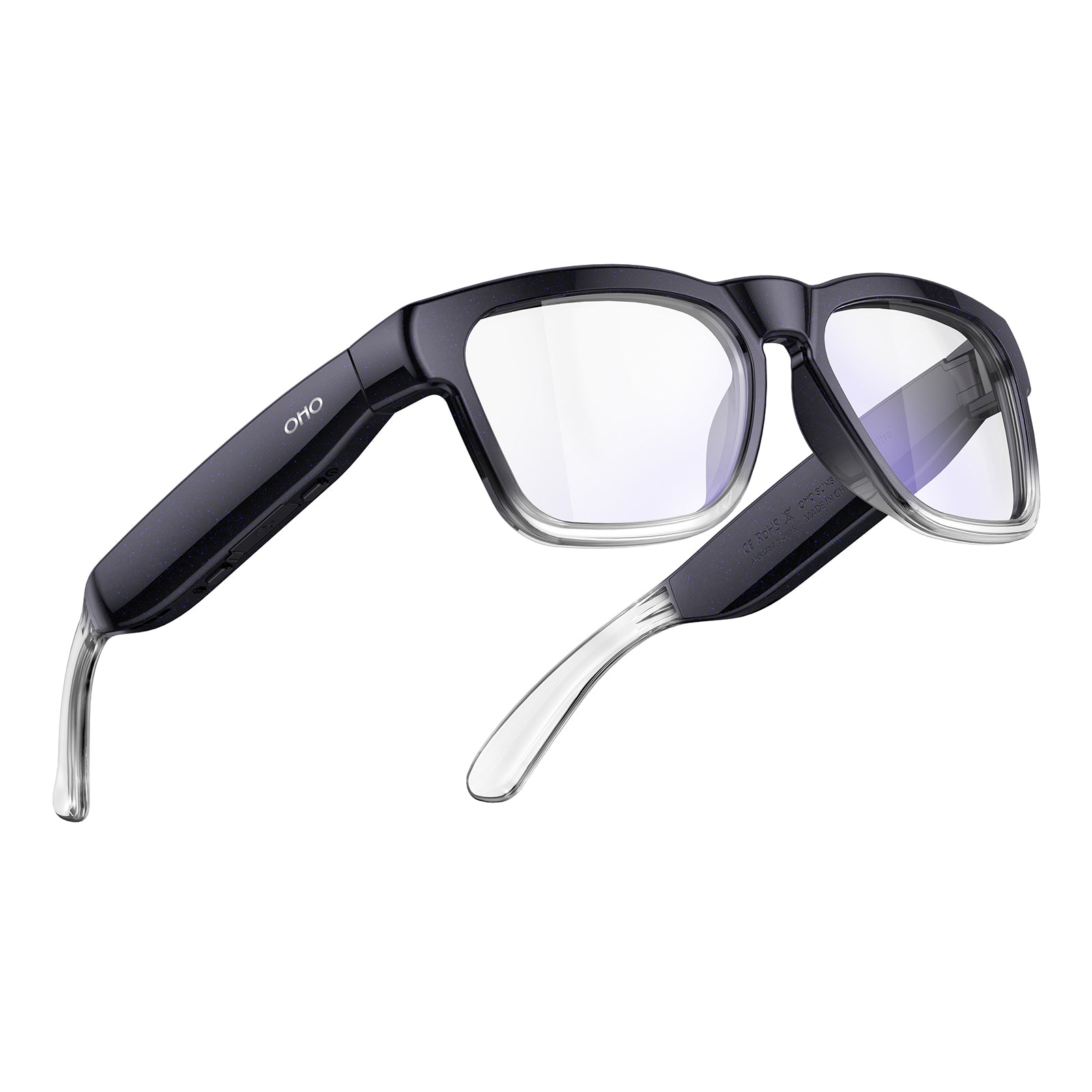






Clear lenses without added tint can work well for an evening walk, as long as your vision stays sharp and you can still notice nearby traffic. Driving after dark is a stricter call: the lens must preserve your required prescription correction and a clear view under headlight glare, not just look clear. A blue-light coating or a built-in Bluetooth speaker does not prove either of those things.
This guide splits the walking decision from the driving decision, then explains how to judge glare, vision, and audio awareness before you choose a pair of clear glasses for your commute.
Can You Wear Clear Blue-Light Bluetooth Glasses on an Evening Commute?
Evening walking and after-dark driving are different decisions, even in the same pair of glasses. For a walk, a clear lens is acceptable once you confirm it does not blur your view of curbs, crosswalks, or approaching cars, and once your audio stays low enough to notice traffic. For driving, the bar is higher: you need your full required prescription correction in the lens, plus a clear, undistorted view of the road under oncoming headlights.
A blue-light coating or a Bluetooth speaker built into the frame does not prove either condition. Those features describe screen filtering and audio convenience, not glare control or corrected vision. If a lens dims, warps, or replaces the correction you actually need, stop wearing it behind the wheel until that is resolved. Walking is more forgiving, but the same basic check for a clear, undistorted view still applies before you head out under streetlights.
What Blue-Light Filtering Can—and Cannot—Do for Eye Fatigue
Blue-light filtering is not a proven fix for the tired, dry-eye feeling that shows up after a long day of screens. The American Academy of Ophthalmology reports that blue-light-blocking lenses have not been shown to reduce digital eye strain in the way many product claims suggest.
That does not mean your evening fatigue is imaginary. Hours of close screen work reduce how often you blink, and that alone can leave eyes feeling dry and strained by the time you head outside. Treat lens comfort and clarity as their own decision, separate from any blue-light marketing label. If you are weighing a lens that shifts tint indoors versus one built purely to filter blue light, our comparison of photochromic versus blue-light lenses walks through how each behaves as you move from a screen to outdoor light.
How to Judge Headlight Glare and Night Visibility
Glare tolerance is what actually separates a lens that is fine for night use from one that is not. Judge it by whether the road and the people on it stay visible, not by whether the lens looks clear or carries a blue-light label.
What to Look for in the Lens
- Prescription correction: if you need corrective lenses, confirm the frame includes that correction rather than assuming you can wear it comfortably over your existing glasses.
- No dimming or distortion: the lens should not noticeably darken the scene or warp straight lines like lane markings and curbs.
- Usable contrast under lights: check the actual frame at dusk or under streetlights, not just in daylight, since some coatings behave differently once real headlights and streetlamps are in the picture.
Why Clear Does Not Mean Glare-Free
A clear lens skips the obvious step of adding tint, but that alone does not guarantee comfortable glare handling. NHTSA's review of nighttime driving conditions notes that headlight glare reduces roadway visibility when bright lights appear against a dark background, regardless of what the wearer's lens is called.
Tinted options do not have a clear advantage either. In a simulator study of 22 drivers, yellow lenses in a small study did not improve pedestrian detection or reduce the effect of glare from oncoming headlights compared with clear lenses. That result is limited to one small cohort, but it is enough to reject the idea that a tint automatically fixes glare. If your view gets harder to read once headlights appear, that lens has already failed the test for night driving.
Keep Bluetooth Audio Secondary to Traffic Awareness
Bluetooth audio is a convenience, not a safety feature, so keep it working around your attention rather than the other way. NHTSA's distracted-driving guidance treats any activity that pulls focus from the road, including adjusting audio, as a potential driving distraction.
- Set volume and pairing before you start moving, whether you are walking toward a crosswalk or pulling out of a driveway.
- Keep the volume low enough that a horn, a cyclist's bell, or an approaching engine is still easy to hear.
- While walking, lower or pause audio near intersections, crosswalks, and any stretch where you are sharing space with vehicles.
- While driving, pause audio, calls, or voice commands the moment they compete with reading traffic, checking mirrors, or reacting to another car.
Open-ear speakers sit outside the ear canal, which is a design detail, not a guarantee that you will catch every relevant sound. If you are deciding between an open-ear frame and closed headphones for a commute, our breakdown of Bluetooth glasses vs. headphones compares how each handles everyday awareness.
Neutral Buyer Checks Before Choosing Commute Audio Glasses
Before any product enters the picture, resolve five things in order: the exact lens, your prescription needs, physical fit, audio controls, and what has actually been verified versus just listed. Skipping the lens question first is the fastest way to end up disappointed after dark.
Lens and Prescription Checks
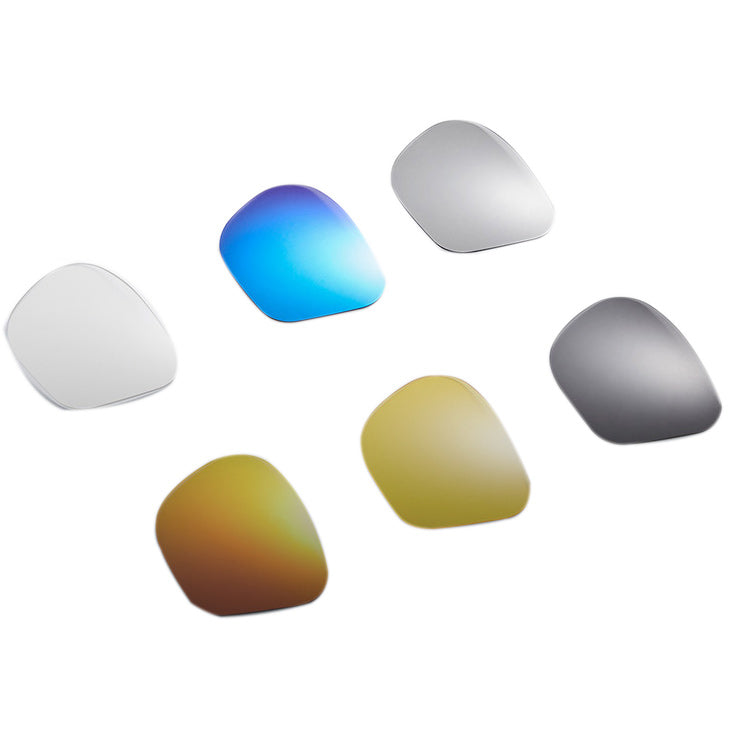
- Confirm the actual lens type. Clear, tinted, polarized, and photochromic labels can behave differently outdoors, so check which one you are actually getting rather than assuming from the frame name.
- Resolve prescription needs upfront. Most smart frames are not designed to be worn comfortably over existing glasses, so ask whether the lens itself can carry your correction or whether a separate lens insert is offered.
- Look for evidence about light transmission and distortion under real lighting, not just a marketing description, before treating any pair as ready for night driving.
Audio and Fit Checks
- Check bridge, temple, and frame fit for a stable hold through a walk or a drive, without pinching or slipping.
- Test pairing, volume, calls, and voice controls in a calm setting before you rely on them during a commute.
- Treat battery life, water resistance, and open-ear design as convenience features. They tell you how the glasses perform day to day, not whether they are proven safe for after-dark driving.
Browsing a full lens and audio lineup side by side makes these comparisons easier; our Bluetooth glasses collection groups current polarized, photochromic, and blue-light options in one place.
Where OHO SUNSHINE Elite Fits—and Where It Does Not
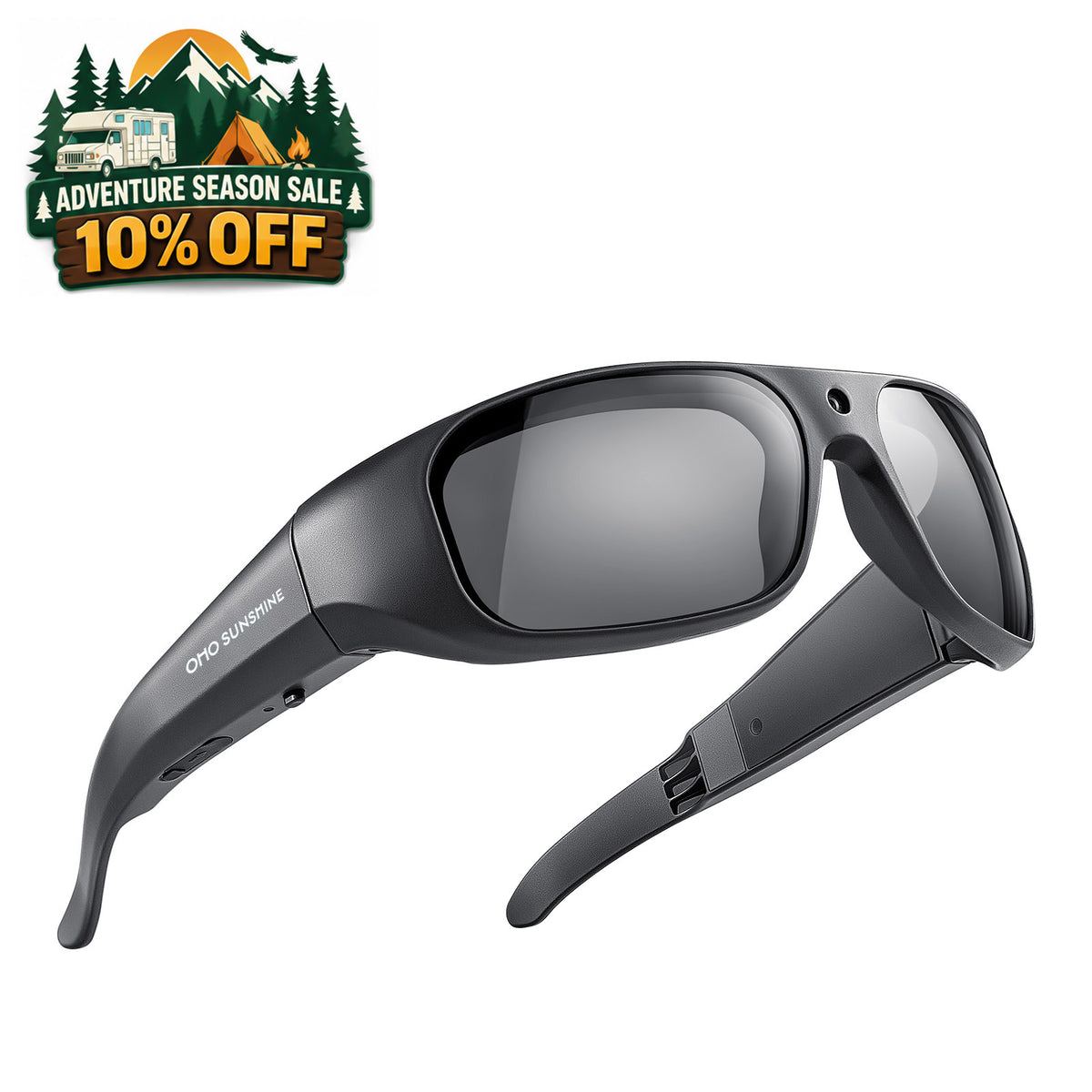
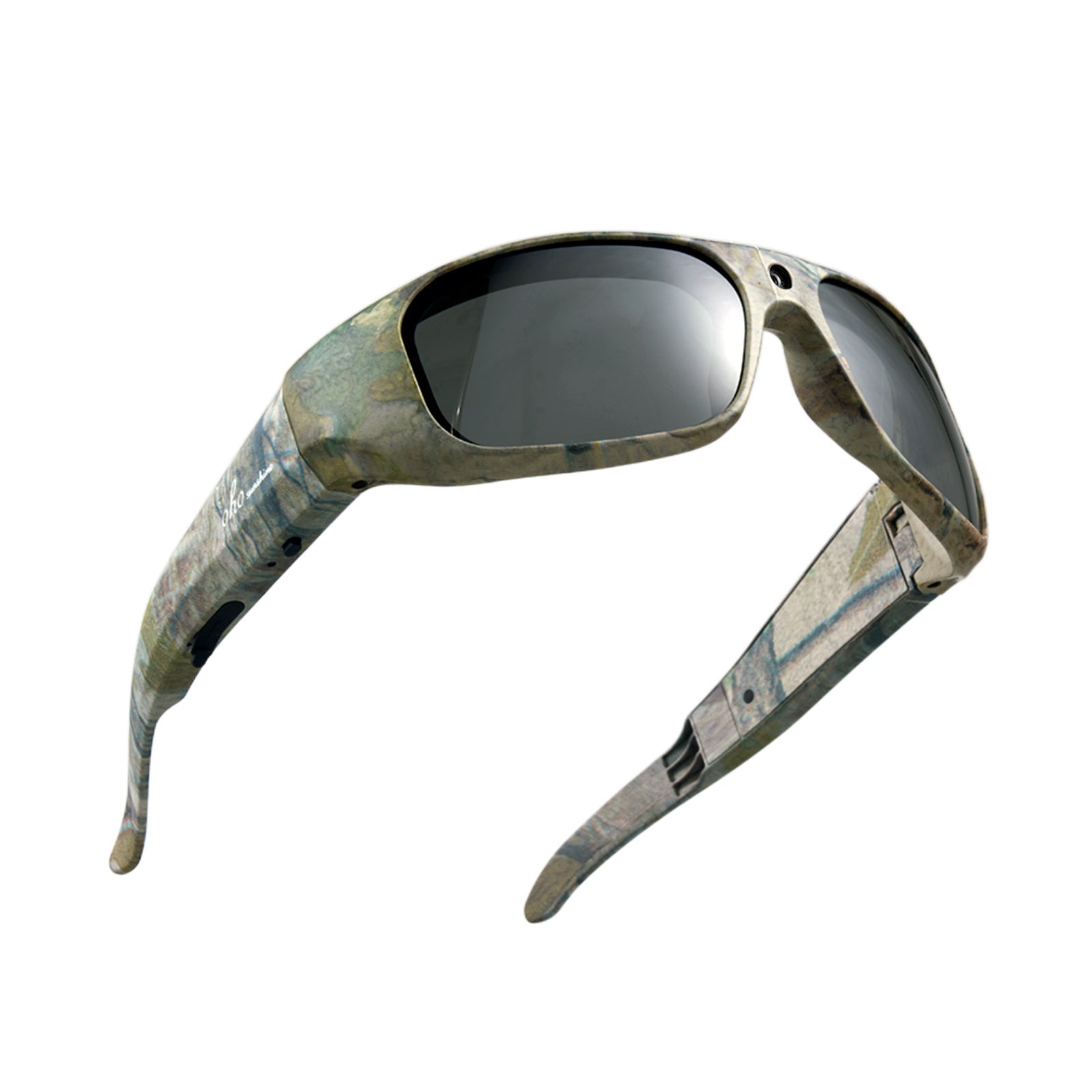
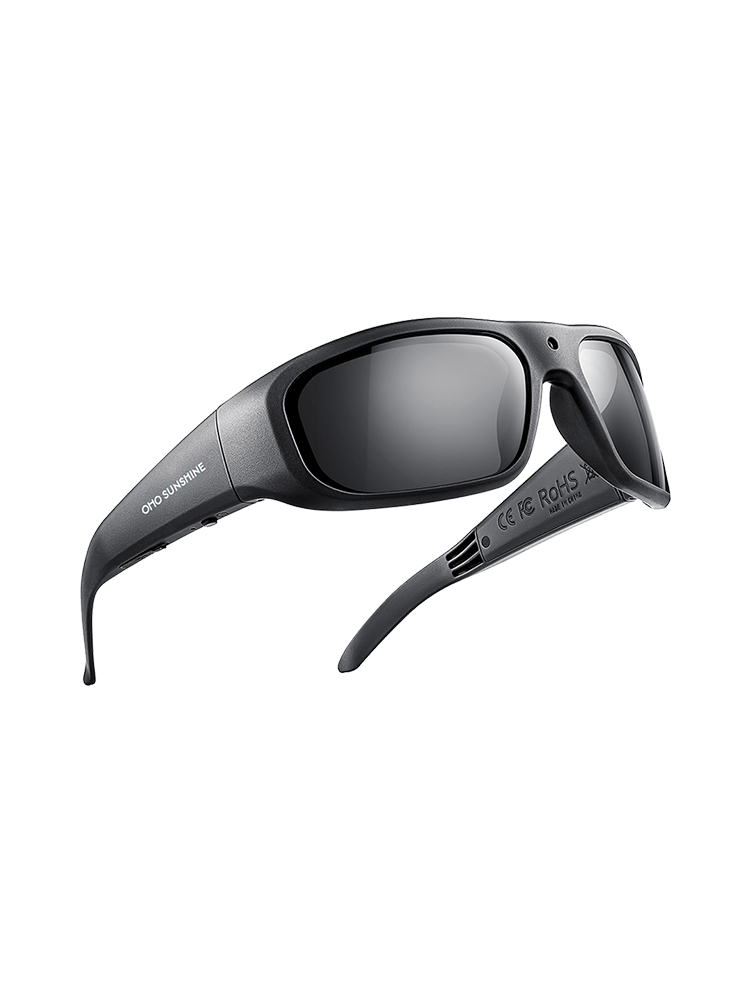
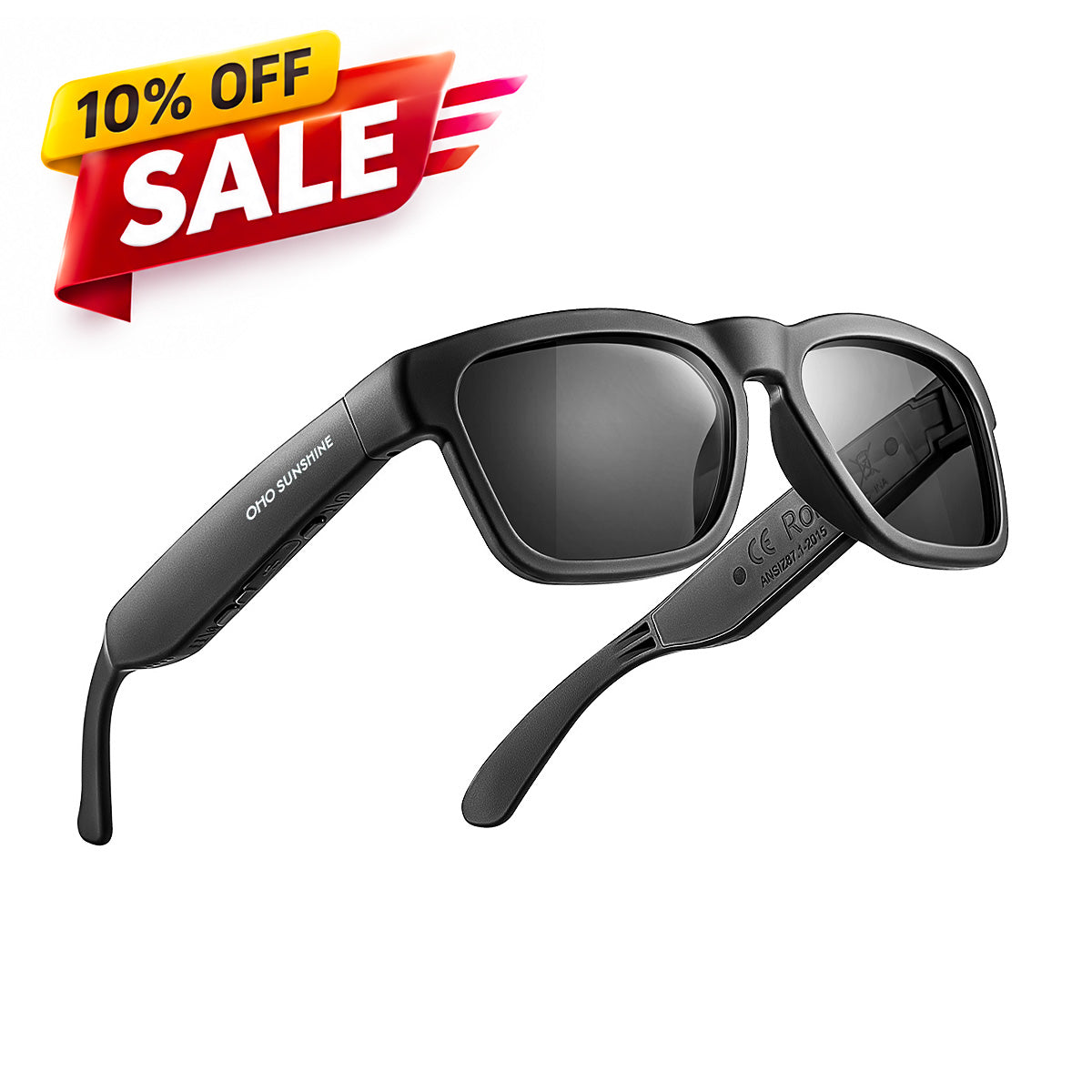
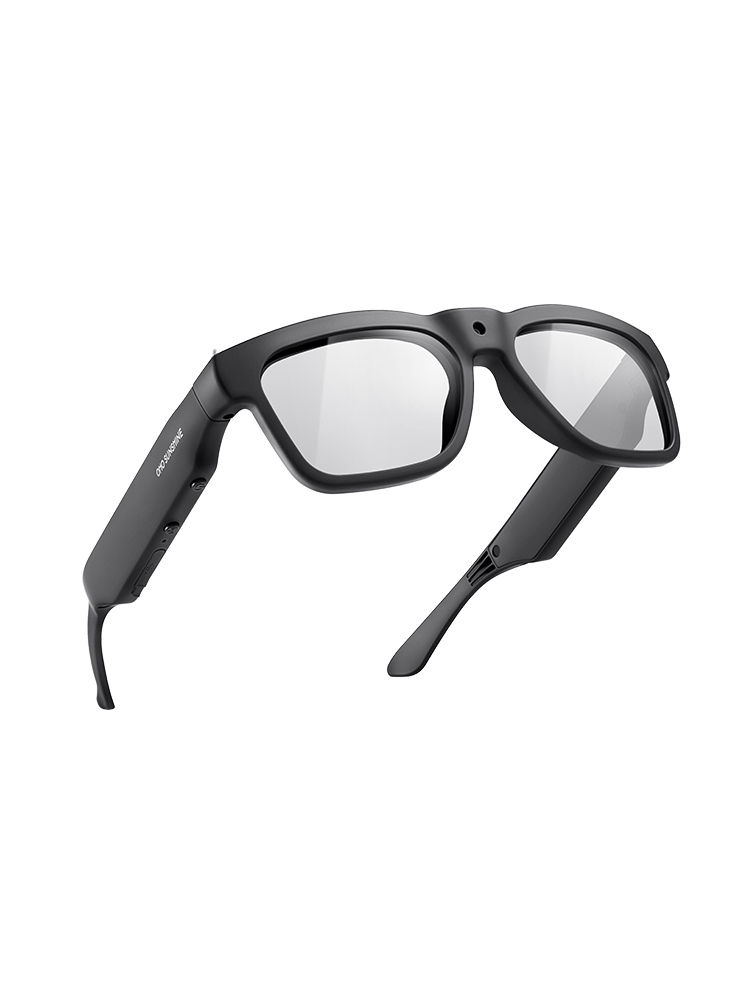
The OHO SUNSHINE Elite Smart Bluetooth Glasses fit into this decision as an audio-and-eyewear option worth checking, not as a confirmed night-driving lens. We list open-ear Bluetooth audio, polarized TAC lenses, changeable lenses, ANSI Z87.1-certified frames, UV400 protection, and a 36-gram weight for the Elite, along with a 10-hour battery and IPX4 water resistance.
Those specs support general commuting use: the open-ear design keeps your ear canal free while you walk or ride, the ANSI-rated frame and UV400 lenses cover daytime eye protection, and the lightweight build is easy to wear for a full day. What they do not establish is clear-lens status or verified performance under headlight glare, since the listed lens type is polarized rather than an untinted, clear lens. If your evening commute is mostly walking, or driving where you already wear separate corrective glasses, the Elite's audio and general eyewear features are relevant to weigh. If you specifically need a confirmed clear, corrective lens for night driving, treat that as a separate, unresolved question rather than assuming this or any polarized listing answers it. You can review the Elite Smart Bluetooth Glasses listing for the full spec sheet before deciding.
FAQs
What should I do if glare makes it hard to see the road?
If headlight glare makes roadway objects harder to see, treat that as a stop condition rather than something to push through. Slow down, increase following distance if you are already driving, and avoid relying on that lens again until you have confirmed it does not dim or distort your view under real headlights.

Can the OHO SUNSHINE Elite be worn over prescription glasses?
No. The Elite is not designed to be worn over existing prescription glasses, but the listing supports changeable lenses, so a corrective lens insert is the intended path if you need vision correction with this frame.
Does open-ear audio guarantee I'll notice traffic?
No. Open-ear speakers sit outside your ear canal, which can leave more surrounding sound audible than sealed headphones, but that is a design detail, not a guarantee. Keep volume low and pause audio whenever a cue like a horn or an approaching vehicle would otherwise be harder to hear.
How long does the Elite's battery last for an evening commute?
The Elite lists roughly 10 hours of battery life per charge with IPX4 water resistance, which comfortably covers a round-trip evening commute for most riders and walkers. Charge it ahead of a longer trip rather than assuming a partial charge will last through both legs.
Before You Drive After Dark, Resolve the Lens Question
Before you rely on any clear-lens or blue-light frame for driving after dark, confirm the actual lens in daylight and under real headlights: it needs to carry your required prescription and leave the road just as visible as your everyday glasses. If you cannot confirm that yet, keep the frame for walking or general audio use and hold off on driving in it. Once the lens passes that check, headlight glare and Bluetooth audio become manageable with the habits above, not obstacles to work around.




Laisser un commentaire
Ce site est protégé par hCaptcha, et la Politique de confidentialité et les Conditions de service de hCaptcha s’appliquent.