














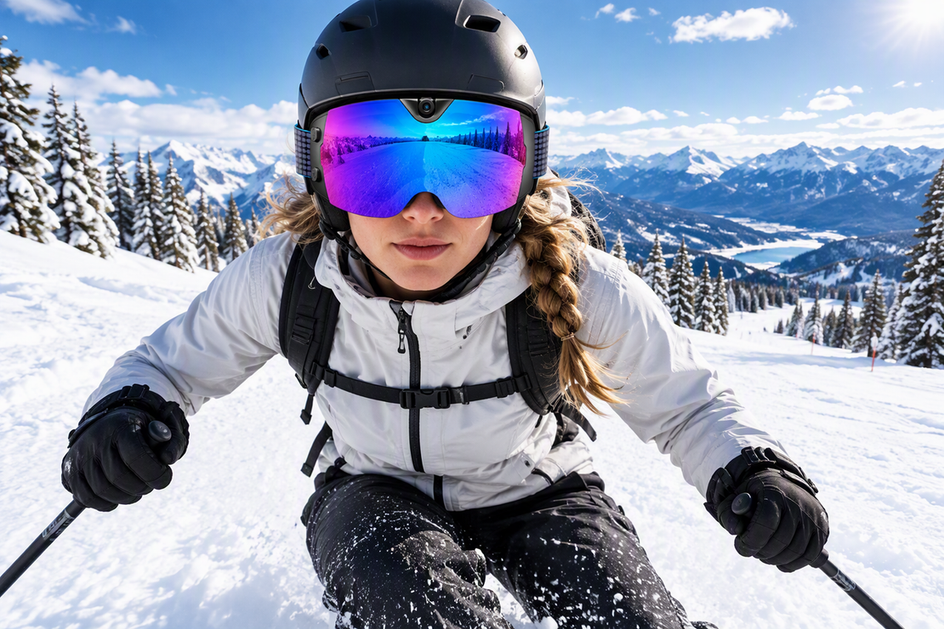
Ski-tip-heavy footage from camera-equipped goggles usually traces back to body position, not the camera itself. A centered downhill stance and a neutral head position create the real starting point for a wider, more usable frame. From there, a short stationary test and a gentle-slope check let you fine-tune the goggle angle before trusting it on an aggressive carve.
How Stance and Head Position Change Your Ski POV
Your stance and head position aim the camera long before any goggle adjustment matters. Get the body position right first, then treat the goggles as a fine-tuning tool.
Start With a Centered Downhill Stance
A centered athletic stance works as the framing baseline: flex your ankles, knees, and hips, hinge slightly at the hips, and keep contact toward the tongue of your boot. Your weight should sit just forward of your heel rather than stacked straight up. This centered athletic ski stance is the posture instructors use to keep skiers balanced through a turn, and it also keeps a goggle-mounted camera pointed at the trail instead of the snow in front of your boots. Standing tall to check your framing before a run can be misleading, because straightening your joints often pushes you into a back-seat position you would never hold while actually carving. Set up the test with the same bend and hip hinge you plan to use on the run, not the upright posture you might use while waiting in the lift line. Treat this stance as a starting reference rather than a fixed stance width, since ski length, terrain, and personal comfort still shape the exact position you settle into once you are moving.

Keep the Head Neutral Before Changing the Goggles
Where you look and how the goggles sit on your face are two separate things, and mixing them up leads to wasted adjustments. Head position controls where an eye-line camera points moment to moment, while goggle or mount seating sets the fixed baseline angle. During an aggressive carve, a dropped chin tilts an eye-line camera toward nearby snow and your ski tips, even if the goggles themselves are seated correctly. Before touching any hardware, classify what you are actually seeing in a clip: tip-heavy footage shows mostly snow and boots, horizon-heavy footage loses too much trail in favor of sky, and off-center footage drifts to one side even though you skied straight. That classification tells you whether the fix belongs to your head position, your seating, or your line of travel. Resetting to a neutral head position first is important because it removes a moving variable, so any goggle adjustment you make afterward gets tested against a stable baseline instead of a moving target.
How to Set and Test the Camera Angle Before a Run
Setting up camera-equipped goggles happens in three stages: seat them the way you will actually wear them, verify the frame on a gentle slope, and only then decide if a fixed goggle viewpoint fits your filming goal.
Seat the Goggles and Set a Starting View
Run this sequence while stopped, before you clip in for a real run:
- Wear the goggles with the same helmet, hood, or hat you plan to use on the hill, since fit and seating can shift once you add gear.
- Reproduce the centered stance and neutral head position described above, since that is the posture the camera should actually be framing.
- Look at the visible split between sky, trail, and ski tips, and make one small seating or mount change only if your specific goggles allow that kind of adjustment.
- Record a short clip or use whatever preview your goggles offer, then review it before committing to a longer run; a camera ski goggle framing test walks through this stationary check in more detail.
Verify the Frame on a Gentle Slope
A stationary check only gets you partway there, so confirm the result on a short, controlled slope before you attempt the run you actually want to film. If tips and nearby snow still dominate the frame, first return to a neutral head position, then try one small upward framing correction, but only if your goggles or mount support that kind of change. Reverse the correction if the horizon climbs too high or the trail disappears from the bottom of the frame, since that means you overcorrected rather than fixed the original problem. If the picture looks off-center instead of tip-heavy, the fix is usually in seating or alignment rather than tilt, so recheck how the goggles sit on your face before changing the angle again. Make one change at a time and retest on the same gentle slope, because stacking multiple untested adjustments makes it hard to tell which change actually helped. Once the gentle-slope test looks right, you have a verified baseline to carry into a faster, more aggressive carve.
When Camera Ski Goggles Fit the Run
Camera-equipped goggles make the most sense when a fixed, eye-line viewpoint matches what you are trying to film, not when you need multiple angles or a movable mount.
| Buyer condition | Why it matters | Skyshot fit or open question |
|---|---|---|
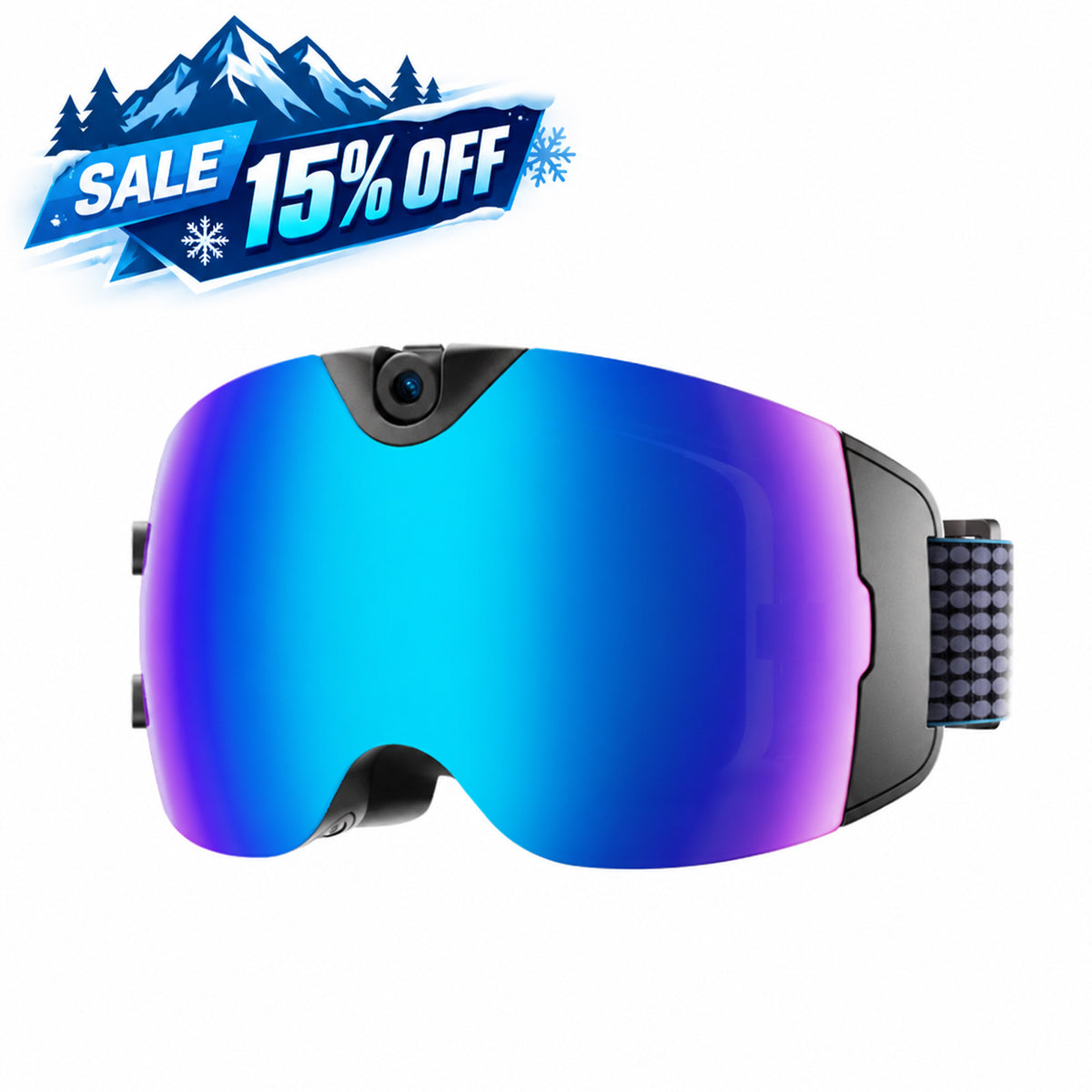
| Hands-free eye-line POV is the priority | No separate mount or cables to manage on the hill | Supported: integrated 4K/30 camera built into the goggles |
| You need to adjust or preview the exact framing | Some camera goggles allow tilt or live preview, others do not | Unverified: adjustment range and any live preview are not confirmed |
| You want wide scene coverage in the recording | A wider lens captures more of the scene but not tilt or head position | Supported: listed 140° wide-angle lens, framing still depends on stance |
| You want a quick post-run review workflow | Wi-Fi transfer and simple charging matter between runs | Supported: WiFi wireless connection and USB-C charging are listed features |
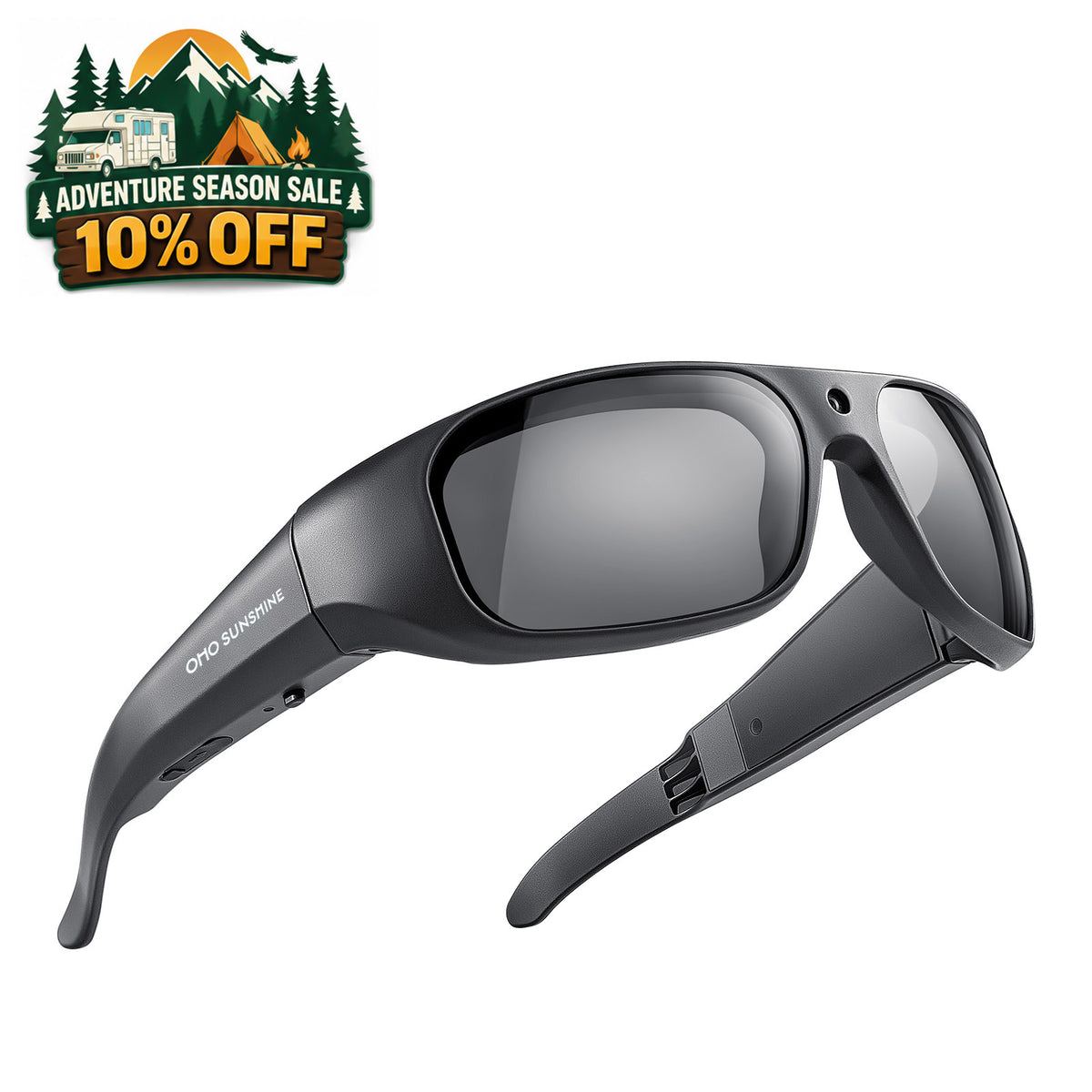
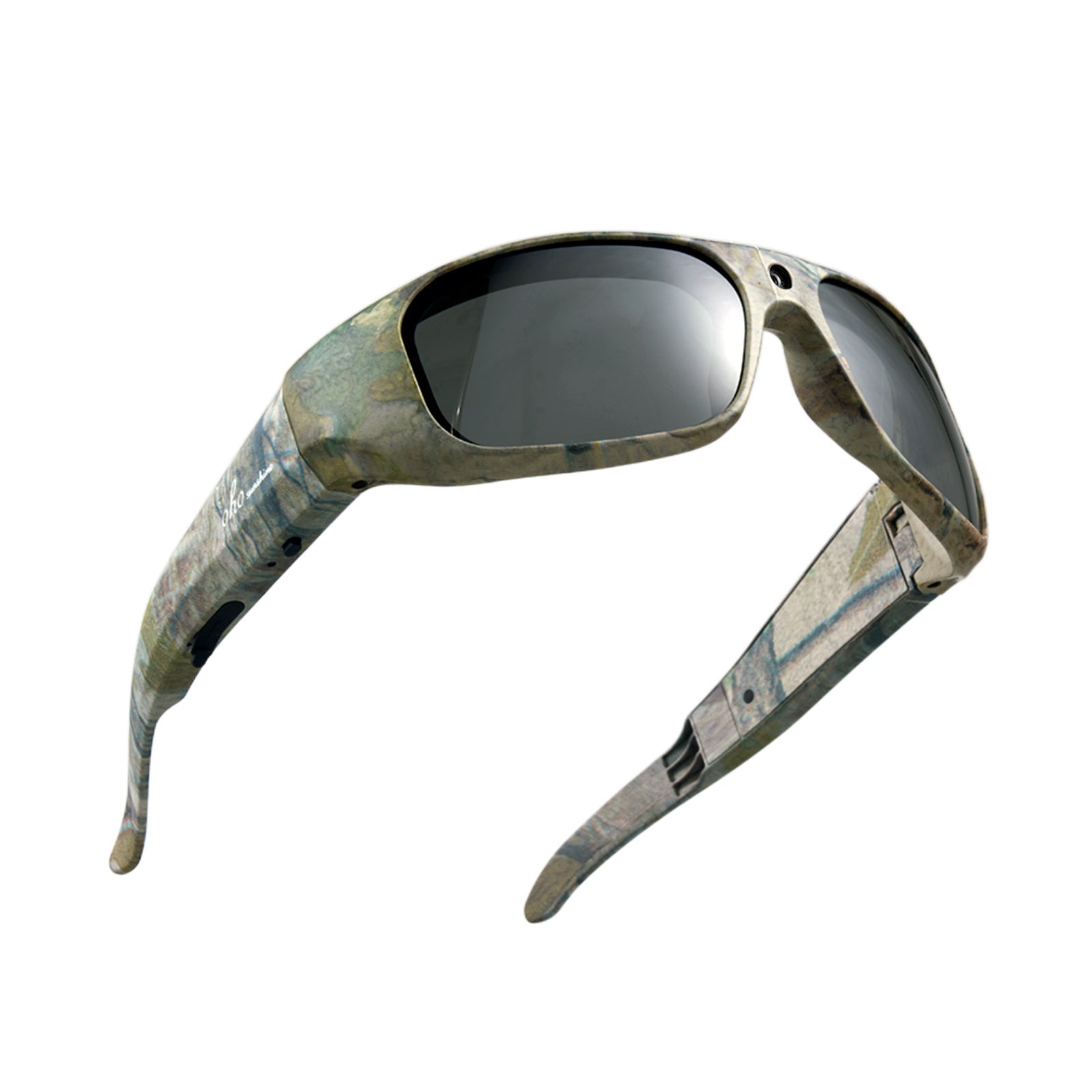
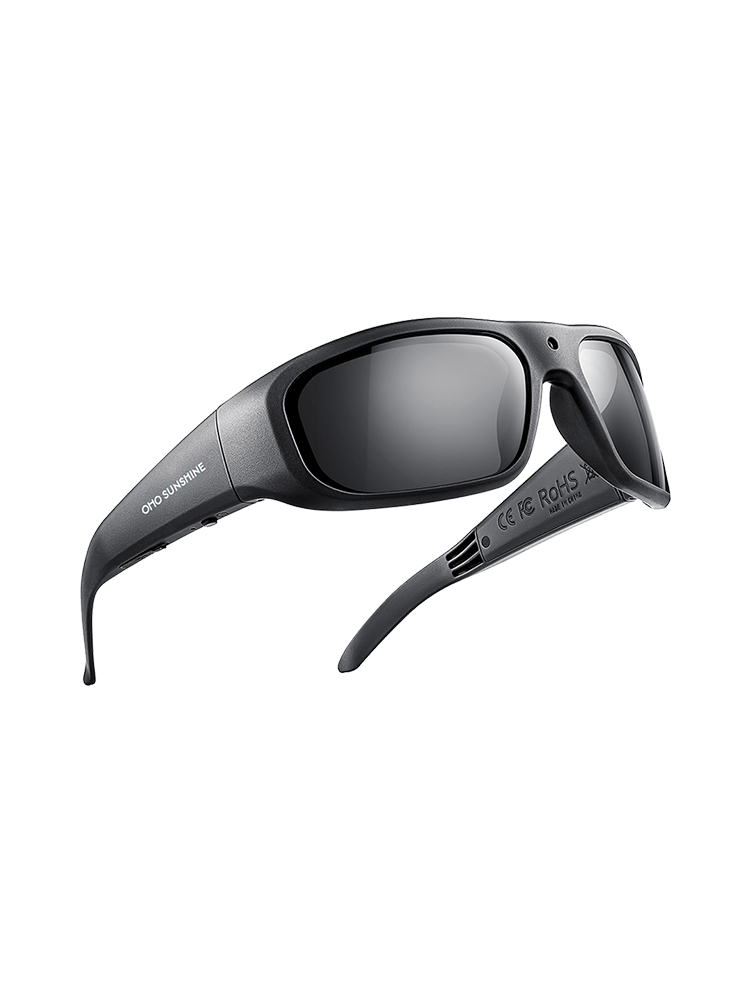
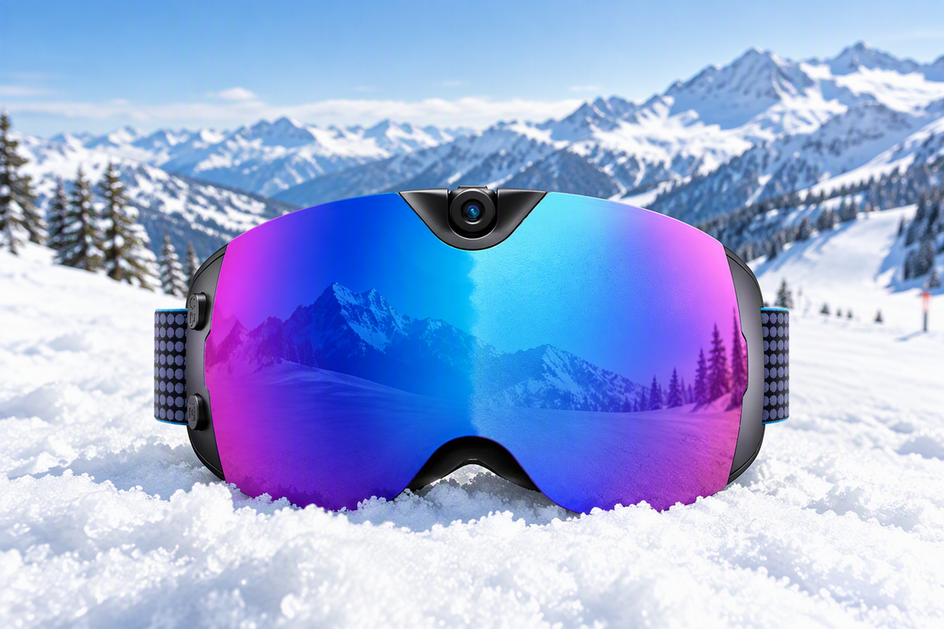
This split matters more than any single spec. If your tested framing goal is hands-free downhill footage and you are comfortable with a fixed goggle viewpoint, the Skyshot camera ski goggles fit that scenario, backed by their listed 4K/30 video, 140° lens, anti-fog and polarized optics, Wi-Fi transfer, and USB-C charging. We have not verified an adjustable mount or a live framing preview on this model, so treat the stationary and gentle-slope tests above as how you confirm fit rather than relying on the spec sheet alone. If you need a movable mount or multiple camera positions instead, a fixed-viewpoint goggle camera is the wrong tool regardless of its recording specs. Browsing the 4K snow goggle camera collection can help you compare other integrated options once you know which buyer condition matters most to you.

Framing better ski footage starts with your stance, not your gear. Reset to a centered, neutral posture, run the stationary and gentle-slope tests above, and only then decide whether a fixed-viewpoint camera goggle fits your filming goal. If it does, match the buyer conditions to your priorities before choosing a specific model.
FAQs
Can I fix a camera angle by moving my head instead of adjusting the goggles?
Moving your head only changes where an eye-line camera points for that instant; it does not reset the baseline angle of the goggles or mount. Set your baseline from a neutral head position first, then treat head movement during a turn as part of skiing, not as your main framing fix. If the frame is wrong at rest, adjust the seating or mount instead of relying on exaggerated head movement mid-run.
Do the same horizon-framing principles work with snowboard goggles?
The same logic transfers: test from your actual snowboard stance, classify the result as tip-heavy, horizon-heavy, or off-center, and make one small adjustment at a time. Snowboard stance and head movement differ enough from skiing that you should not assume identical results, so run your own stationary and slope tests rather than copying a skier's exact setup.
Does a wide-angle camera guarantee that I will capture more horizon?
A wider field of view can include more of the scene in each frame, but it does not set the camera's tilt, your head position, or where the horizon lands in the shot. Skyshot's listed 140° lens is a specification about scene coverage, not a promise that it will capture the horizon during a deep carve. Seating, stance, and the tests described above still determine the final framing.


Deixe um comentário
Este site está protegido pela Política de privacidade da hCaptcha e da hCaptcha e aplicam-se os Termos de serviço das mesmas.