














4K camera glasses can capture useful first-person archery footage, but only after you confirm three things: the camera's viewpoint relative to your eye, physical clearance around your bow and anchor point, and stable framing during the shot. None of those checks are guaranteed by a 4K resolution spec alone. Resolution tells you how sharp the recording looks, not whether the lens sits where your eye actually sees the sight picture.
Treat sunglasses with a built-in camera as a documentation tool first, not a substitute aiming reference. A short non-live test, described below, tells you whether the frame is useful for coaching review or too offset for precise sight-picture analysis.
Can 4K Camera Glasses Capture a Useful First-Person Sight Picture?
A 4K label describes recorded detail, not alignment between your eye and the camera sensor. That distinction decides whether the footage is useful for your specific goal.

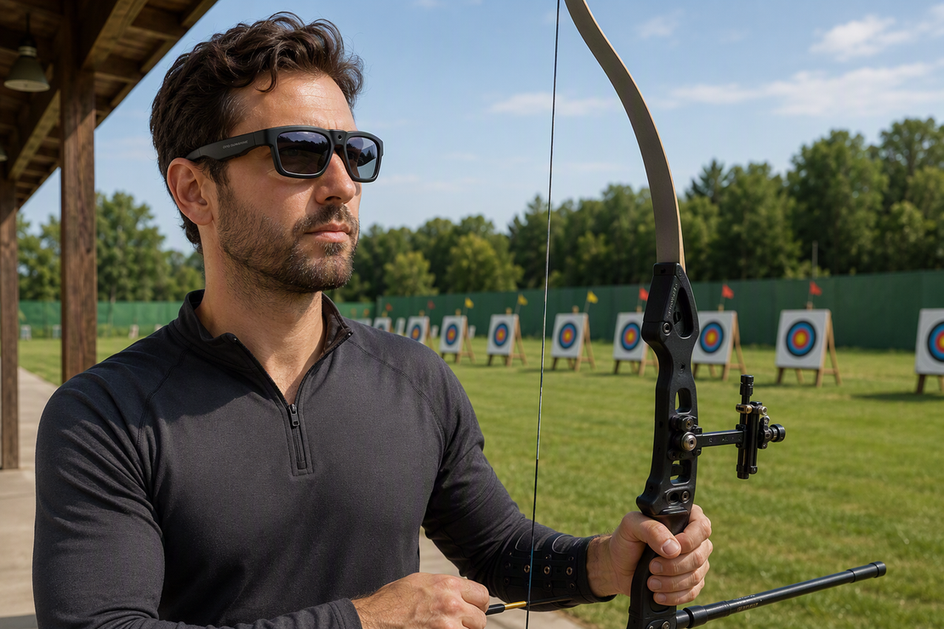
For hands-free documentation or general form review, sunglasses with a built-in camera can work well: they show stance, draw motion, and follow-through without a separate camera rig. For precise sight-picture analysis, where the exact relationship between your sight pin, the target, and your eye matters, the same recording can be misleading, because the sensor is not positioned at your eye.
The practical answer is conditional. Before you trust the footage for anything beyond general documentation, run the fit, sightline, anchor-clearance, and movement checks in the next sections as pass/fail conditions. If any of them fail, use the recording only for what it can show and do not treat it as a stand-in for your visual sight picture.
How Camera Position Creates Parallax in the Recorded Frame
Parallax is the practical effect of your eye and the camera sensor being two separate observation points. Even a few millimeters of offset changes what lines up with what in the recorded frame.
Eye Sightline Versus Sensor Viewpoint
Your eye and the camera lens never occupy the exact same point in space, even on a center-bridge design. A camera's camera's own viewpoint is the primary factor that determines the geometric relationships inside the recorded image, more than sensor resolution or processing. That means the recording is shaped by where the lens sits, which direction it points, and its field of view, not by how many megapixels it captures.
This is not the same as saying the footage contains a specific aiming error. It means the frame reflects the camera's station point, and that point is not identical to your visual sightline.
What Parallax Changes in the Frame
Because of that offset, your sight pin, riser, arrow, and target can appear in a different relative position on camera than they do through your own eye. A perfectly sharp 4K frame can still be the wrong composition if your goal is exact sight-picture analysis.
The useful test is simple: does the recorded frame show the specific reference points your coach or you need to evaluate? If it shows your stance, draw, and release clearly, it is useful for form review even with some offset. If it needs to match your exact aiming line, offset becomes the limiting factor, regardless of resolution.
How to Verify Framing Before You Shoot
Verify fit and framing away from live shooting before you rely on camera glasses during practice. Two short checks, done in order, give you a pass/fail answer.
Dry-Fit the Frame and Clearance
- Confirm your club, range, or event permits recording equipment and follow all range command procedures before handling the glasses near the shooting line.
- Put the glasses on the way you normally would, then mimic your actual stance, draw, anchor, and release position without a live arrow.
- Check the bridge, camera housing, lens edge, controls, and frame arms against your face, release path, string path, and anchor point during that simulated draw.
- Repeat the simulated draw a few times to confirm the fit stays consistent, not just correct on the first try.
- Note whether the recording controls stay reachable and whether the camera status is visible without breaking your form.
Record a Non-Live Alignment Clip
- With the bow and target set up but no live shot taken, record a short clip using your normal stance and anchor.
- Review the clip and check whether your intended sight reference, the target, your hands, and your follow-through area are all visible in frame.
- Repeat using your actual head position and anchor rather than adjusting your posture to please the camera.
- Classify the result as usable for your stated goal, limited to general documentation only, or a stop condition if the glasses interfered physically or the frame is not useful at all.
Do not begin live practice if the glasses, camera housing, controls, or frame contact your anchor, release path, face, or the bowstring during this dry-fit and non-live simulation. That contact is a stop condition, not a minor fit issue.
Which Clearance Checks Change by Bow and Anchor Style?
The same glasses can fit one archer and interfere with another because compound, recurve, and traditional setups use different release mechanics and facial anchor points. Your clearance check has to match your actual equipment, not a generic fit test.
Compound shooting typically uses a release aid clipped to a D-loop near the face, which changes where your hand and the release mechanism sit relative to the camera housing during the draw. Recurve and traditional archers commonly use different release styles such as a finger tab, glove, or bare fingers, which changes the string path and where the string contacts your face and forearm at release.
Neither category is inherently more compatible with camera glasses. The question that matters is whether your specific camera frame, housing, and controls stay clear through your full personal draw and release routine, checked with the dry-fit sequence above rather than assumed from published dimensions.
How Stable Will Footage Be During Release and Recoil?
Normal bow movement, including draw, release, and follow-through, can still show up as head movement or blur in your footage even with stabilization active. That limit matters more than the camera's resolution once you get past the framing question.
Electronic image stabilization works by estimating motion and then shifting or cropping the image to smooth it out, a process explained in general terms in this overview of how stabilization works. That process can reduce distracting shake, but it does not guarantee a clear frame during a fast release, and it does not eliminate the need to check your actual footage. Our motion smoothing test walks through a repeatable way to evaluate that limit before you rely on any camera glasses for coaching review.
Judge your own release stability from a controlled sample clip rather than from a stabilization spec sheet. If the recorded frame stays legible through your draw and release, the glasses are working for that purpose. If it blurs badly at the moment of release, treat that as a limit of your specific setup and camera, not proof of a defect.

Archery movement and firearm recoil are separate problems, and no evidence here supports carrying an archery stability result over to firearm use. If your filming goal involves firearm target shooting, evaluate that setup separately with product-specific and range-specific testing rather than assuming an archery result transfers.
Which Documented OHO SUNSHINE Options Fit the Filming Job?
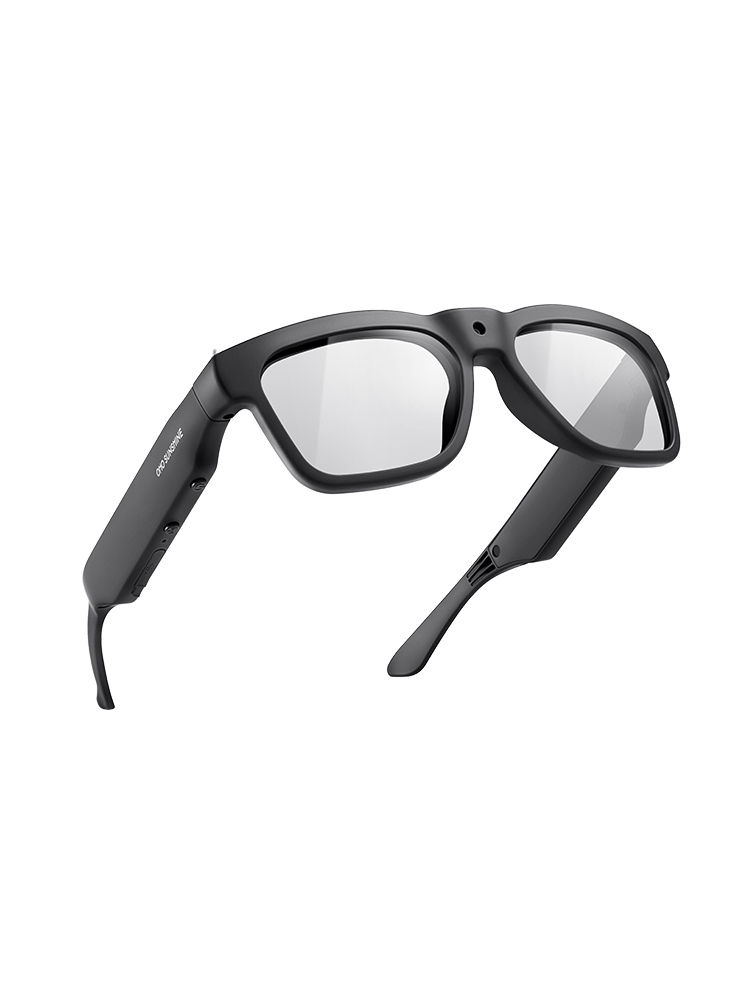
Two of the three OHO SUNSHINE glasses covered here have documented camera and 4K/30 fps video facts, which makes them candidates for the dry-fit and framing test above. The third is a documented Bluetooth and translation option, not a verified filming choice, so it belongs in a different buying decision.
| Product | Documented function and fit fact | Decision outcome |
|---|---|---|
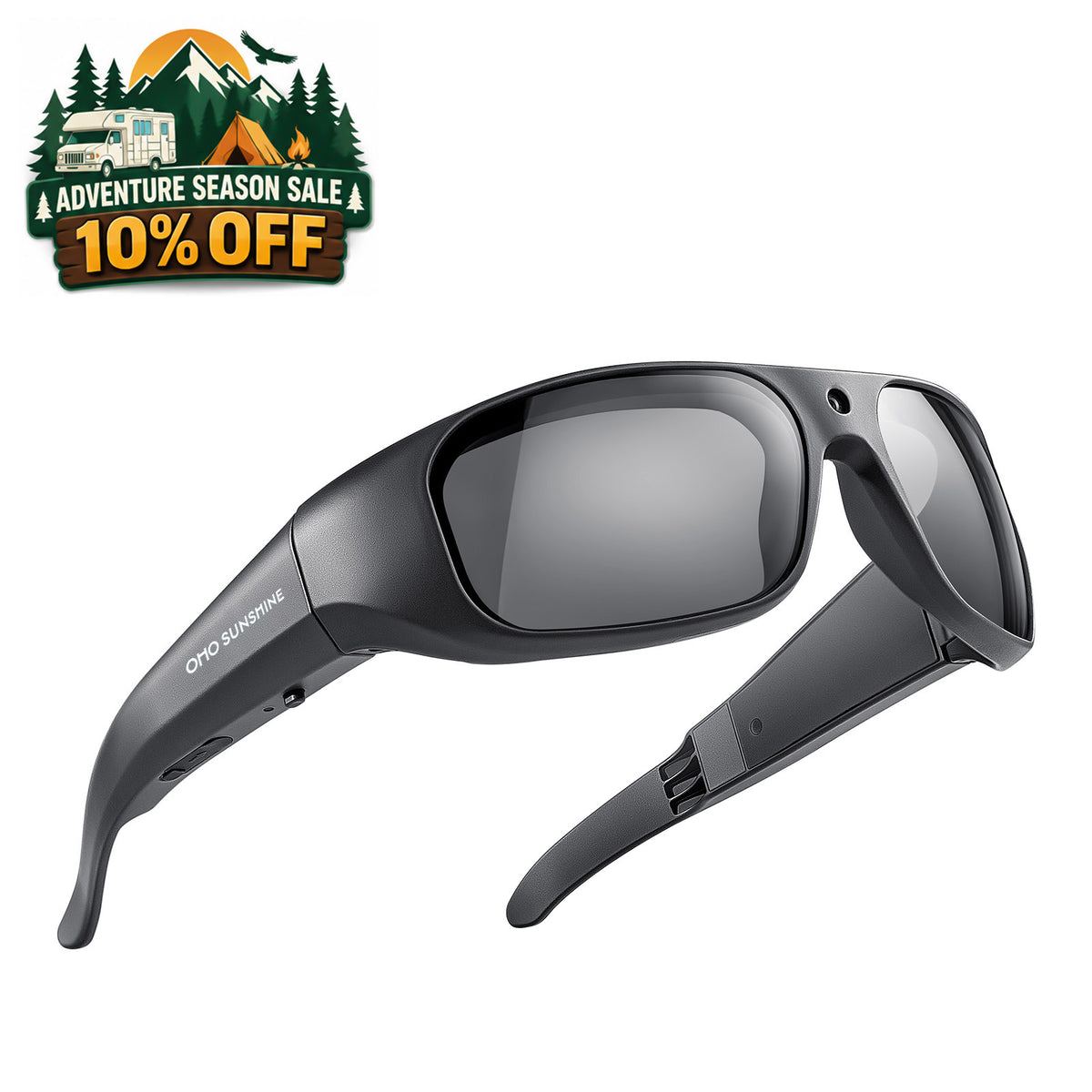
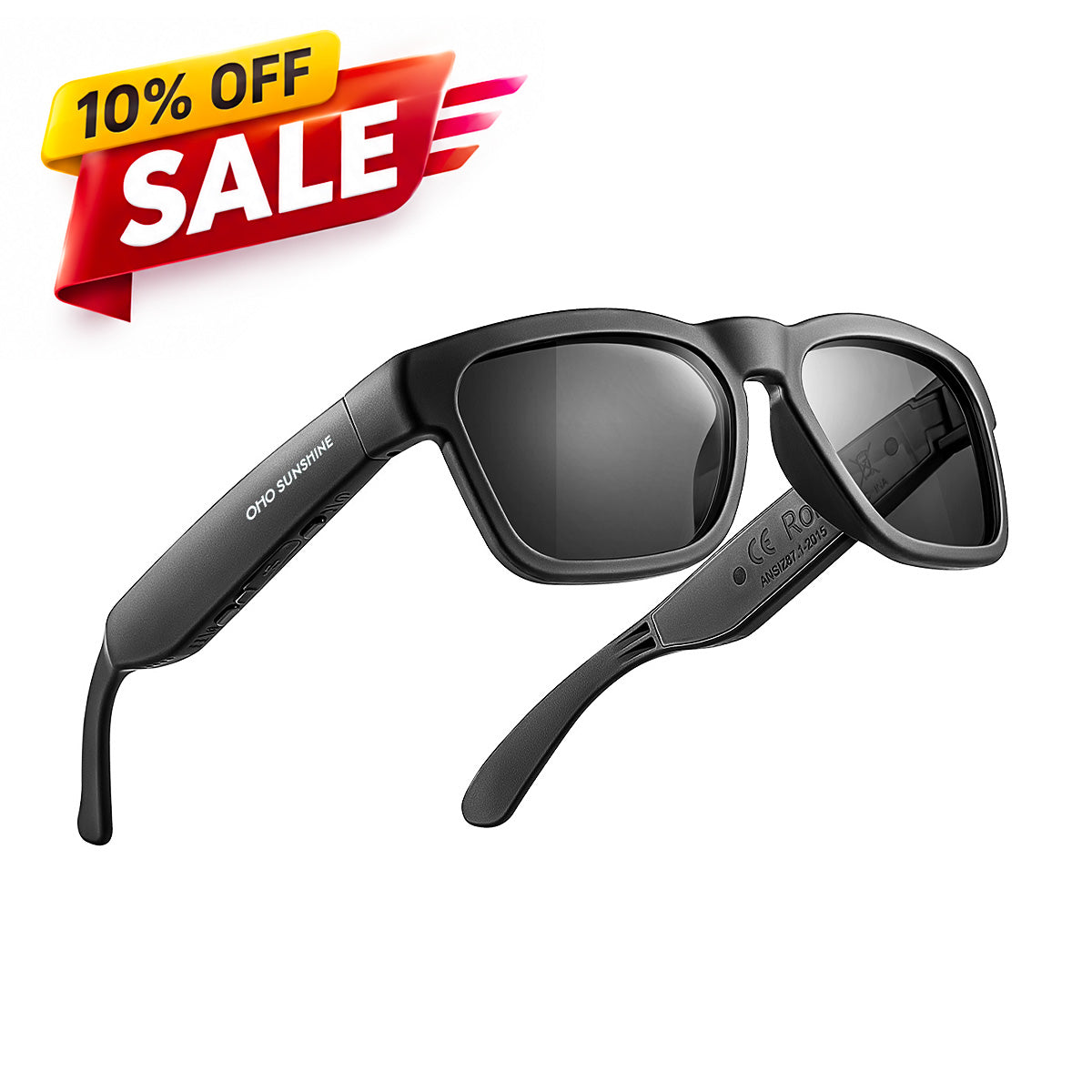
| Edge Pro | 4K/30 fps video, 24MP photo, 41.5 g listed weight, ANSI Z87.1 rated | Documented camera candidate for testing; lighter of the two camera options |
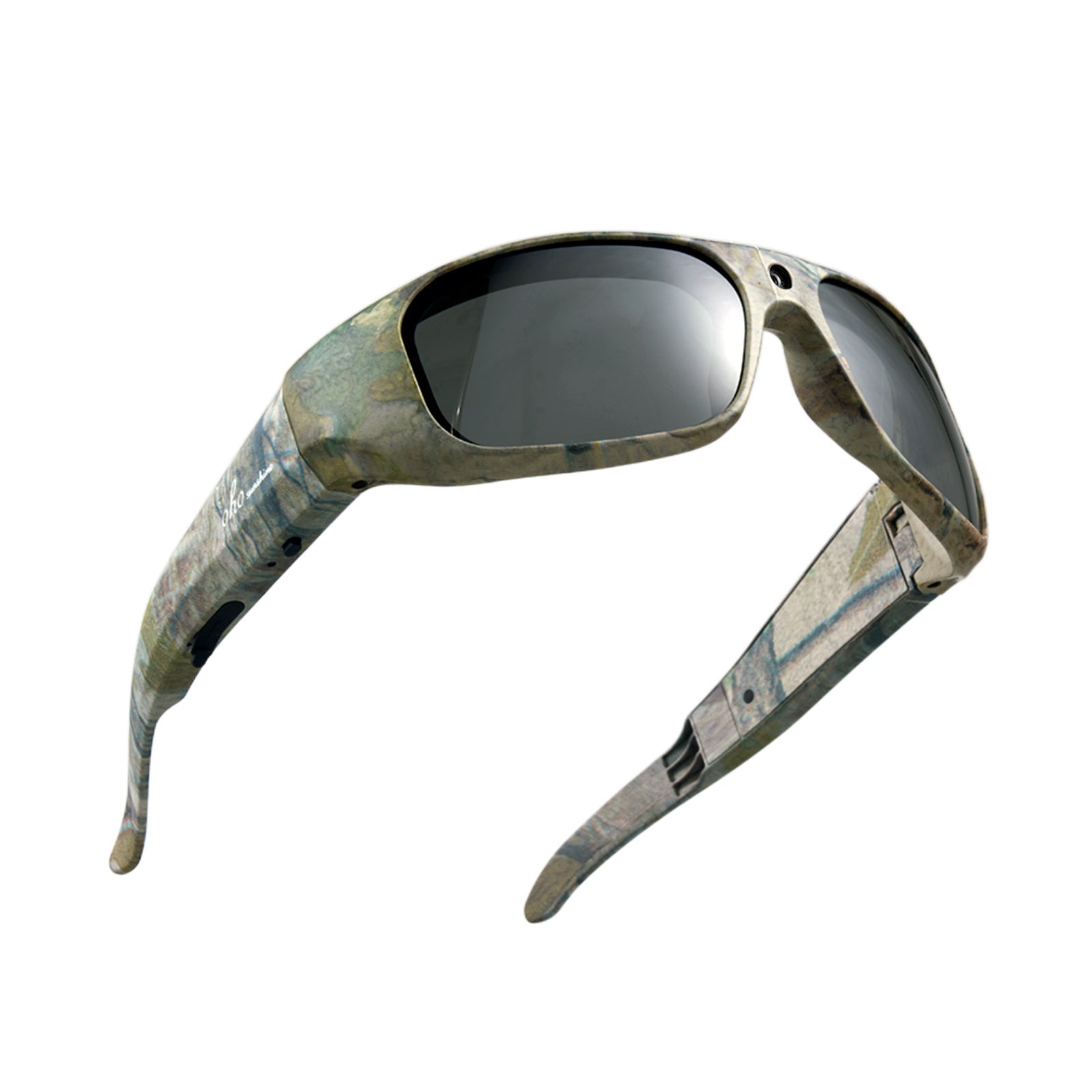
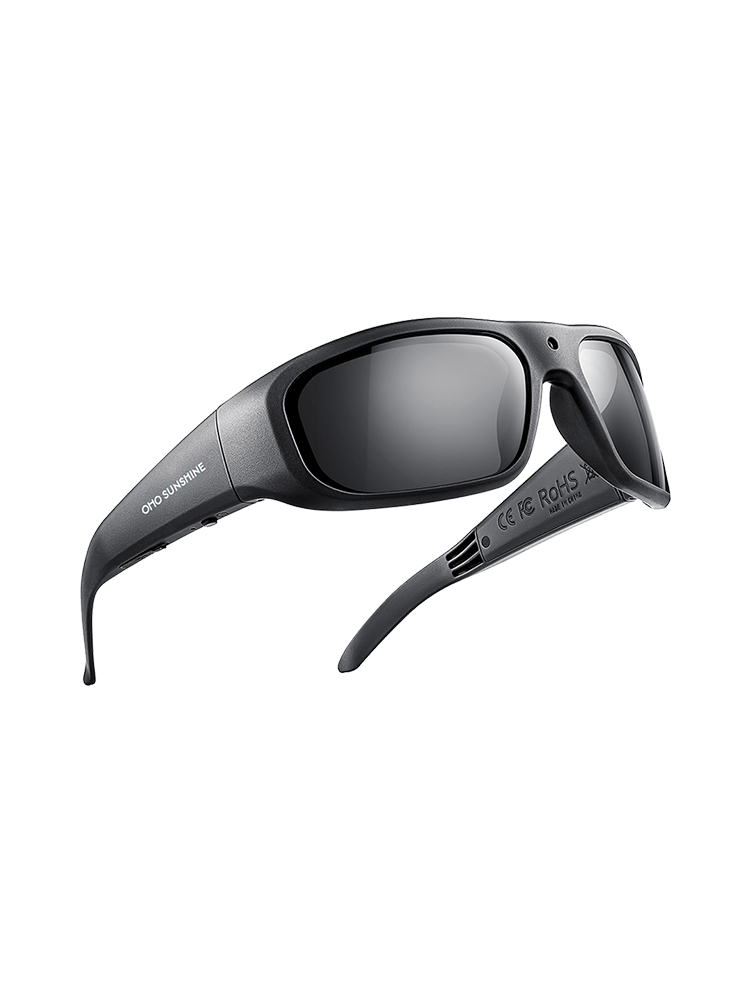
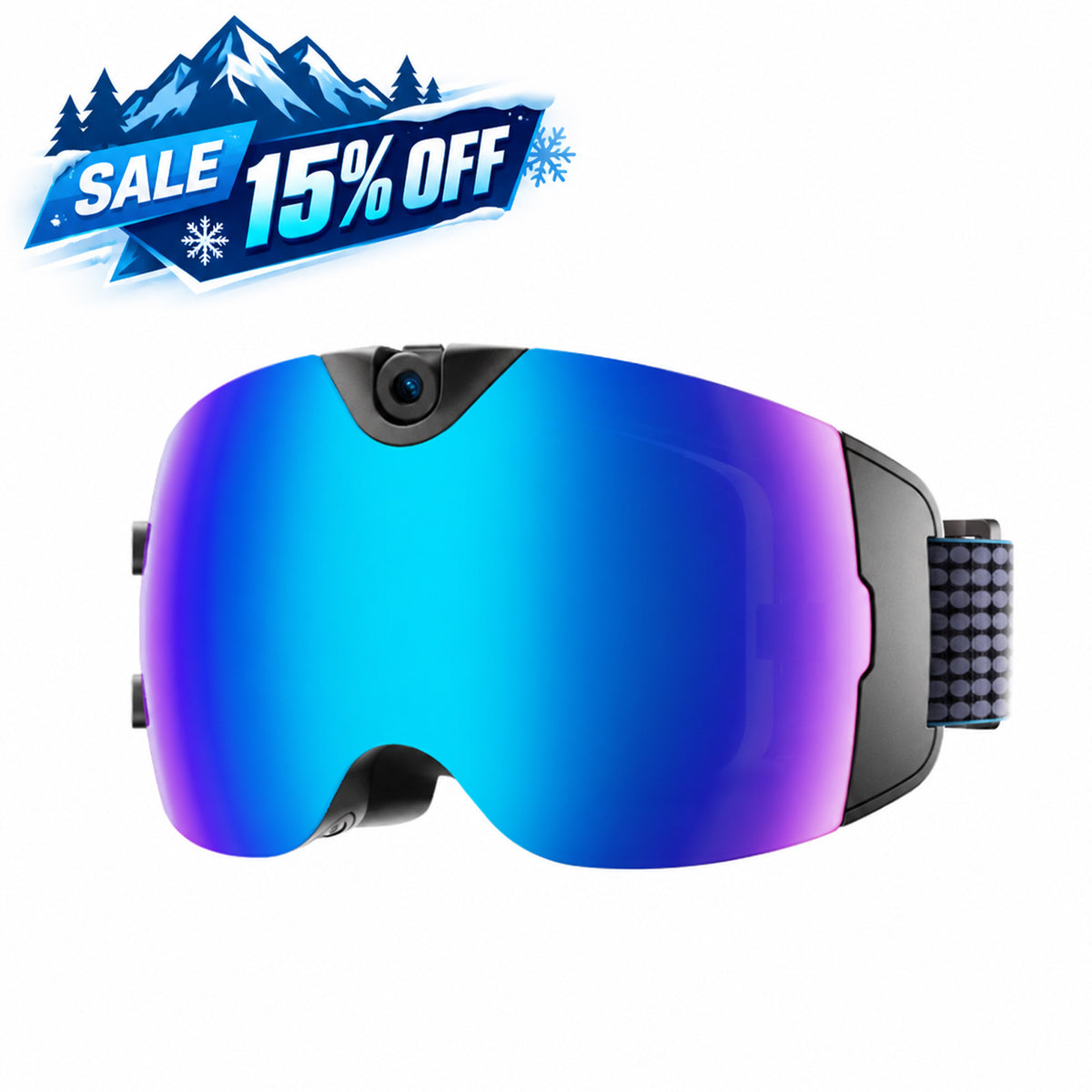
| Brave | 4K/30 fps video, built-in microphone, IPX4, published frame dimensions, 60 g listed weight | Documented camera candidate; published dimensions help a preliminary fit check |
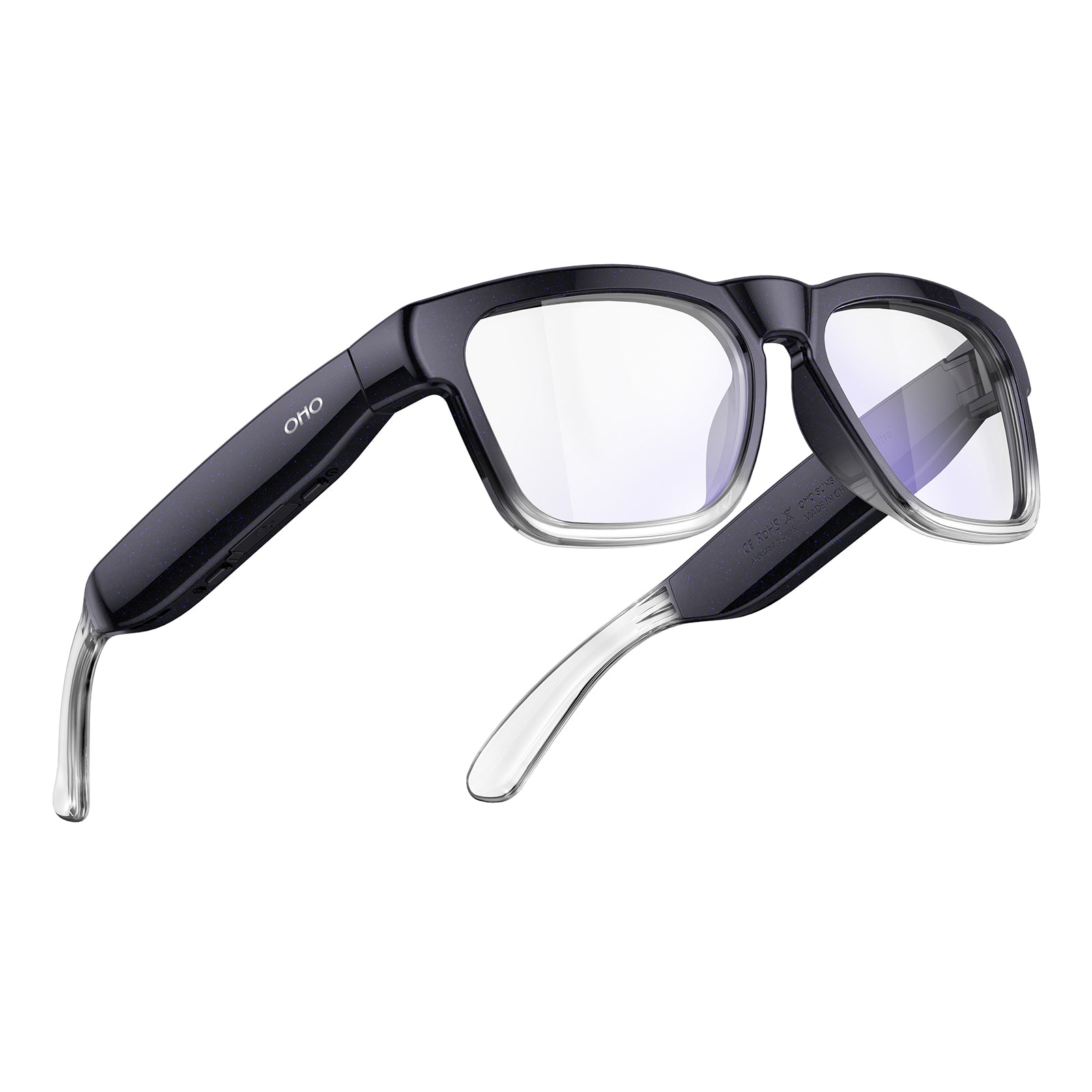
| GlobeEar | Bluetooth audio, AI translation, 10-hour listed battery; no supplied camera fact | Suited to audio and translation use, not a filming recommendation here |
If you want a documented 4K camera to run through the dry-fit and non-live clip test, our Edge Pro camera glasses list the lighter build of the two camera options, which some archers find easier to hold steady through repeated draws. Our Brave 4K camera glasses publish frame dimensions you can compare against your own face and anchor before drawing, which supports a more specific preliminary fit check, though it still does not replace the live clearance test. Neither product's listed specifications establish camera placement, stabilization performance, or bowstring clearance for your individual setup; that still requires the dry-fit sequence above.
For readers who actually want smart glasses with a camera and Bluetooth for translation and hands-free audio rather than a filming tool, the GlobeEar Bluetooth glasses document that function, but its supplied record does not include a camera or video-resolution spec, so it should not be treated as a filming solution for this use case. Browse our full camera glasses collection if you want to compare additional documented 4K options against the same checklist.
What to Do When the Sight Picture or Stability Test Fails
When the dry-fit or clip test does not pass, match your next step to what actually failed rather than abandoning the idea entirely. A partial failure often still leaves a narrower, still-useful option.
If the frame is offset from your intended sight reference but still shows your stance, draw, and follow-through clearly, keep using it for that narrower coaching purpose rather than discarding the footage. If the glasses, housing, or controls physically contact your anchor, release path, or string during the dry-fit, stop and do not proceed to live practice with that setup; that contact is a stop condition regardless of how good the image looks.
If your goal genuinely requires sight-picture fidelity, move to a separately positioned camera rather than continuing to force eyewear alignment, since the geometry problem described earlier does not resolve itself with a better lens. If the clip shows unstable footage during release, treat that clip as insufficient evidence and test a different mounting position or recording method before deciding the glasses are unsuitable altogether.
Conclusion
Use camera glasses for archery only after a non-live dry-fit and framing test passes: no contact with your anchor, release, or string, and a frame that actually shows what you need. They are not automatically a true eye-level sight recorder, and archery stability results do not extend to firearm recoil. Choose a documented camera model, run the test, and use a separately positioned camera when exact sight-picture fidelity is the goal.
FAQs
Can a coach use camera-glasses footage to judge an archer's sight picture?
Camera-glasses footage can help a coach review head movement, anchor consistency, release timing, and general form when those elements are visible in frame. It should not be treated as proof that the recorded frame matches the archer's exact eye-level sight picture. Pair it with a separately positioned reference camera when sight alignment itself is the coaching objective.
Are camera glasses automatically allowed at an archery or shooting range?
No, permission is not universal and should never be assumed. Ask the club, event organizer, or range officer before recording, and follow all range commands during setup and shooting, since local procedures always take priority over a filming plan.
Does camera-glasses success with archery predict performance under firearm recoil?
No. Successful, stable archery footage does not establish firearm-recoil tolerance, stabilization performance, or safety for that separate use case. Treat firearm filming as its own product- and range-specific evaluation, and do not live-test an unverified setup based on an archery result.


Laat een reactie achter
Deze site wordt beschermd door hCaptcha en het privacybeleid en de servicevoorwaarden van hCaptcha zijn van toepassing.