
















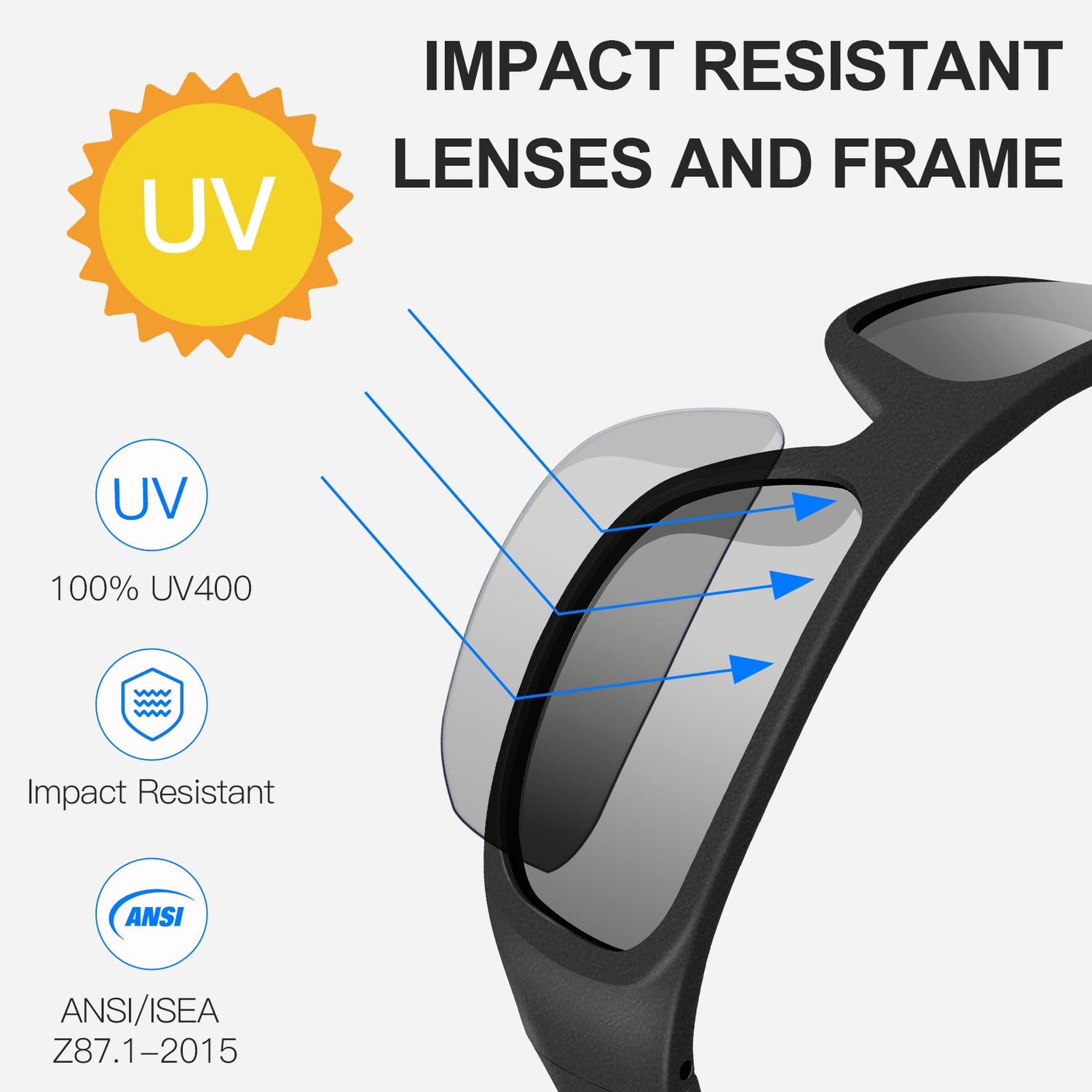
Le choix entre des verres polarisés et photochromiques dépend d’une seule question : votre principal problème est-il l’éblouissement dû aux reflets ou la variation de luminosité ? Les lunettes de soleil polarisées offrent un meilleur contrôle de l’éblouissement, tandis que les verres photochromiques conviennent mieux lorsque vous passez de conditions lumineuses à des conditions plus sombres. La bonne réponse dépend moins de l’étiquette que des endroits où vous portez le plus souvent vos lunettes.

Les verres polarisés et photochromiques en un coup d’œil
Les verres polarisés réduisent l’éblouissement provenant des surfaces planes et réfléchissantes. En termes simples, ils contribuent à atténuer la forte brillance de l’eau, du bitume, des capots et d’autres reflets lumineux, raison pour laquelle la mention polarisation anti-éblouissement est surtout importante lorsque la lumière réfléchie est gênante.
Les verres photochromiques ont une fonction différente. Ils s’assombrissent et s’éclaircissent lorsque la lumière ambiante change : ils sont donc conçus pour les personnes qui passent de l’intérieur à l’ombre, puis au soleil. Ils sont ainsi utiles lorsque la luminosité varie au cours de la journée, mais ne constituent pas pour autant un remplacement universel contre l’éblouissement.

Le choix est simple : si l’éblouissement dû aux reflets est le principal problème, commencez par des lunettes de soleil polarisées. Si le principal problème est la variation de luminosité, commencez par des verres photochromiques. Si vous êtes confronté aux deux situations, la suite de l’article vous aidera à trouver la solution la moins contraignante.
Comment fonctionnent les deux types de verres
Les verres polarisés réduisent l’éblouissement dû aux reflets
Les verres polarisés sont conçus pour filtrer les ondes lumineuses horizontales qui se réfléchissent sur les surfaces lisses. C’est pourquoi ils sont souvent particulièrement utiles sur les routes très éclairées, près de l’eau ou dans les environnements où les reflets créent une distraction visuelle intense. Leur avantage est pratique, pas magique : ils réduisent un type précis d’éblouissement, mais n’améliorent pas automatiquement chaque vue.
Pour choisir, c’est simple. Si l’éblouissement oblige vos yeux à faire davantage d’efforts, la polarisation répond au bon problème. Si votre principale difficulté vient de changements constants de luminosité, la polarisation seule ne suffit pas.
Les verres photochromiques s’adaptent aux variations de luminosité
Les verres photochromiques réagissent à l’intensité lumineuse en s’assombrissant ou en s’éclaircissant. Cela peut être pratique lorsque vous sortez d’un bâtiment, entrez au soleil, puis retournez à l’ombre. Pour de nombreux acheteurs, l’intérêt principal n’est pas d’obtenir un assombrissement maximal, mais de ne pas devoir changer de lunettes chaque fois que la lumière varie.
Cette commodité a toutefois ses limites. Le comportement photochromique varie selon la conception des verres et l’environnement, et la transition peut sembler plus lente ou moins marquée dans certains contextes que les acheteurs ne l’imaginent. Pour un usage quotidien, la vraie question est de savoir si les verres s’adapteront suffisamment bien à vos habitudes pour vous simplifier la vie.
Pourquoi une même paire ne peut pas résoudre tous les problèmes
Le contrôle de l’éblouissement et l’adaptation à la luminosité sont deux fonctions différentes ; le « meilleur » verre varie donc selon l’activité. Une paire qui semble idéale sur un sentier ensoleillé peut devenir gênante dans une routine de bureau où les écrans sont omniprésents. Une paire pratique pour faire des courses peut se révéler insuffisante lorsque les reflets constituent le principal problème.
C’est pourquoi comparer les verres polarisants aux verres photochromiques ne revient pas à déterminer lequel est toujours gagnant. Il s’agit d’une décision fondée sur l’usage. Plus vous connaissez précisément votre environnement principal, plus le choix devient facile.
À quelles situations chaque type de verre convient-il le mieux ?
| Situation | Verres polarisants | Verres photochromiques |
|---|---|---|
| Conduite | Généralement mieux adaptés pour contrôler l’éblouissement, surtout face aux reflets intenses en journée | Meilleurs si votre journée comprend de fréquents passages entre l’extérieur et l’intérieur, mais l’assombrissement dans la voiture peut être limité |
| Vélo | Utiles lorsque les reflets de la chaussée et de la circulation sont la principale gêne | Souvent mieux adaptés aux sorties qui alternent entre soleil et ombre |
| Ski / neige | Très efficaces contre l’éblouissement intense, mais le compromis concernant la visibilité de la glace est important | Utile lorsque la luminosité en montagne varie souvent et que le confort compte davantage que la filtration des reflets |
| Écrans / appareils | Peuvent créer des problèmes de visibilité sous certains angles | Généralement plus faciles à utiliser avec des écrans que les verres polarisants, même si la teinte des verres compte toujours |
| Routine intérieur-extérieur | Moins pratique si vous passez constamment de l’intérieur à l’extérieur | Souvent l’option la plus pratique avec une seule paire |
| Utilisation mixte | Idéal lorsque l’éblouissement est le vrai problème la plupart du temps | Idéal lorsque le confort et les variations de luminosité sont prioritaires |
Le tableau ci-dessus est un point de départ, pas un classement universel. Le meilleur verre est celui qui correspond à votre environnement le plus fréquent. Si vous passez principalement vos journées dehors dans une lumière très éblouissante, les verres polarisants l’emportent généralement. Si vous alternez constamment entre intérieur et extérieur, les verres photochromiques sont généralement plus faciles à vivre au quotidien.
Conduite, vélo et conditions neigeuses
Conduite et éblouissement diurne
Pour conduire de jour, les verres polarisants font généralement la différence la plus visible, car ils sont précisément conçus pour réduire l’éblouissement de la route. C’est particulièrement utile lors des trajets ensoleillés, sur chaussée mouillée et sur les itinéraires où la lumière réfléchie est abondante.
Les verres photochromiques peuvent rester intéressants pour les conducteurs qui passent du temps à entrer et sortir de leur voiture, mais la voiture elle-même change la donne. Les verres photochromiques classiques restent souvent clairs ou s’assombrissent mal à l’intérieur d’un véhicule, car le pare-brise bloque une grande partie des UV qui activent le changement de teinte. C’est pourquoi un verre qui paraît polyvalent sur le papier peut se révéler décevant au volant.
Si vous utilisez principalement vos lunettes pour conduire, réfléchissez à la source de l’éblouissement. À l’extérieur de la voiture, les verres photochromiques peuvent sembler pratiques ; à l’intérieur, les verres polarisants offrent souvent un résultat plus prévisible.
À vélo entre soleil et ombre
C’est en cyclisme que la comparaison dépend le plus de la situation. Au cours d’une même sortie, les cyclistes passent souvent du plein soleil à l’ombre des arbres, aux passages supérieurs et à l’ombre urbaine ; les changements de luminosité peuvent donc devenir plus gênants qu’une luminosité vive constante. C’est pourquoi les verres photochromiques sont souvent pratiques pour les sorties dans des conditions mixtes.
Les verres polarisés peuvent tout de même être utiles si les reflets du bitume, des voitures ou des surfaces mouillées sont votre principal problème. Le compromis est que le cyclisme implique aussi, pour de nombreux cyclistes, l’utilisation d’écrans et de compteurs de vélo, et que les verres polarisés peuvent rendre les affichages LCD et LED plus difficiles à lire selon l’angle. Si votre sortie dépend de consultations rapides de l’écran, cet aspect compte davantage que le bénéfice contre l’éblouissement.
Une règle pratique : si vous remarquez des changements constants de luminosité, les verres photochromiques sont généralement les plus simples. Si vous êtes davantage gêné par les reflets intenses et dépendez rarement des écrans, les verres polarisés peuvent être le meilleur choix.
Ski, neige et lumière en montagne
La neige change la donne, car la lumière vive réfléchie est fréquente et peut être intense. Les verres polarisés peuvent être utiles dans ce cas, mais le compromis concernant la détection de la glace est important : en réduisant les reflets de la surface, ils peuvent rendre les plaques verglacées plus difficiles à repérer sur les routes ou les pistes de ski.
C’est pourquoi le ski ne justifie pas systématiquement le choix de verres polarisés. Si vous cherchez surtout à atténuer l’éblouissement, les verres polarisés sont utiles. Si vous voulez davantage de flexibilité lorsque les nuages, l’ombre et le soleil se déplacent sur la montagne, les verres photochromiques peuvent être plus pratiques.
Pour la neige et la montagne, demandez-vous quel élément compte le plus pour vous : réduire l’éblouissement ou préserver le contraste de la surface. La réponse indique généralement plus rapidement le verre le mieux adapté que le discours des marques.
Écrans, intérieur et usages mixtes
Les verres polarisés sont ceux qui posent le plus souvent problème avec les téléphones, les appareils GPS, les tableaux de bord et les ordinateurs portables. Harvard indique que les lunettes de soleil polarisées peuvent nuire à la visibilité des écrans et affichages LCD et LED selon l’angle. Si vous passez beaucoup de temps à consulter des appareils, cet inconvénient peut l’emporter sur le bénéfice contre l’éblouissement extérieur.
Les verres photochromiques sont généralement plus pratiques dans les routines alternant intérieur et extérieur, car ils sont conçus pour s’adapter aux changements de luminosité plutôt que pour filtrer un éblouissement constant. Ils sont donc intéressants pour les trajets domicile-travail, les courses et le quotidien, lorsque vous ne voulez pas changer constamment de lunettes.
Un rapide auto-diagnostic peut vous aider ici : si vos lunettes passent plus de temps près des écrans qu’en plein soleil, les verres photochromiques sont souvent le choix le plus sûr. Si elles sont davantage exposées à une lumière vive réfléchie qu’aux appareils électroniques, les verres polarisés conviennent généralement mieux.
Comment choisir le bon verre
Avant d’acheter, vérifiez ces cinq points :
- Quel est mon principal usage : conduite, cyclisme, ski ou port quotidien ?
- Ce qui me gêne le plus, est-ce l’éblouissement réfléchi ou la luminosité changeante ?
- Est-ce que je passe beaucoup de temps à regarder des téléphones, des tableaux de bord ou des ordinateurs portables ?
- Est-ce que j’entre et sors assez souvent des bâtiments pour qu’une seule paire soit plus pratique ?
- Est-ce que je choisis séparément la bonne protection UV, indépendamment du type de verres ?
La vérification de la protection UV est importante, car le filtrage des UV est distinct de la polarisation et de la teinte. Un verre foncé ne correspond pas automatiquement aux spécifications de sécurité appropriées.
Les verres hybrides qui combinent polarisation et comportement photochromique existent, mais ils sont propres à certains modèles plutôt que la solution par défaut. Considérez-les comme une option à vérifier avant l’achat, surtout si vous voulez qu’une seule paire couvre à la fois l’éblouissement, les variations de luminosité et la commodité au quotidien.
Choisissez des lunettes de soleil polarisées lorsque l’éblouissement est le principal problème, et des verres photochromiques lorsque les changements de luminosité et la commodité comptent davantage. Si vous hésitez encore, comparez votre journée la plus courante, et non la plus rare, puis laissez-la guider votre choix de verres.
FAQ
Quelle est la différence entre les verres polarisés et photochromiques ?
Les verres polarisés réduisent l’éblouissement réfléchi, tandis que les verres photochromiques s’adaptent aux variations de luminosité. Pour vous en souvenir facilement, pensez à éblouissement contre adaptation. Si les reflets vous gênent, les verres polarisés sont généralement plus adaptés. Si les conditions lumineuses changent constamment, les verres photochromiques sont souvent plus logiques.
Les verres polarisés sont-ils meilleurs pour conduire ?
Ils sont souvent plus efficaces contre l’éblouissement diurne, car ils ciblent directement la lumière réfléchie. En revanche, ils peuvent rendre certains écrans et tableaux de bord plus difficiles à lire, et ils ne conviennent pas à toutes les conditions de conduite. Si vous conduisez principalement de jour avec de fortes réflexions, les verres polarisés constituent généralement le meilleur point de départ.
Les verres photochromiques en valent-ils la peine pour le cyclisme ?
Souvent oui, si vos trajets alternent entre soleil et ombre et que vous voulez une seule paire qui s’adapte au parcours. Ils sont moins intéressants si vous utilisez beaucoup les compteurs de vélo ou les écrans de téléphone, ou si vous recherchez le filtrage de l’éblouissement le plus puissant possible. Le facteur décisif est de savoir si vous accordez plus d’importance à la commodité ou à la lisibilité des écrans.
Peut-on avoir des verres photochromiques polarisés ?
Parfois, mais vous devez vérifier la conception exacte des verres au lieu de supposer que toutes les combinaisons existent. Les verres hybrides sont généralement propres à chaque modèle, et non une norme universelle. Si vous voulez bénéficier des deux avantages, vérifiez que la paire choisie combine réellement l’adaptation à la lumière et la polarisation, plutôt qu’une seule de ces fonctions.
Les verres polarisés fonctionnent-ils bien avec les écrans ?
Pas toujours. Elles peuvent donner aux écrans LCD et LED un aspect sombre ou déformé sous certains angles, c’est pourquoi les utilisateurs qui regardent souvent des écrans remarquent rapidement cet inconvénient. Si vous utilisez souvent vos appareils à l’extérieur ou en voiture, testez d’abord l’angle de vision ou choisissez un type de verre moins susceptible d’interférer avec les écrans.


Laisser un commentaire
Ce site est protégé par hCaptcha, et la Politique de confidentialité et les Conditions de service de hCaptcha s’appliquent.