














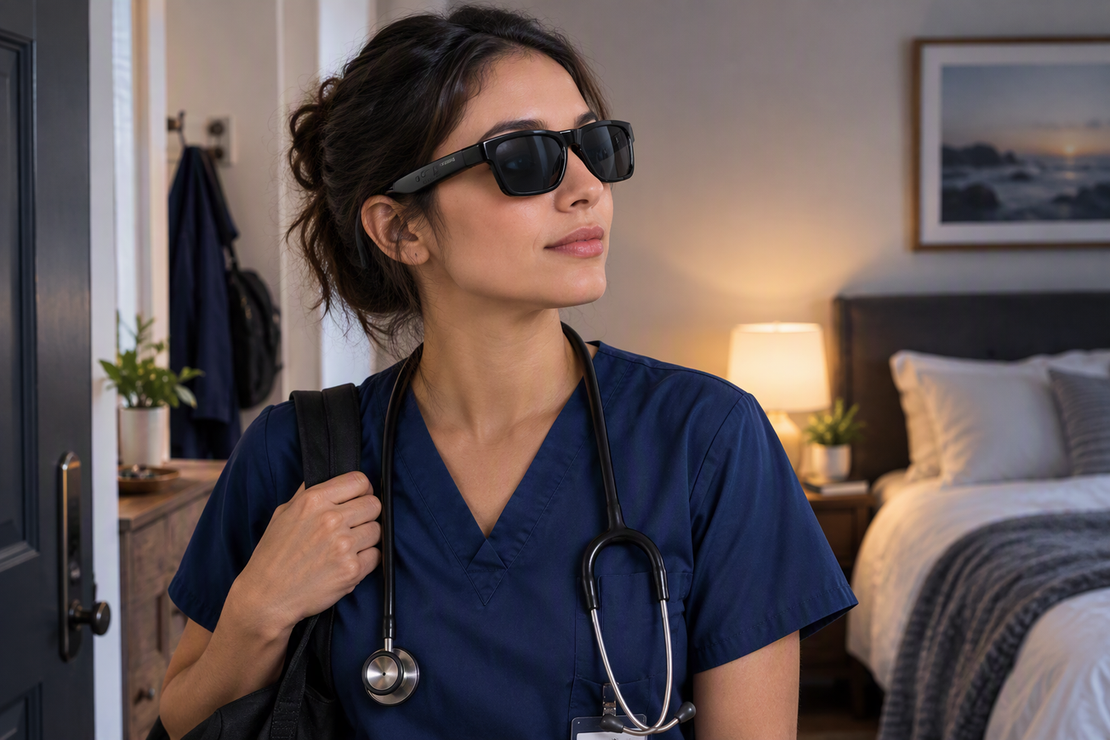
Blue light filter glasses may help some night-shift nurses ease into daytime sleep, but the research doesn't back a guaranteed benefit, and AI, Bluetooth, or camera features add convenience rather than proven sleep effects. The strongest studies on commercial blue-light lenses show no reliable improvement in sleep quality, so wearing them is a personal experiment, not a treatment. What matters more for the ride home is staying alert enough to get there safely.
What the evidence says about blue light after a night shift
Reducing morning light exposure may support a smoother transition toward daytime sleep, but that idea comes from circadian biology, not a proven fix. Commercial blue light filtering glasses have not been shown to reliably improve sleep quality in controlled research.
Why morning light matters before daytime sleep
Light has a strong influence on the body's internal clock. When morning light hits the retina after a night shift, it triggers hormonal signals that tell the body to start daytime alerting processes, and blue light is the wavelength component of daylight with the strongest effect on that signal, according to NIOSH shift work guidance. For a nurse walking out into sunrise or midmorning light, that means the same light that helped patients wake up for the day is working against the nurse's attempt to wind down. Reducing that light exposure on the way home is a reasonable idea to test, not a promise that it will work for everyone. The practical goal is simple: cut down on bright light between leaving the hospital and getting into bed, without assuming a specific lens or gadget guarantees the result.
What blue-light glasses research can show, and cannot show
A Cochrane review of 17 randomized controlled trials found that spectacles marketed to filter blue light probably make no difference to eye strain, eye health, or sleep quality, and the reviewers described the evidence as inconclusive and uncertain because the studies used different lenses and had limited follow-up. That doesn't prove the glasses never help anyone, but it does mean no consumer brand can honestly promise a sleep benefit based on today's research. Healthcare night-shift workers have been studied directly: one peer-reviewed project evaluated ICU night-shift healthcare workers during the pandemic. That study confirms nurses and similar workers are a relevant population for this question, but it does not validate any specific consumer model sold today, including AI-enabled or photochromic glasses. Our blue-light glasses evidence breakdown goes deeper into who is most likely to notice a difference and why product marketing often outruns the data. The bottom line for this section: a cautious trial of reduced morning light is reasonable, but no AI label, photochromic tint, or generic "blue light blocking" claim currently proves a sleep outcome.

How nurses should judge smart glasses for the commute
The commute decision splits into two separate questions: is the reader trying to reduce morning light, or mainly looking for hands-free audio and communication? Answering both correctly means checking safety and lens facts before any smart feature enters the picture.
Separate sleep evidence from hands-free convenience
A hands-free family call on the way home solves a different problem than reducing morning light, and neither one proves the other works. Open-ear Bluetooth audio, voice control, or AI translation can make a permitted call easier to manage while driving or walking to a parked car, but none of those functions have anything to do with circadian timing or melatonin. If the goal is a quick call to say the shift is over, that's a communication convenience, not a sleep intervention. Before relying on any smart glasses for that call, confirm the phone pairs correctly, the app supports the intended feature, and the account is set up ahead of time. A feature that only works after a software update or account login is not useful at 7 a.m. after a 12-hour shift.
Check the lens, fit, visibility, and workplace rules
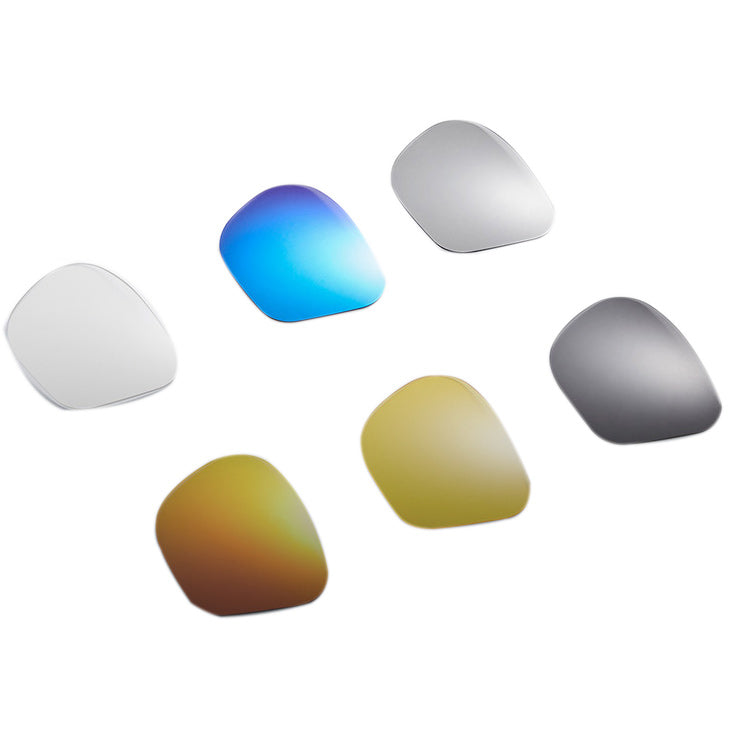
The single most useful check is asking for actual lens transmission data, not a marketing label. "AI," "photochromic," or "UV protection" on a spec sheet says nothing about which wavelengths the lens blocks or how much. A short, ordered checklist keeps the buying decision honest:
- Ask for wavelength-specific transmission or comparable lens performance data instead of trusting AI, photochromic, or generic blue-light wording alone.
- Confirm prescription compatibility, frame comfort, and clear vision on the actual morning route before relying on the glasses daily.
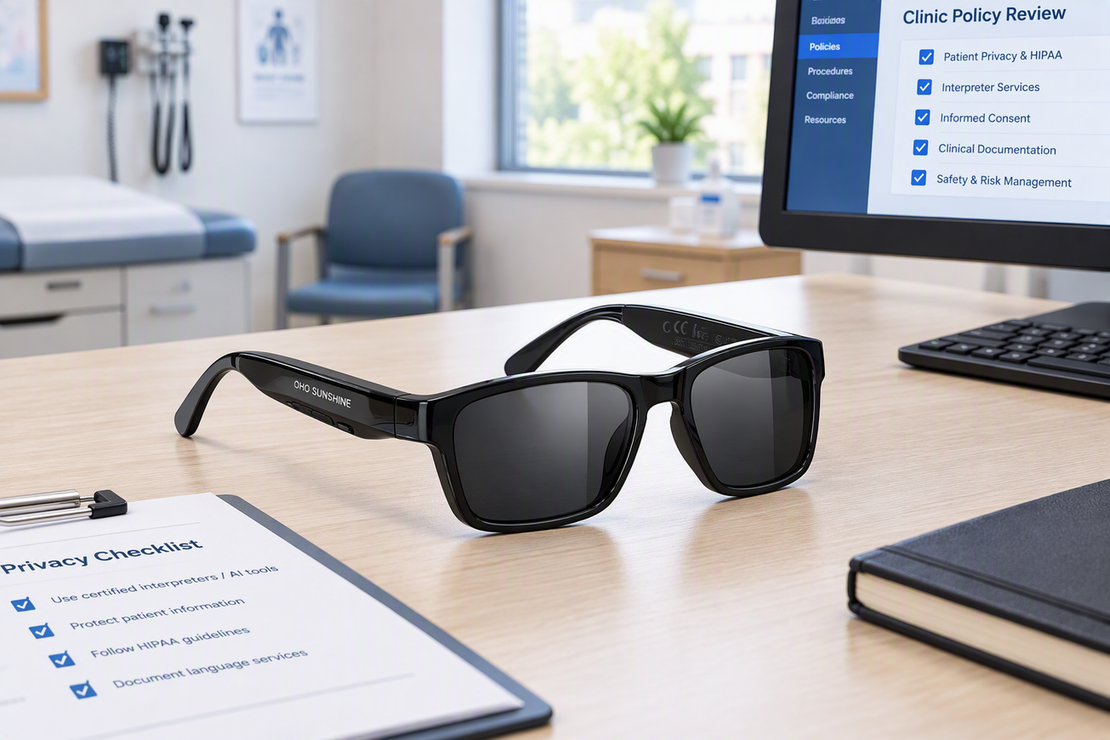
- Verify whether audio, microphones, cameras, and Bluetooth devices are allowed in the specific hospital unit or during the commute, since hospital privacy and workplace rules vary.
- Do not drive while dangerously sleepy, and do not treat dark lenses as a fix for that fatigue. NIOSH specifically notes that dark sunglasses after a night shift can raise drowsy-driving risk, and the safer approach is to use them only when someone else is driving.
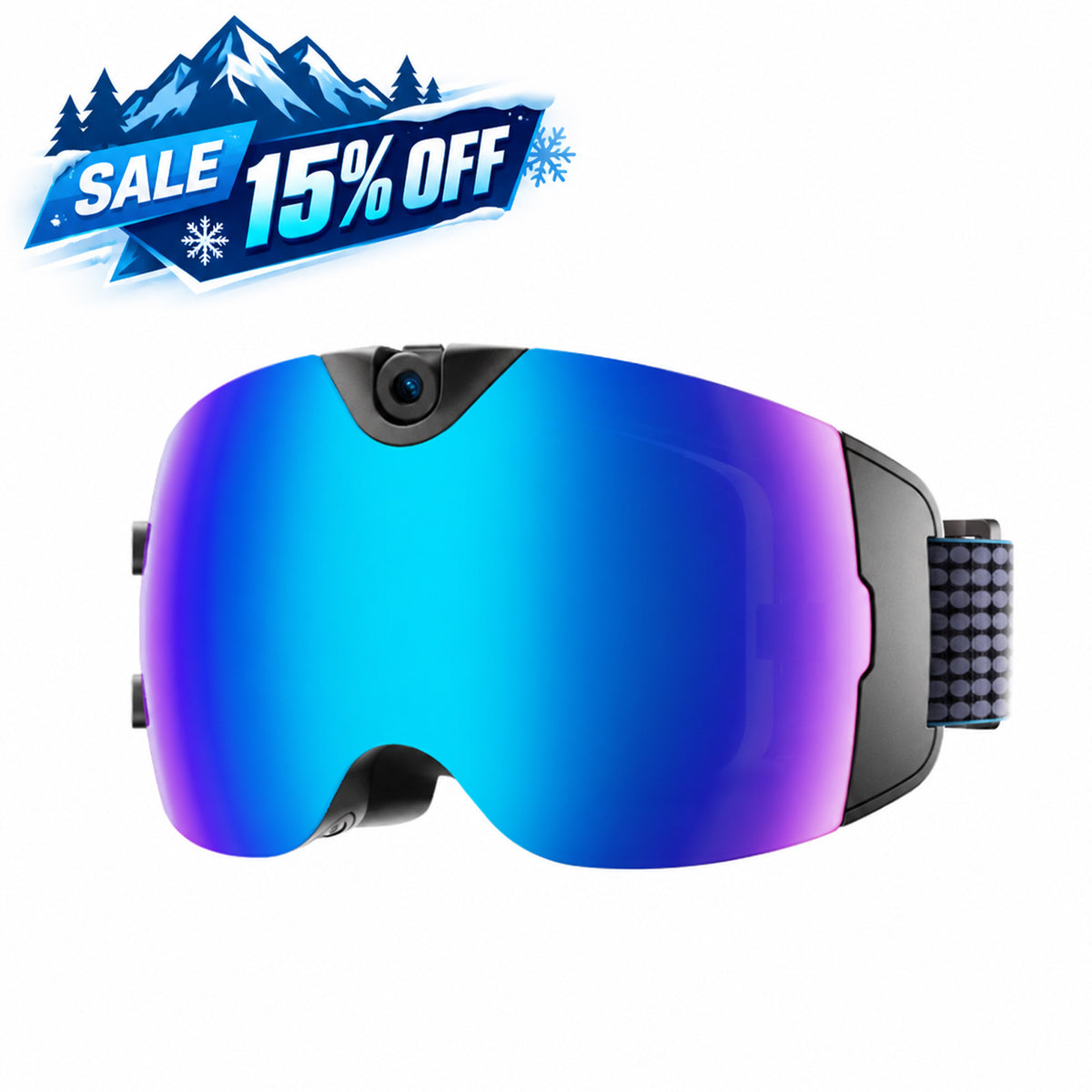
If a camera feature matters for a different scenario, such as recording a commute or a family event, the camera glasses collection shows current options, but recording features raise their own workplace and privacy questions that need separate confirmation.
Where the Elingo smart glasses fit, and where they do not
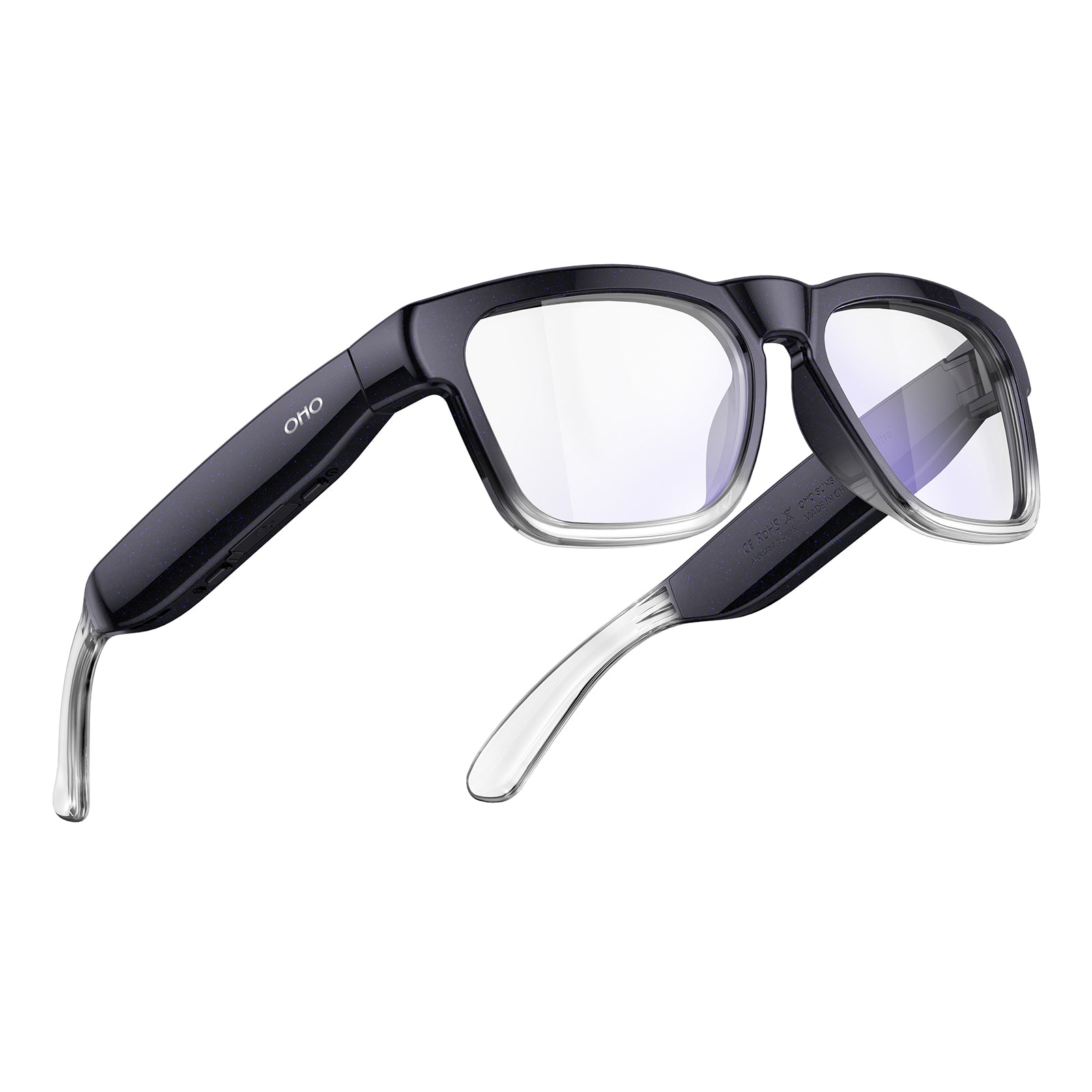
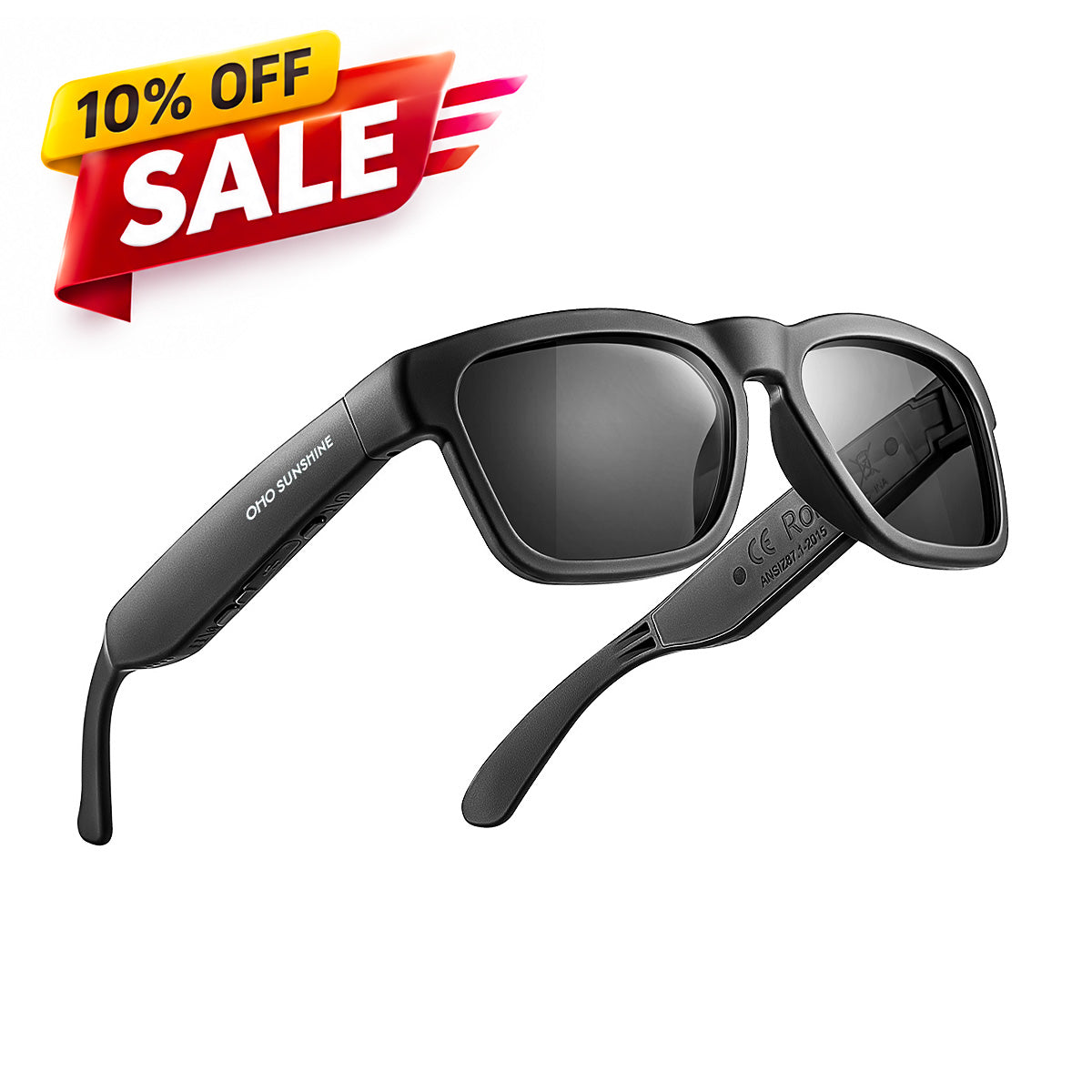
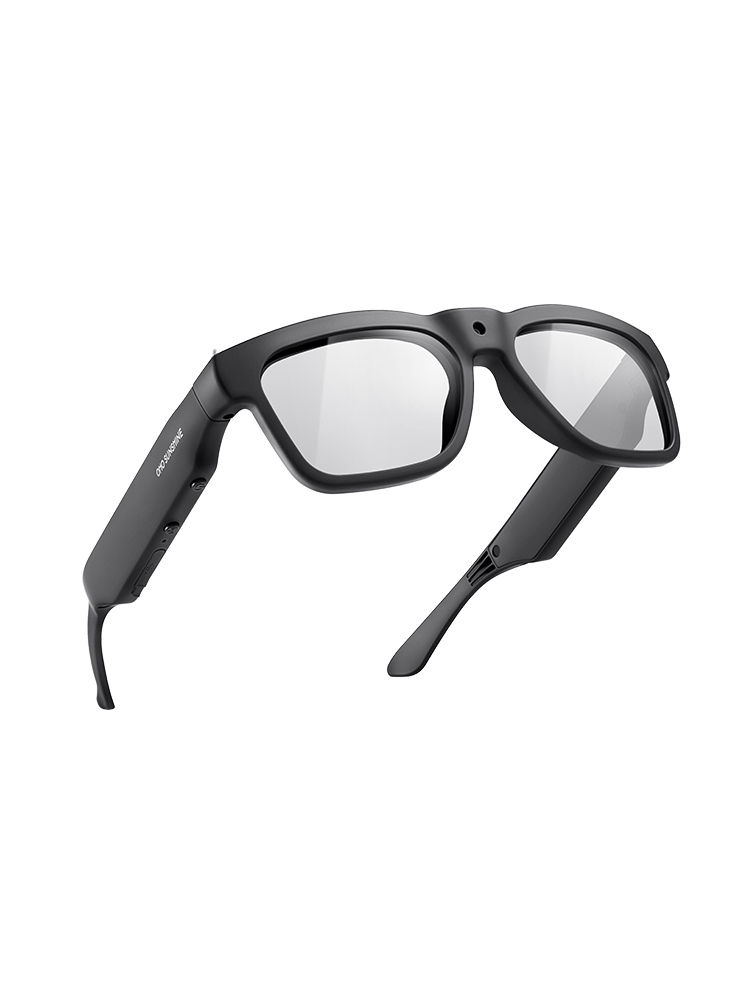
The Elingo smart AI glasses are documented with photochromic lenses, open-ear Bluetooth audio, voice control, and real-time AI translation, built for scenarios like driving and daily commuting. Those are real, supported features for a nurse who wants a hands-free call or an easier way to communicate on the way home, and the open-ear speaker design leaves more ambient sound audible than sealed earbuds. However, photochromic lenses adjust to overall ambient brightness rather than targeted blue wavelengths, and this model does not provide verified blue-light filtration or clinical sleep benefits. A nurse who wants AI smart glasses mainly for hands-free translation or bluetooth smart glasses convenience on the drive home has a supported reason to consider this pair. A nurse whose main goal is testing whether reduced morning light helps daytime sleep should treat that as a separate, unproven experiment rather than a reason to buy this specific model.

FAQs
Do blue-light-filtering glasses improve daytime sleep after a night shift?
No reliable, universal improvement has been established. A Cochrane review of randomized trials found that blue-light-filtering spectacles probably make no difference to sleep quality, so any use should be treated as a cautious personal trial rather than a guaranteed fix.
Can AI or Bluetooth features make smart glasses better for sleep?
No. AI translation, Bluetooth audio, voice control, and camera functions are convenience features, not evidence of lens performance. They may help with a permitted hands-free call or translation task, but they don't change what the research says about sleep quality.
When might a night-shift nurse reasonably use filtered glasses?
A reasonable window is right after leaving work, on the way home, when visibility on the route is still adequate and the nurse isn't dangerously sleepy behind the wheel. NIOSH notes that dark glasses can worsen drowsy driving, so the safer choice when fatigue is high is to have someone else drive rather than rely on tinted lenses.
What should nurses verify before buying smart glasses for the commute?
Check wavelength-specific lens data instead of marketing labels, confirm prescription fit and comfort, test visibility on the actual route, and verify phone or app compatibility for any audio or translation feature. Also confirm the hospital's rules on cameras, microphones, and Bluetooth devices before assuming a feature is allowed on shift or during the commute.


Dejar un comentario
Este sitio está protegido por hCaptcha y se aplican la Política de privacidad de hCaptcha y los Términos del servicio.