



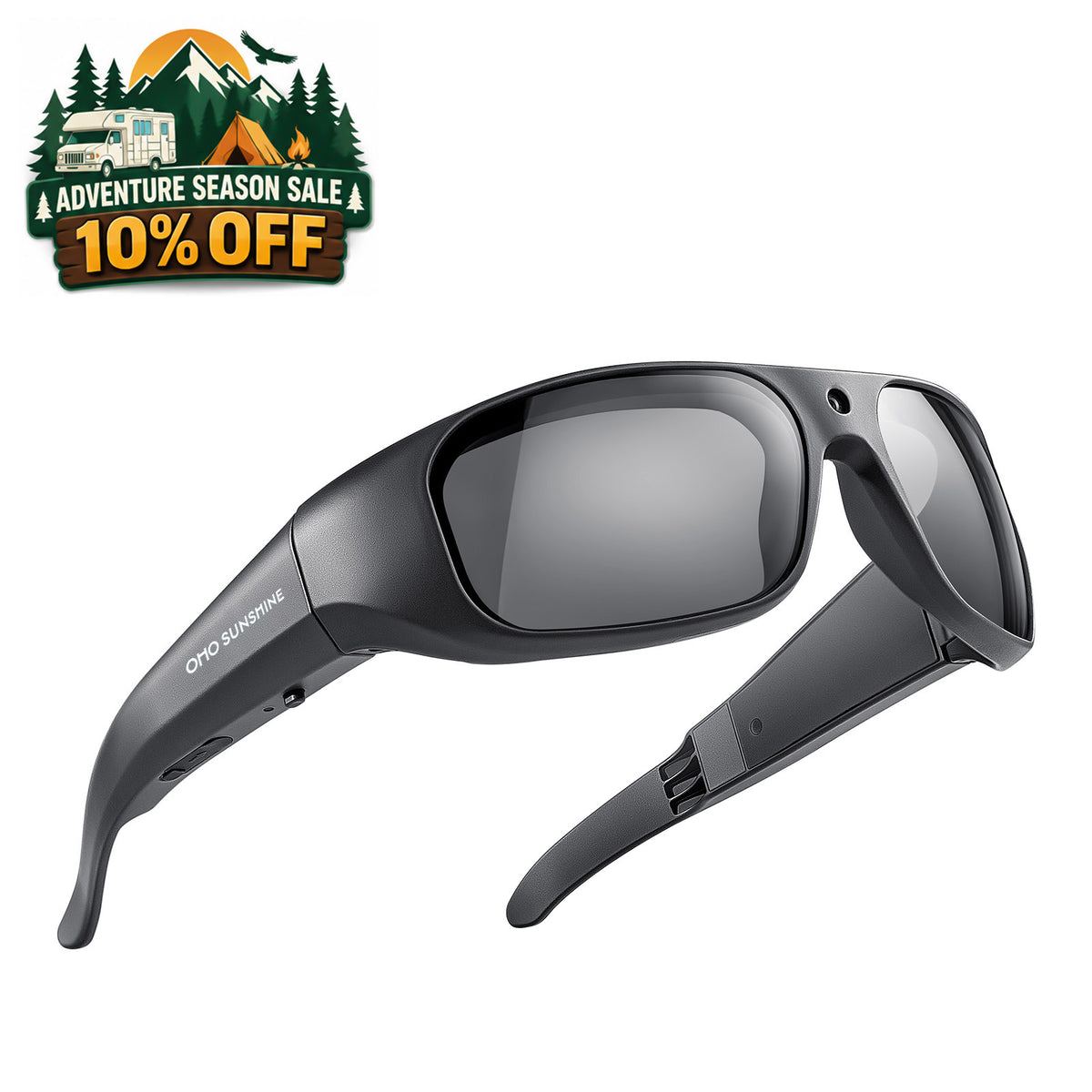


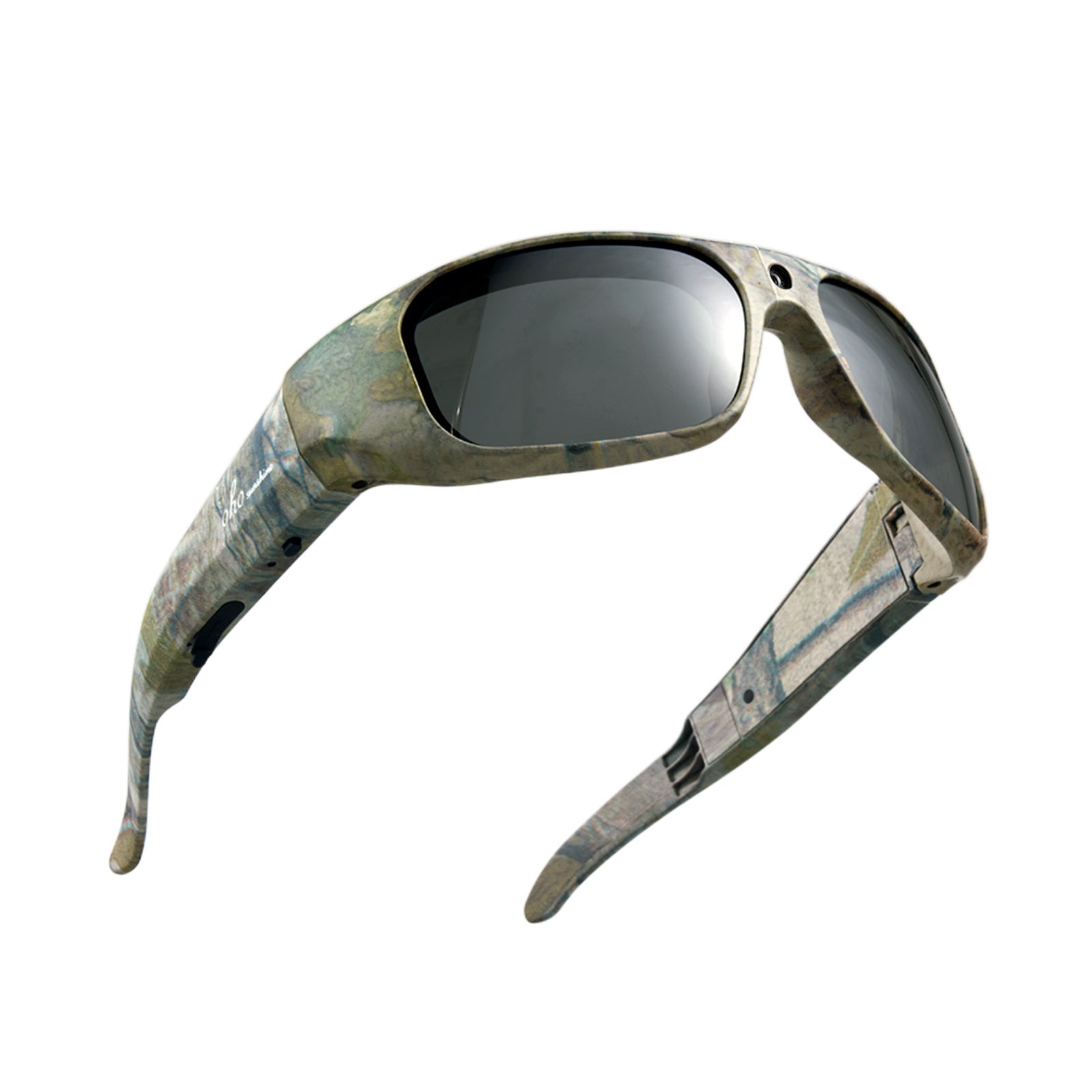


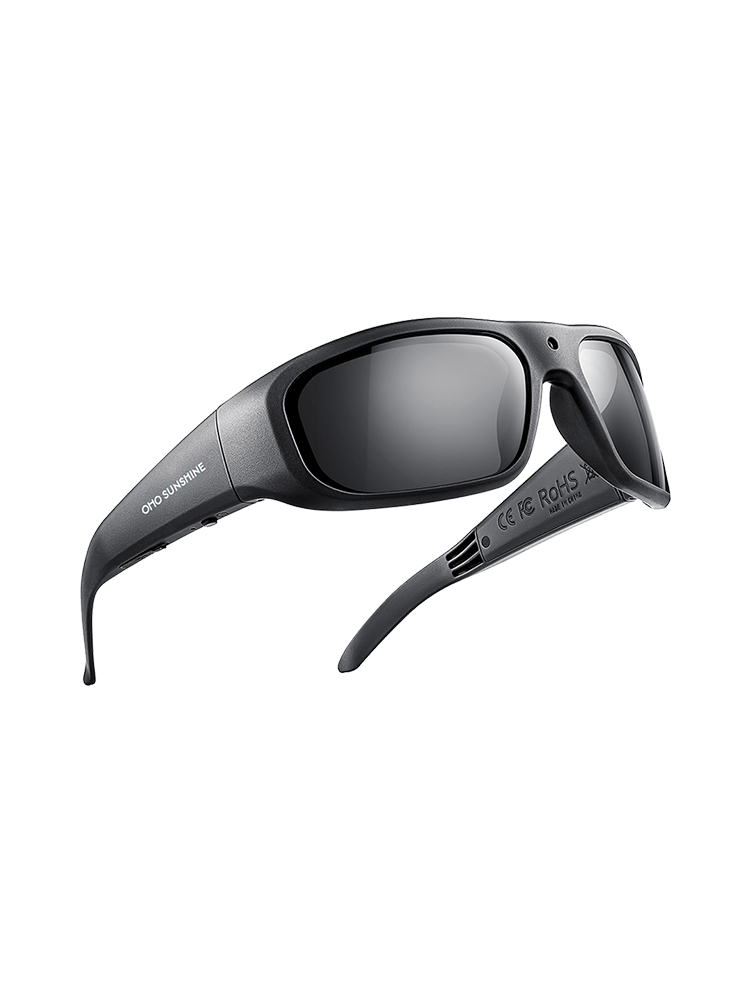


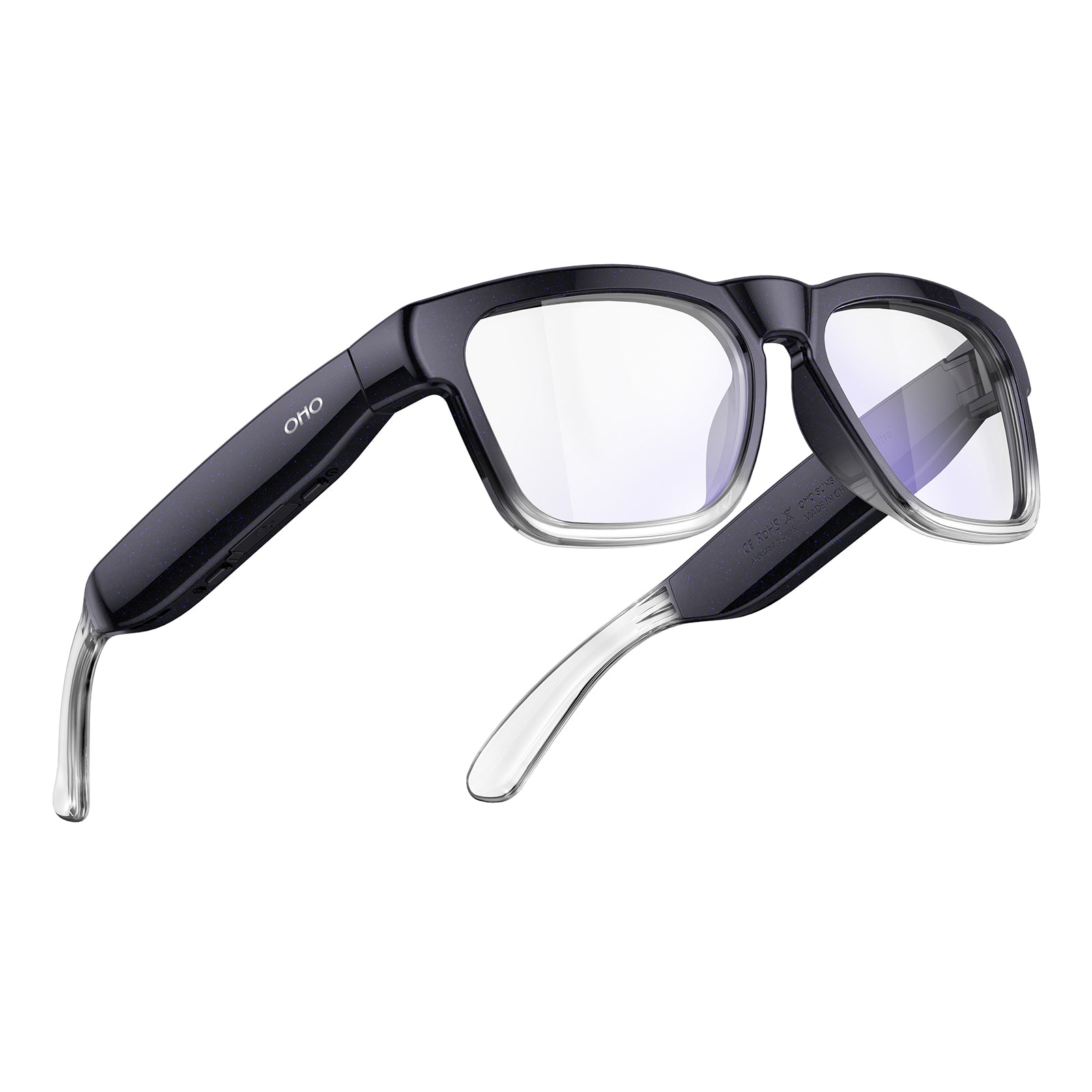




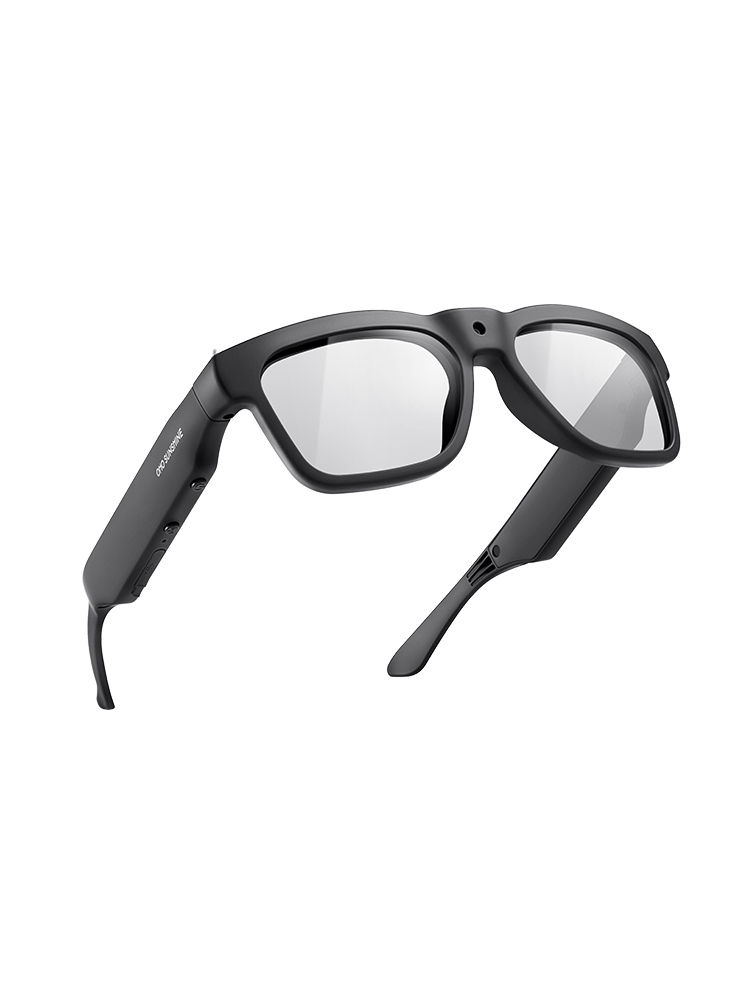


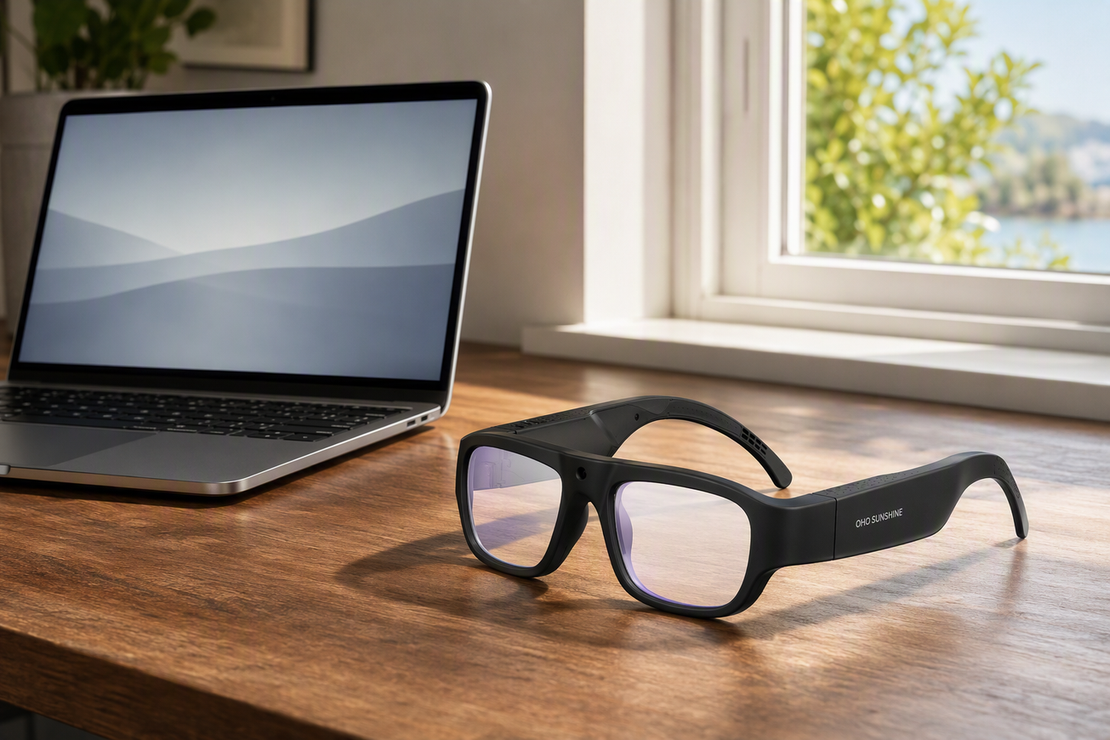
If you have a round face, which generally has curved lines, similar width and length proportions, and few pronounced angles, angular, rectangular, or geometric frame fronts usually give the strongest visual contrast, though rounded frames still work when their measurements fit. Choosing glasses for a round face comes down to frame width, bridge width, lens size, and temple length, not just face shape. Before you order smart glasses online, compare those measurements against a pair you already wear comfortably, then check how camera or Bluetooth hardware affects fit. This guide covers frame shape as a starting point, how to choose smart glasses for a round face using product-page measurements, and how camera glasses or smart Bluetooth sunglasses change the checklist.
What frame shapes work best for a round face?
A round face for glasses purposes generally means curved lines with similar width and length, without many sharp angles. Angular, rectangular, and geometric frame fronts are a strong starting shortlist for adding contrast, though rounded frames stay in play when you like the look and the fit checks pass.

Start with contrast, not a face-shape rule
Face shape is a styling hint, not a strict rule for glasses for a round face. Structured lines, like a squared-off top edge or a straight brow bar, create contrast against curved cheeks and a rounded jaw. That is why angular, rectangular, and geometric frames often get recommended first, according to this round-face frame guidance: they add definition where the face has little. But contrast is a preference, not a requirement. If you like the way rounded frames look on you, and the width and bridge measurements fit properly, no rule rules them out. Personal taste and real fit both belong in this decision.
Compare four frame directions
Each frame direction has a typical visual effect and its own fit check worth confirming before you shortlist it.
| Frame direction | Usual visual effect on rounded lines | Fit checks that can keep or reject it |
|---|---|---|
| Angular | Strongest contrast, adds sharp definition | Check overall width and bridge fit; watch for corners pressing at the temples |
| Rectangular | Adds horizontal structure and visual length | Check total front width and lens coverage against your face |
| Geometric | Controlled contrast with less common shapes | Check bridge and lens proportions carefully since shapes vary widely |
| Rounded | Softer continuity with round facial lines | Keep only if width and bridge measurements stay secure and proportionate |
The path below shows how a frame shape moves from a style pick to a confirmed shortlist item, checking width, bridge, lens size, and hardware placement along the way rather than stopping at looks alone.
Which measurements should you check before ordering smart glasses?
When comparing smart glasses for a round face, check five numbers before you order: lens width, bridge width, temple length, lens height, and overall frame width. Use a pair you already wear comfortably as your baseline, then match those same numbers on the product page.
Start with the size string
Check the inside of your current glasses' arm pieces for a short string of numbers, usually separated by squares or dashes. The first number is lens width, the second is bridge width, and the third is temple length, all in millimeters. If your smart glasses do not list a size string in the same format, or you do not have a comparison pair handy, measure your existing frames directly or contact the retailer, as recommended in this guide to reading glasses measurements. Our smart glasses fit guide covers bridge contact, temple pressure, and weight balance in more detail if you want to check comfort beyond these three numbers.
Compare front width and bridge first
Overall frame width tells you whether the sides will clear your temples without pressing in. Bridge width, along with the product photos, shows whether the frame can rest securely on your nose without sliding or digging in. There is no universal millimeter cutoff that works for everyone, so treat these two numbers as a comparison against your reference pair rather than a fixed rule. If the smart glasses list a front width or bridge width noticeably wider or narrower than your comfortable pair, expect a different fit.
Treat lens size as a secondary check
Lens width and height affect coverage and the overall look of the frame, but they should not override a front-width or bridge mismatch. A lens size you like on a frame that is too wide or too narrow at the bridge will still fit poorly. Clear lenses, tinted lenses, and sunglass-style frames differ mainly in coverage, so check lens height specifically when you want fuller eye coverage, such as with smart Bluetooth sunglasses used outdoors.
Use one measurement-verification checklist
Before adding smart glasses to your cart, run through this short checklist using your reference pair and the product page:
- Record your comfortable pair's lens width, bridge width, and temple length from the arm size string.
- Add your comfortable pair's overall frame width and lens height if you can measure them.
- Copy the same five measurements from the smart-glasses product page, using the same units.
- Flag any measurement that is missing, unlabeled, or defined differently, and confirm it before ordering.
How do camera and Bluetooth components change the fit check?
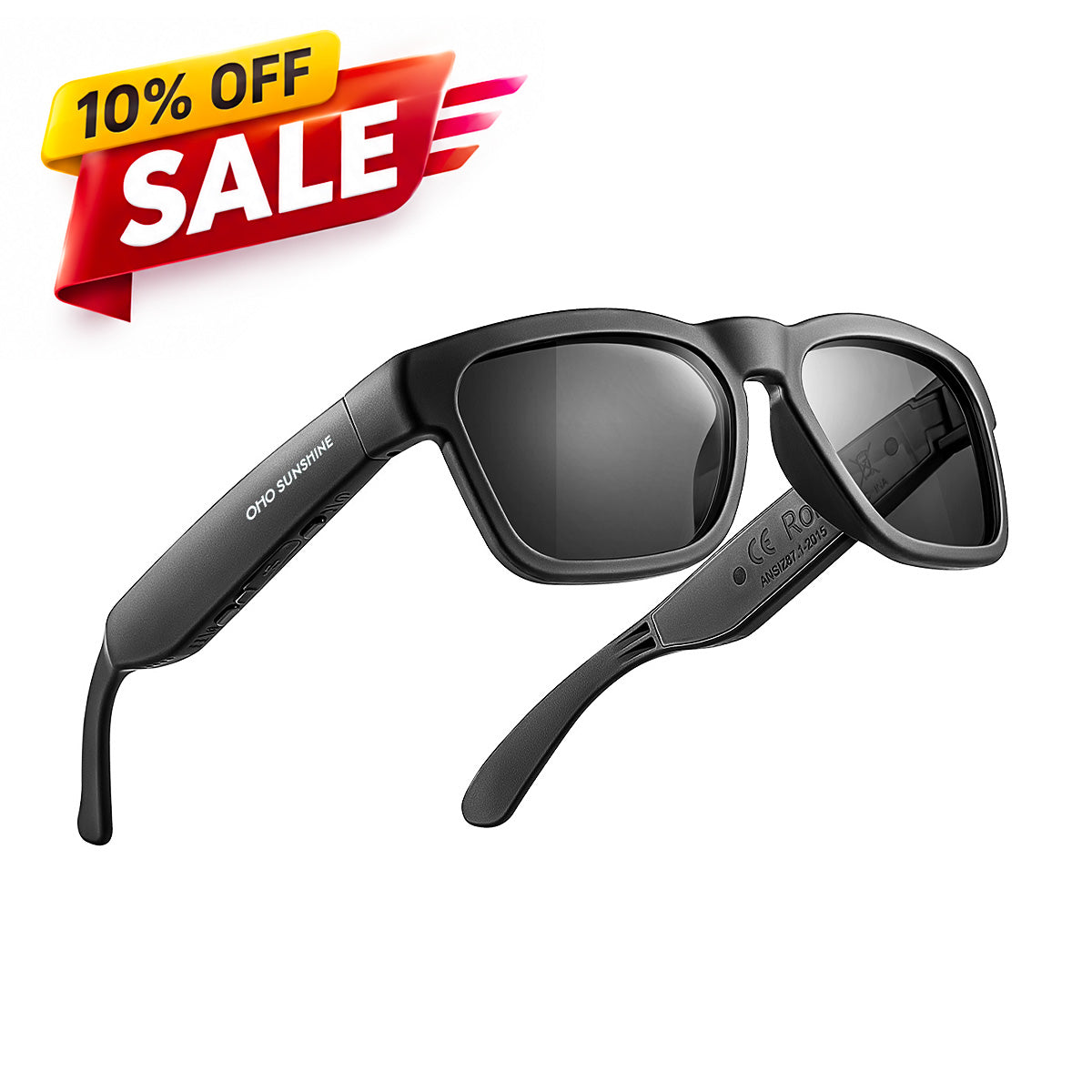
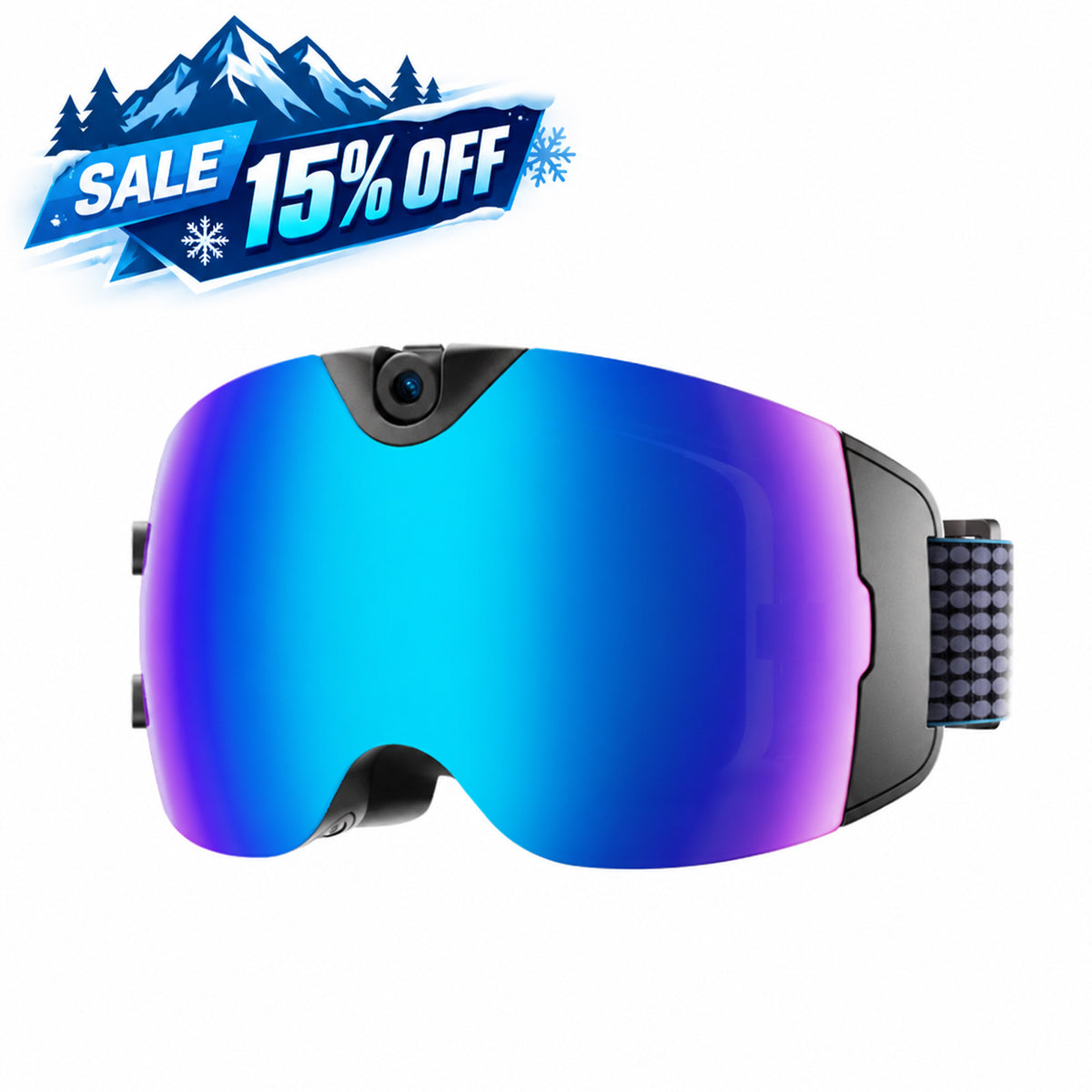
Camera glasses and smart Bluetooth sunglasses may add hardware that changes where weight and bulk sit on the frame. Add an exact-model hardware inspection to the standard fit checks, and separate it by hardware type.
Camera glasses: check position and front depth
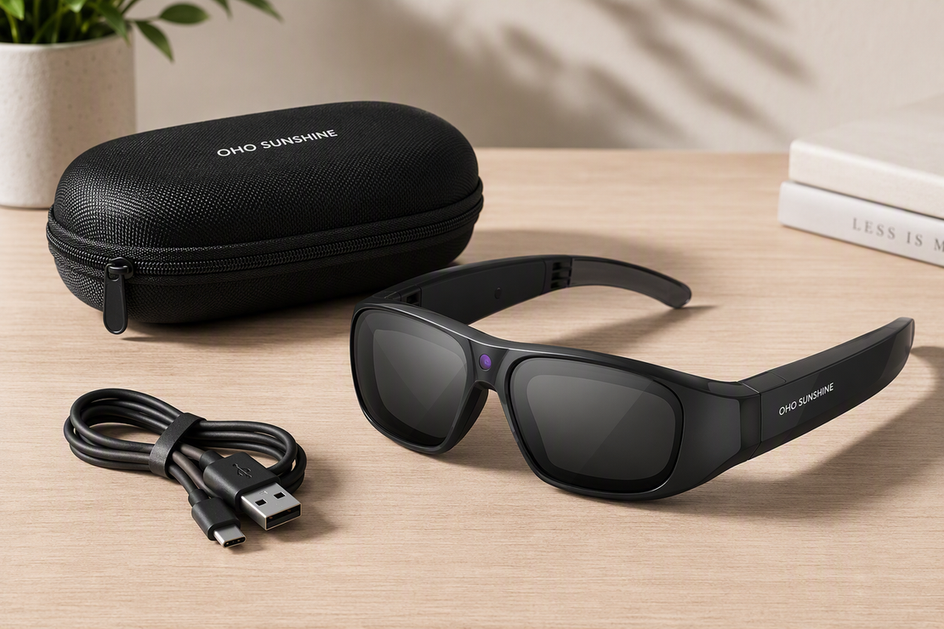
Camera placement varies by model, so inspect the exact product page for the camera position instead of assuming all camera glasses or 4K camera glasses use the same layout. Check the front depth and any visible housing in the product photos, and compare that profile with your reference pair's front-to-back depth if it is listed. Use the camera location as a model-specific fit check, not as a reason to infer how another model is arranged.
Bluetooth glasses: check the temples and weight
Bluetooth hardware placement varies by model. On the exact product page, identify any listed temple modules, speakers, microphones, controls, or battery hardware, then compare the listed weight and arm length with your reference pair. Do not assume every Bluetooth frame has the same components or bulk. Confirm that the speaker location leaves the clearance you need around your ears and hairline.
Use photos and specifications together
A list of dimensions tells you size, but it will not always show where a camera or speaker module sits. When the product page does not make placement clear, contact support or use the stated return route rather than guessing from the frame shape alone. Apply this exact-model check once per product you are considering, without repeating the full measurement checklist from the previous section.
What should you verify before adding smart glasses to the cart?
Once you have picked a frame shape and compared measurements, run through this four-step sequence before you check out.
- Measure your comfortable existing pair for lens width, bridge width, temple length, lens height, and overall frame width.
- Compare those same five numbers on the smart glasses product page, checking that the definitions match.
- Inspect hardware placement, camera position or temple modules, and confirm the frame stays stable through ordinary head movement using the same width, bridge, and temple-security checks described in this practical frame-fit checks guide.
- Confirm the return window and support contact before ordering, so you have a next step if the fit does not match once the glasses arrive.
Take a few minutes to compare your reference pair before adding smart glasses to the cart. That gives you a clearer purchase decision than face shape alone.
FAQs
Does lens size affect the choice for a round face?
Lens width and height mainly affect coverage and style. Overall frame width and bridge fit should still decide whether the frame works for a round face, since a lens size you like will not fix a front or bridge mismatch.
How can I assess temple comfort before ordering smart glasses online?
Compare temple length and any visible module bulk with a pair you already wear comfortably. Use product photos and listed dimensions together, and check the return policy, since online inspection cannot fully replace trying a frame on.
Do camera or Bluetooth features change the frame-fit checks for a round face?
Yes. Camera glasses need a camera-position and front-depth check, while Bluetooth glasses need a temple-module, speaker-clearance, and weight-distribution check. Apply this to the exact model you are considering rather than assuming every smart glasses design places components the same way.
What should I measure on an existing pair before comparing smart-glasses dimensions online?
Record lens width, bridge width, and temple length from the arm size string, plus overall frame width and lens height if you can measure them. Keep the units and definitions consistent when you compare those numbers with the product page.


Commenta
Questo sito è protetto da hCaptcha e applica le Norme sulla privacy e i Termini di servizio di hCaptcha.