













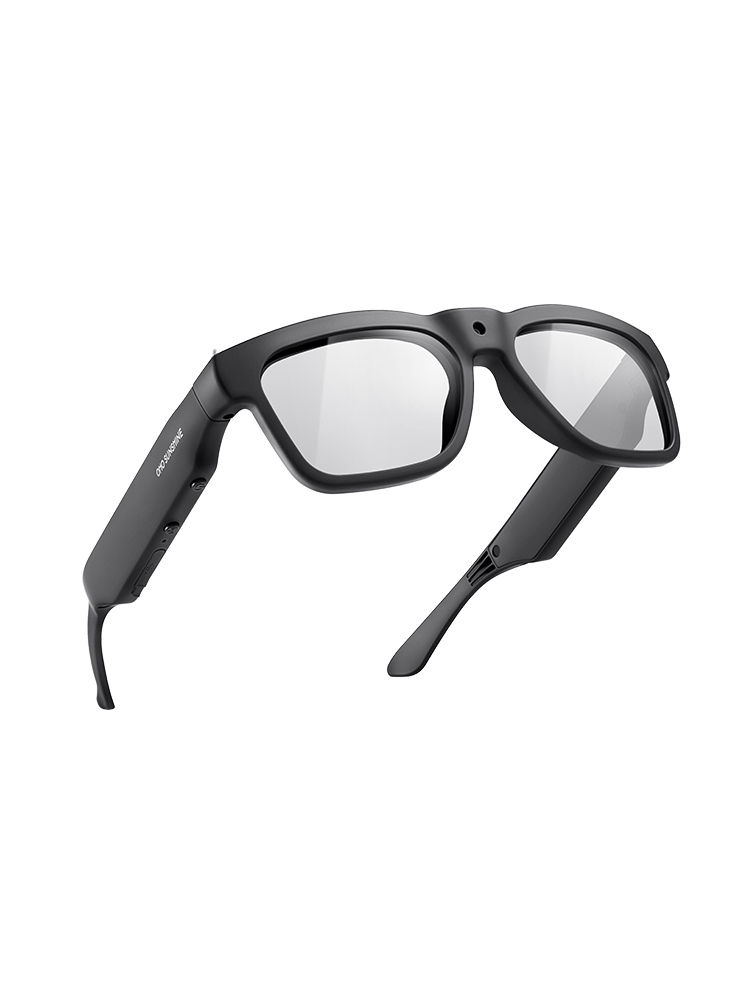


The most reliable way to have a two-way conversation through AI translation glasses is a simple turn-taking habit: one person speaks a full thought, waits until the visible or audible translation finishes, then the other person replies. Before you lean on this rhythm, check the conversation mode and turn-completion signal documented for your exact glasses and companion app, since that cue is not the same across every setup.
This routine cuts down on clipped exchanges, but it is a conversational habit, not a guaranteed fix. Once you know how your own AI smart glasses signal a finished turn, the rest of the conversation becomes much easier to manage.
Use the device's completion cue to pace each turn
Every AI translation setup signals a finished turn in its own way, whether you are using dedicated AI translation glasses or another assisted headset. Find that documented signal first, then build your pacing around it instead of guessing.
Find the documented mode and end-of-turn cue
- Open the current user guide or in-app help for your exact glasses and phone app, and look for the section covering conversation or dialogue mode.
- Note whether the confirmed cue is a sound, an on-screen icon, a finished caption, or something else. Rely only on what that documentation actually states, not on what similar devices do.
- If your material doesn't name a specific completion cue, don't invent one. Check the device-specific user manual for your model, such as the Elingo AI smart glasses, or ask support directly, before you count on the routine during a longer conversation.
Google Translate's Live Translate feature on Android gives one documented example of how a mainstream app handles this. Its help center describes a Conversation setting where translations play out loud through the phone speaker or headphones, tells speakers to take turns, and lets a user tap the Google Translate's Conversation mode text to hear it again or tap Speak to pause and resume. That's a phone app, not a pair of glasses, so treat it as one useful reference point rather than a universal instruction set for every AI smart glasses model.
Alternate one natural thought at a time
- Speaker A says one complete, natural thought, not a long paragraph, and then stops.
- Speaker B waits until the available translated output looks or sounds finished before answering. Jumping in early is the most common reason a turn gets cut short.
- Speaker B replies with one thought of similar length, then the roles switch again.
- Repeat the loop for the rest of the exchange, adjusting pace as you both get a feel for how quickly your setup finishes each turn.
There's no fixed pause length that works for every model, and this loop doesn't promise perfect capture every time. Treat it as a cautious habit that gives your translation glasses' AI processing enough room to finish before the next voice starts. If you want a broader sense of where this kind of pacing matters most, our overview of AI translation glasses scenarios walks through several real conversation settings, from business meetings to travel, where holding a clean rhythm keeps eye contact and dialogue flowing naturally.
Recover an incomplete or interrupted turn
A clipped translation and a dropped connection call for different fixes. Match the response to what actually happened before you try to keep talking.
If a translated turn seems incomplete
- Stop both speakers from talking over the partial output. Overlapping speech makes it harder to tell what was actually captured.
- Once the exchange pauses, ask the original speaker to repeat or clarify just the missing part of the thought, not the whole sentence.
- Treat that repeated portion as a normal part of the conversation rather than a technical retry, since the supported feature list for AI translation glasses doesn't confirm a specific in-app retry behavior.
This is a communication fix, not a settings fix. It works because the listener is filling a real gap in understanding, not because any particular control forced the app to recapture the audio.

If the connection is interrupted
- Pause the translated exchange as soon as you notice the app has stopped responding. Don't assume it will reconnect on its own mid-sentence.
- Follow the current instructions for your specific glasses and phone app rather than guessing at a Bluetooth or Wi-Fi fix that may not apply to your model.
- Resume the conversation only once your setup shows its own documented sign that the session is connected and ready again.
If connection drops happen often in a particular setting, like a crowded restaurant or an airport gate, it's worth checking your device's connection requirements ahead of time rather than troubleshooting mid-conversation. Our smart glasses connection checklist covers the phone, app, Bluetooth, and Wi-Fi checks worth running before you count on a translation session for something important.
Conclusion
Before your next real conversation, run a short two-way exchange with someone nearby and watch for the completion cue in both directions. If either side of that exchange has no clear signal, or the connection drops more than once, check that setup's current documentation before you use it for anything longer or more important.
FAQs
How long should each person pause before replying?
There's no single pause length that fits every pair of AI smart glasses, since the completion cue depends on the specific model and app. Wait until the translated output for the current turn looks or sounds finished, then reply, and adjust the pace once you see how quickly your own setup typically finishes a turn.
What happens if both people talk at the same time?
Overlapping speech is the most likely reason a translation comes out partial or garbled, since the system has to sort out which voice belongs to which turn. If it happens, stop, let the exchange settle, and have one speaker repeat just the part that got missed instead of restarting the whole sentence.
Does a longer pause guarantee an accurate translation?
No. A deliberate pause gives the translation more time to finish, but it doesn't guarantee accuracy or complete capture. Treat the pause-and-wait routine as a habit that reduces clipped turns, not as a promise about translation quality.
Can I use this same turn-taking routine with any translation app?
The general habit, one thought at a time, wait for the output to finish, works as a starting point for most setups. The exact completion cue, controls, and recovery steps still depend on your specific glasses and app, so confirm those details in your own documentation before relying on the routine for an important conversation.


Dejar un comentario
Este sitio está protegido por hCaptcha y se aplican la Política de privacidad de hCaptcha y los Términos del servicio.