





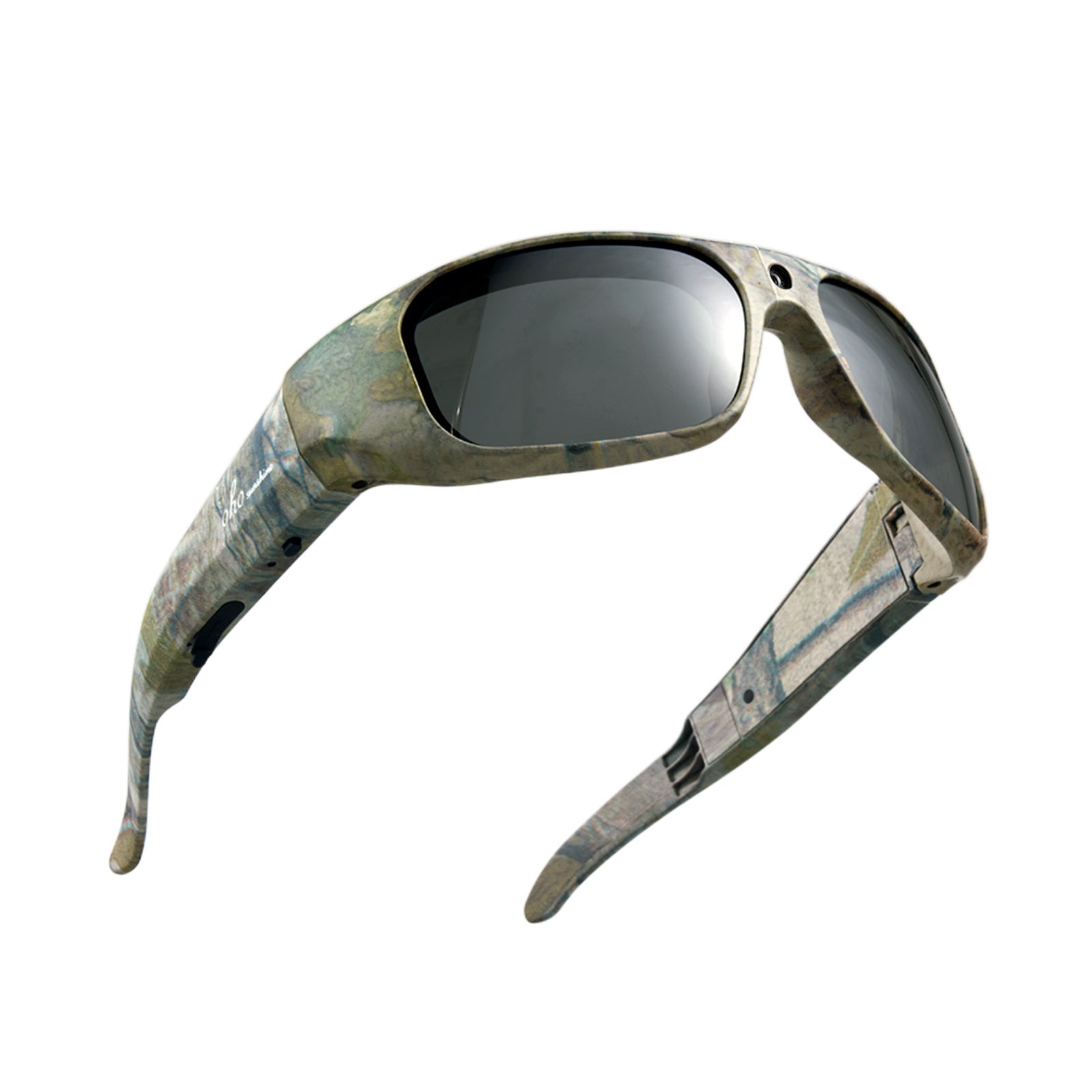


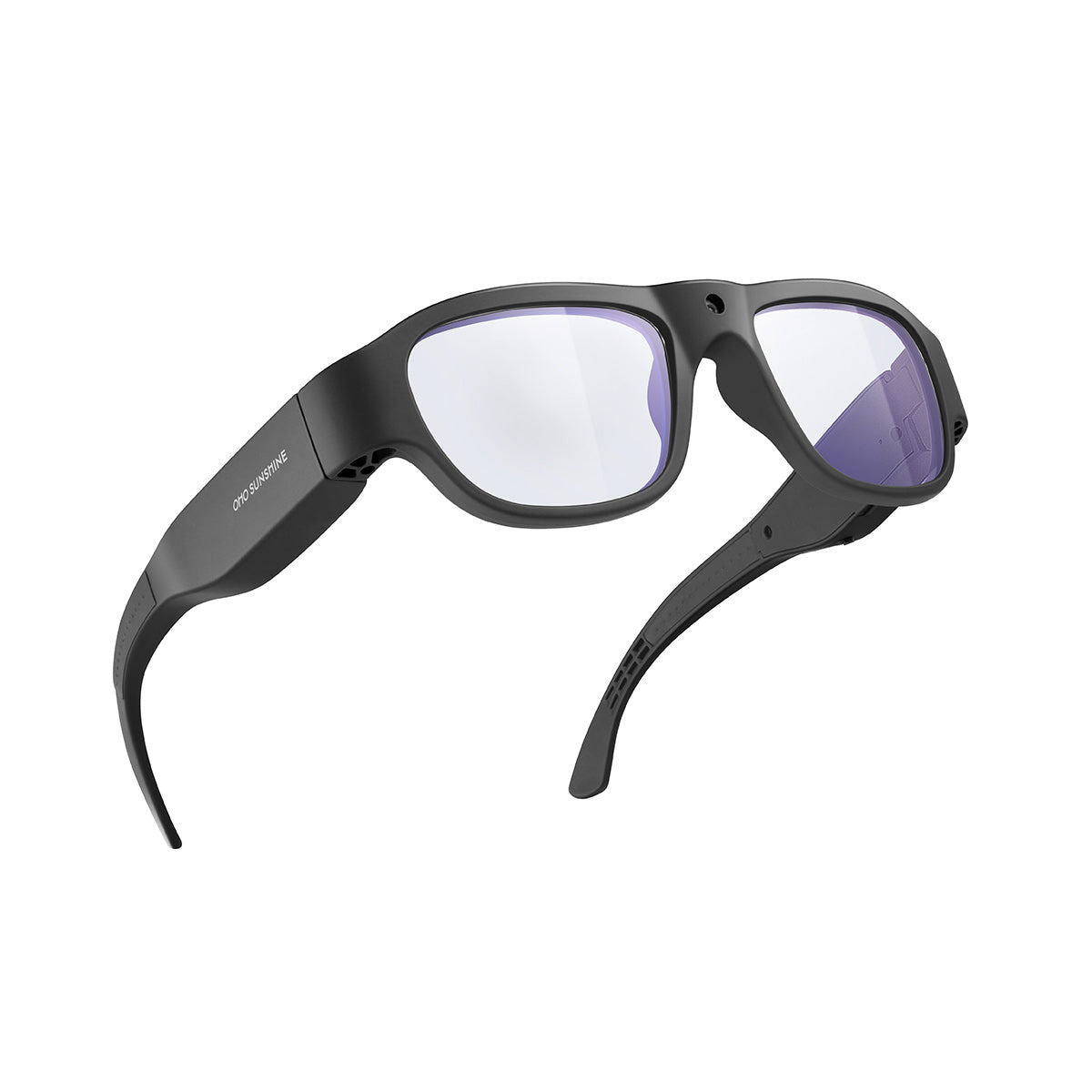
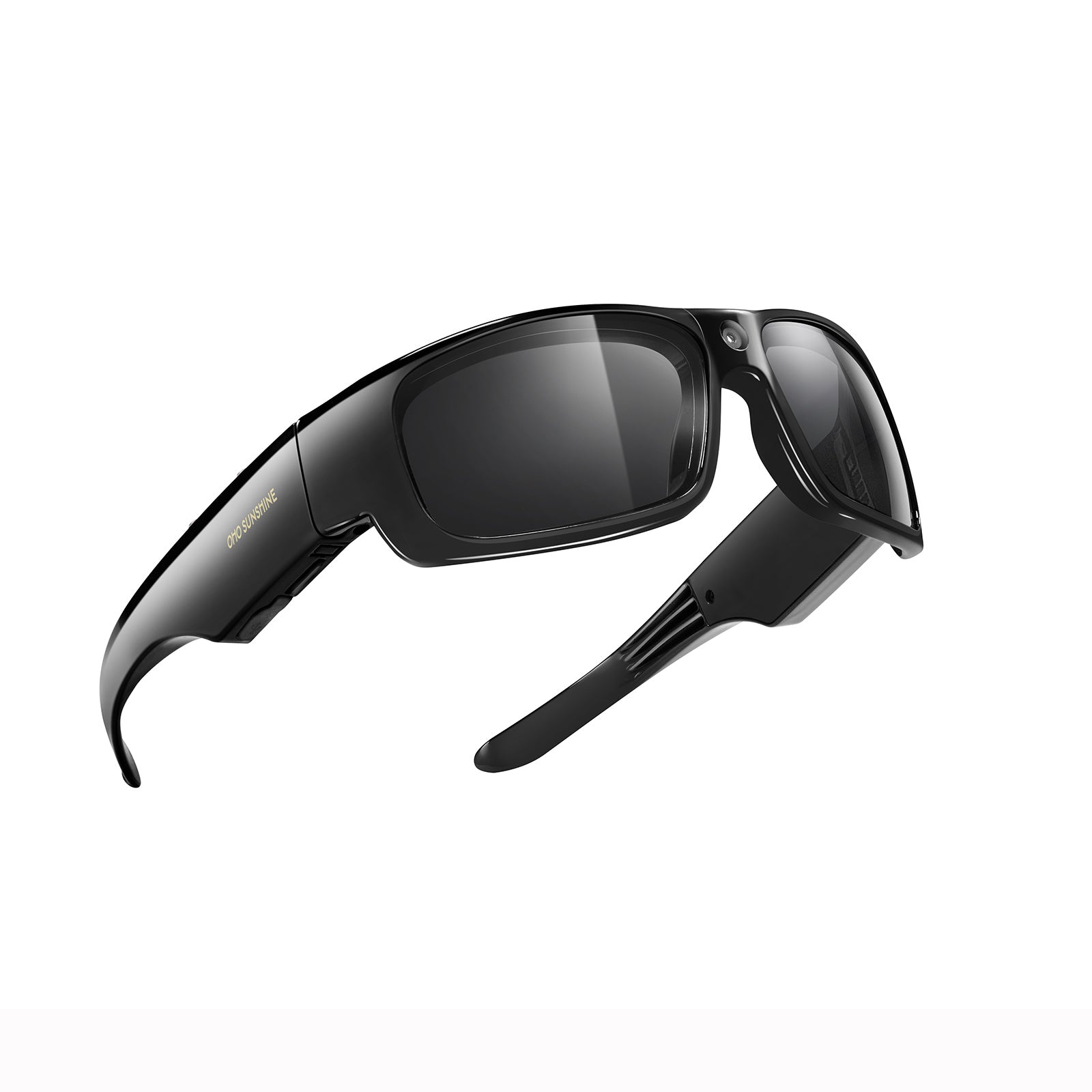


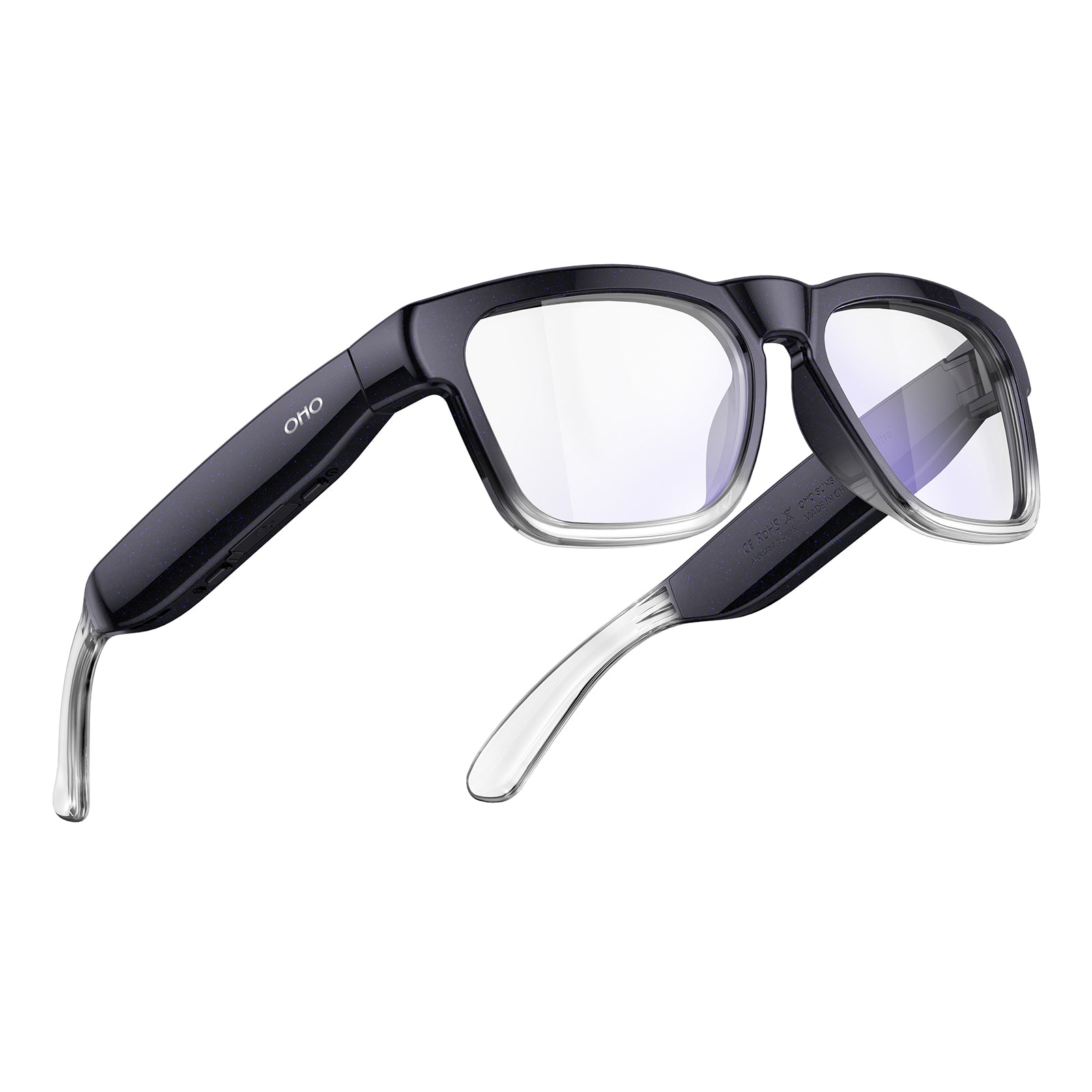


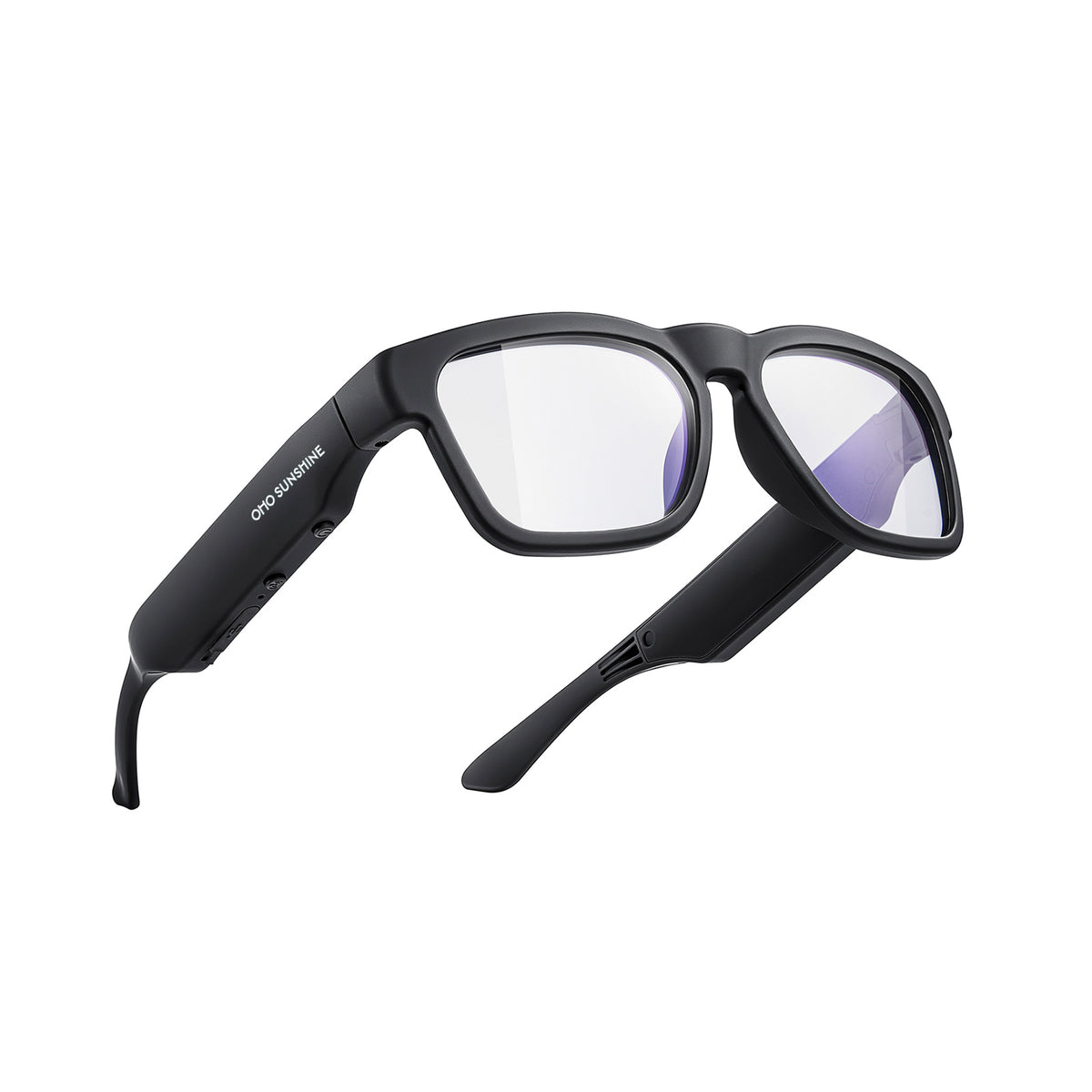





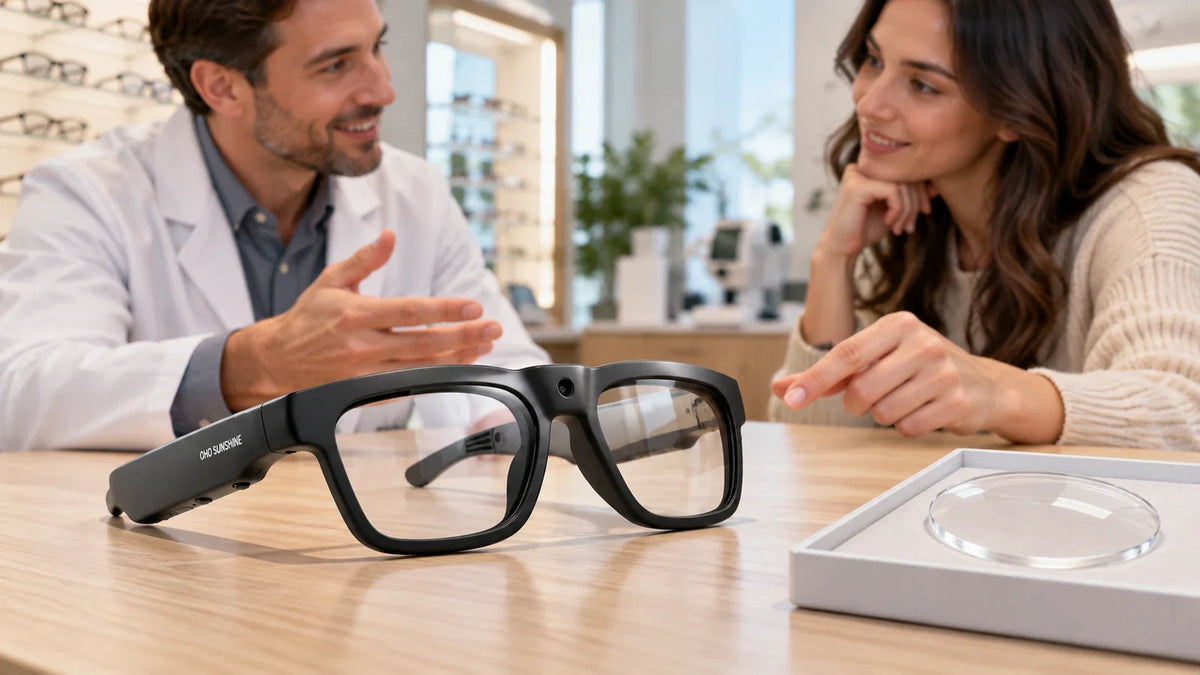
Prescription smart glasses matter because many people cannot use plano lenses comfortably every day. If you wear glasses for myopia, farsightedness, astigmatism, or presbyopia, smart eyewear should support both clear vision and the smart features people want to use every day, from audio and camera functions to translation or outdoor use. Before adding lenses to smart glasses, check frame compatibility, lens type, prescription details, and how the lenses work with the smart features.
Quick Answer
- Model compatibility: Confirm that the smart glasses frame supports prescription lenses.
- Frame shape: Check whether the lens shape and frame curve fit your prescription needs.
- Prescription details: Prepare your current SPH, CYL, AXIS, and PD information.
- Lens type: Choose clear, blue light blocking, photochromic, or tinted lenses based on daily use.
- Lens index: Consider a thinner lens index if your prescription is stronger.
- Smart feature clearance: Make sure the lens setup works with the camera, speakers, microphones, and frame design.
Why Prescription Smart Glasses Matter for Vision Correction
Prescription smart glasses matter because vision correction is not a small niche. According to the World Health Organization’s SPECS 2030 initiative, only 36% of people with distance vision impairment due to refractive error have access to an appropriate pair of spectacles, while more than 800 million people have near vision impairment from presbyopia that could be addressed with reading spectacles.
That need also applies to smart eyewear. Many smart glasses are sold with plano lenses, which means the lenses have no vision correction. Plano lenses may work for users who do not need prescription eyewear, but they do not solve the daily needs of people with myopia, farsightedness, astigmatism, or presbyopia.
For those users, smart glasses cannot only be an audio, camera, AI translation, or outdoor device. They also need to work as everyday eyewear. Prescription smart glasses help bring clear vision and smart functions into the same wearable frame, making smart eyewear more practical for people who already depend on glasses every day.
How Prescription Smart Glasses Are Different From Regular Glasses
Regular prescription glasses usually start with three things: the frame, the prescription, and the lens type. Once those match, the glasses mainly need to provide clear, comfortable vision.
Prescription smart glasses add more layers to that process. The frame may include speakers, microphones, batteries, charging parts, camera modules, touch controls, or thicker temples. These parts make frame design more important, including weight balance, lens shape, and how the glasses sit on the face.
That makes lens replacement more specific than it would be with everyday frames. Users need to confirm whether the original lenses can be replaced, whether the chosen model supports prescription lenses, and whether the lens shape works with the smart glasses design.
Unlike regular frames, smart glasses may need lens choices that fit around built-in electronic parts and still keep the frame balanced for daily wear. This is why prescription compatibility should be checked by model, not assumed from the frame shape alone.
For example, some OHO SUNSHINE compatible models allow users to select prescription lenses directly from the product page. Users can also review prescription smart glasses options before choosing a model. This helps buyers start with frames that are already intended for smart eyewear and prescription use, rather than treating every smart glasses frame like a regular optical frame.
The main takeaway is simple: regular glasses mainly ask whether the lens fits the prescription and frame. Prescription smart glasses also ask whether the lens setup supports the built-in smart features, frame balance, and daily wearing comfort.
Why Curved or Special-Shape Frames Need More Care
Some smart glasses use curved, sporty, or wrap-style frames. These shapes can feel stable for outdoor use and may help the glasses sit closer to the face. When prescription lenses are added, the lens shape and curve need to match the frame more carefully.
A regular daily frame is usually flatter. A curved frame may place the lenses at a different angle in front of the eyes. That angle can affect lens thickness, edge shape, and how natural the view feels, especially for stronger prescriptions or astigmatism.
The main things to check are simple:
- Frame curve: How much the frame wraps around the face.
- Lens shape: Whether the prescription lens can match the frame design.
- Lens thickness: Whether stronger prescriptions may look or feel thicker at the edge.
- Visual comfort: Whether the lens position works well for your prescription.
- Frame stability: Whether the lenses stay secure in a sporty or curved frame.
Curved or special-shape smart glasses can still be a good option, especially for outdoor, camera, or activity-focused use. The key is to confirm that the frame supports prescription lenses before ordering, instead of assuming every smart glasses frame can be handled like a standard optical frame.
Lens Options to Compare Before Ordering
Prescription lenses are not one-size-fits-all. The right option depends on your prescription, daily routine, and where you plan to wear the smart glasses most often.
Blue Light, Photochromic, and Tinted Lenses
Blue light blocking prescription lenses may be useful for people who spend long hours around screens. They can fit work, study, commuting, and indoor routines where smart glasses are used alongside phones, tablets, or computers.
Photochromic prescription lenses adjust to changing light. They darken outdoors and become clearer indoors, which can be useful for users who move between home, office, car, errands, and outdoor spaces throughout the day.
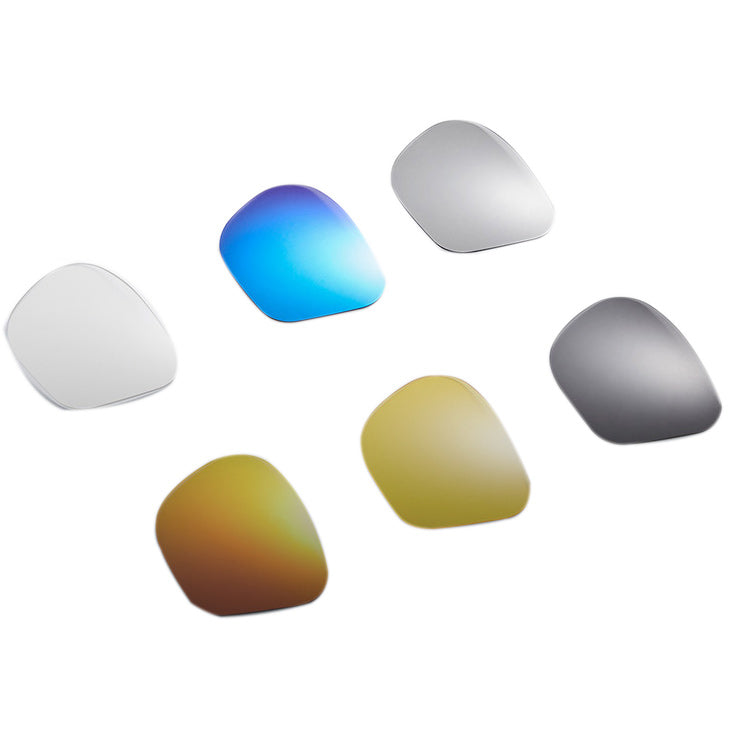
Tinted prescription lenses may be a better fit for bright outdoor settings. They can make smart glasses feel closer to sunglasses while still supporting vision correction, which is useful for travel, outdoor audio, camera use, or casual daily wear.
Lens Index and Prescription Strength
Lens index refers to how efficiently the lens material bends light. A higher index can help make lenses thinner, especially for stronger prescriptions. This may improve comfort and appearance when the frame has a larger lens shape.
Users with higher myopia, farsightedness, or astigmatism should pay closer attention to lens index and frame compatibility. The goal is not only to correct vision, but also to keep the glasses comfortable enough for daily use.
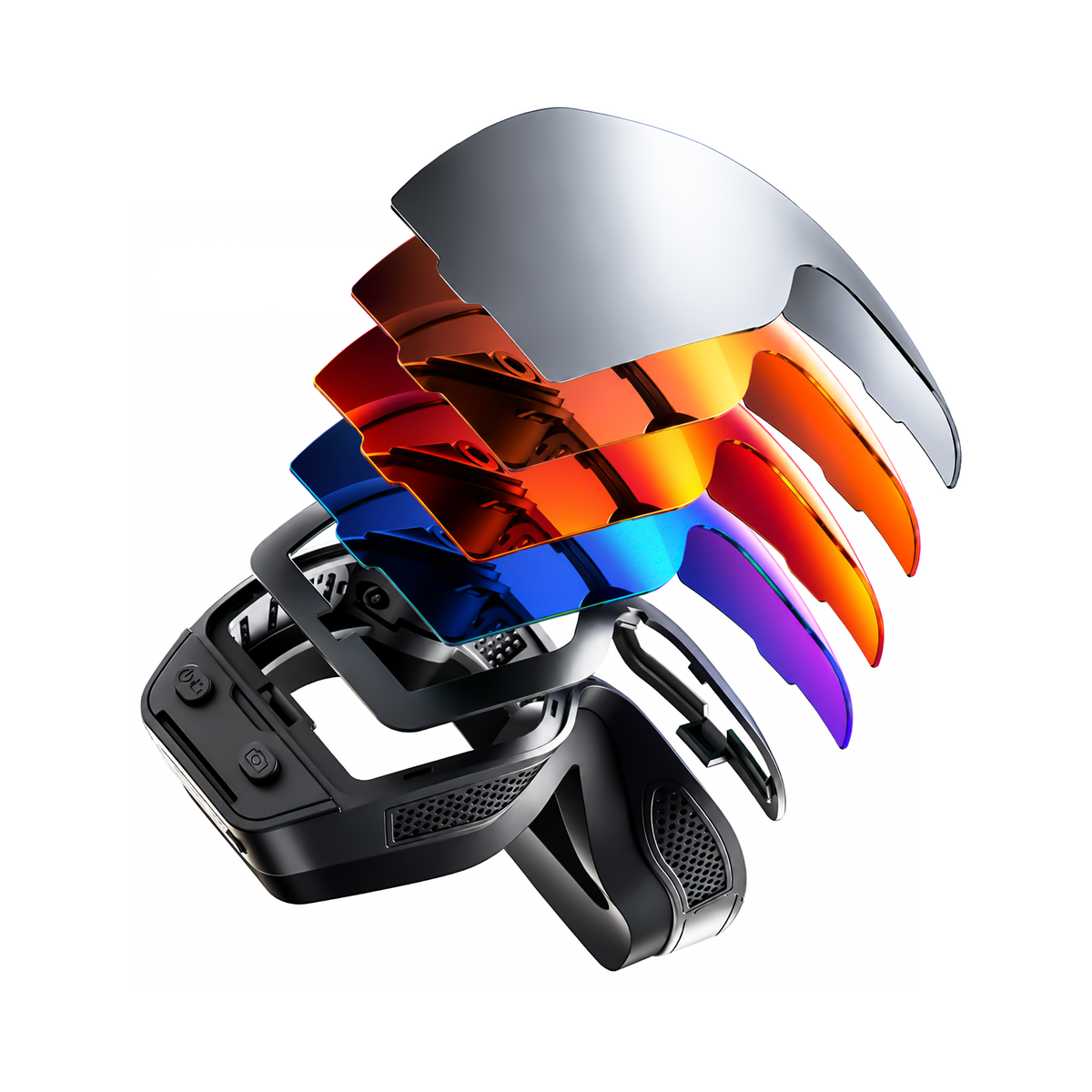
OHO SUNSHINE’s replacement prescription lenses page includes options such as blue light blocking, photochromic, tinted, and different lens index choices. The best choice should match your prescription, your frame, and your main wearing scenario.

Will Prescription Lenses Affect Smart Features?
Prescription lenses mainly handle vision correction. Smart features still depend on the specific smart glasses model. In most cases, changing to prescription lenses should not change what the electronic system is designed to do, but users should still check model compatibility before ordering.
For camera glasses, prescription lenses should be matched to the frame so the camera area remains clear and functional. For Bluetooth audio glasses, prescription lenses should work with a frame that keeps the speakers and microphones positioned correctly. For AI translation glasses, the translation feature usually depends on the microphones, app, phone connection, and audio system, not the prescription lens itself.
Models designed for prescription compatibility usually offer a clearer ordering path than frames with fixed lens designs. A frame with camera parts or a special lens shape may require more careful matching, so users should confirm the exact model, prescription option, lens type, and ordering process before purchase.
The goal is to keep vision correction, smart features, and daily comfort aligned in one wearable frame. A good pair of prescription smart glasses should deliver clear vision, stable fit, comfortable weight, and smart features in a form people can wear every day.
What to Prepare Before Buying Prescription Smart Glasses
Ordering prescription smart glasses is easier when you prepare the right information first. You do not need to be an optical expert, but you do need a current and complete prescription.
Prescription Details to Have Ready
Start with a recent eyeglass prescription from an eye care professional. The key details usually include SPH, CYL, AXIS, and PD.
SPH shows the lens power for nearsightedness or farsightedness. CYL and AXIS are needed if you have astigmatism. PD, or pupillary distance, helps place the optical center of the lenses correctly in front of your eyes.
These details matter because prescription smart glasses are still vision-correction eyewear. If the prescription information is incomplete or outdated, the final lenses may not feel as clear or comfortable as expected.
Lens and Model Choices to Confirm
After the prescription details, confirm how you plan to use the glasses. Decide whether the lenses are mainly for distance, reading, computer use, or general daily wear. Then choose whether you need clear, blue light blocking, photochromic, or tinted lenses.
Also check the lens index if your prescription is stronger. A higher index may help reduce lens thickness and make the glasses feel more balanced.
Finally, confirm that the smart glasses model supports prescription lenses. This step is especially important for camera glasses, audio glasses, AI translation glasses, and curved or special-shape frames. The frame, lens type, and smart features should be compatible before checkout.
Before ordering, prepare:
- Current eyeglass prescription
- SPH, CYL, and AXIS
- PD measurement
- Lens purpose
- Lens type
- Lens index
- Compatible smart glasses model
- Processing time and prescription order policy
The most important step is to match the prescription, frame, and lens option before checkout. Prescription smart glasses are more personal than plano smart glasses, so a little preparation can make the final pair much easier to wear every day.
Make Smart Eyewear Work With Your Prescription
Prescription smart glasses are easier to choose when you start with your vision needs, not only the smart features. Check model compatibility, frame shape, prescription details, lens type, and lens index before ordering. With the right lens setup, smart eyewear can support clearer daily vision while keeping audio, camera, translation, or outdoor features easier to use.
Prescription Smart Glasses Questions
Q1. Can Smart Glasses Have Prescription Lenses?
Yes, some smart glasses can have prescription lenses, but compatibility depends on the model. Users should check whether the frame supports prescription lens options before ordering. The best approach is to choose a model that clearly supports prescription lens options.
Q2. Can I Add Prescription Lenses to Camera Glasses?
Prescription lenses can be added to some camera glasses if the model supports them. The lens design should be matched to the frame so the camera position and frame structure remain clear and functional.
Q3. Do Curved Smart Glasses Need Special Prescription Lenses?
Curved or wrap-style smart glasses may need more careful lens matching than regular flat frames. Base curve, wrap angle, prescription strength, and lens thickness can affect visual comfort. The best option is to choose a prescription-compatible model and provide accurate prescription details.
Q4. What Information Do I Need to Order Prescription Smart Glasses?
You usually need a current eyeglass prescription, SPH, CYL, AXIS, PD, lens type, and the smart glasses model you want. Some users may also need to choose lens index, photochromic lenses, blue light blocking lenses, or tinted lenses. Complete information helps the lenses fit your vision needs more accurately.



Leave a comment
All comments are moderated before being published.
This site is protected by hCaptcha and the hCaptcha Privacy Policy and Terms of Service apply.