










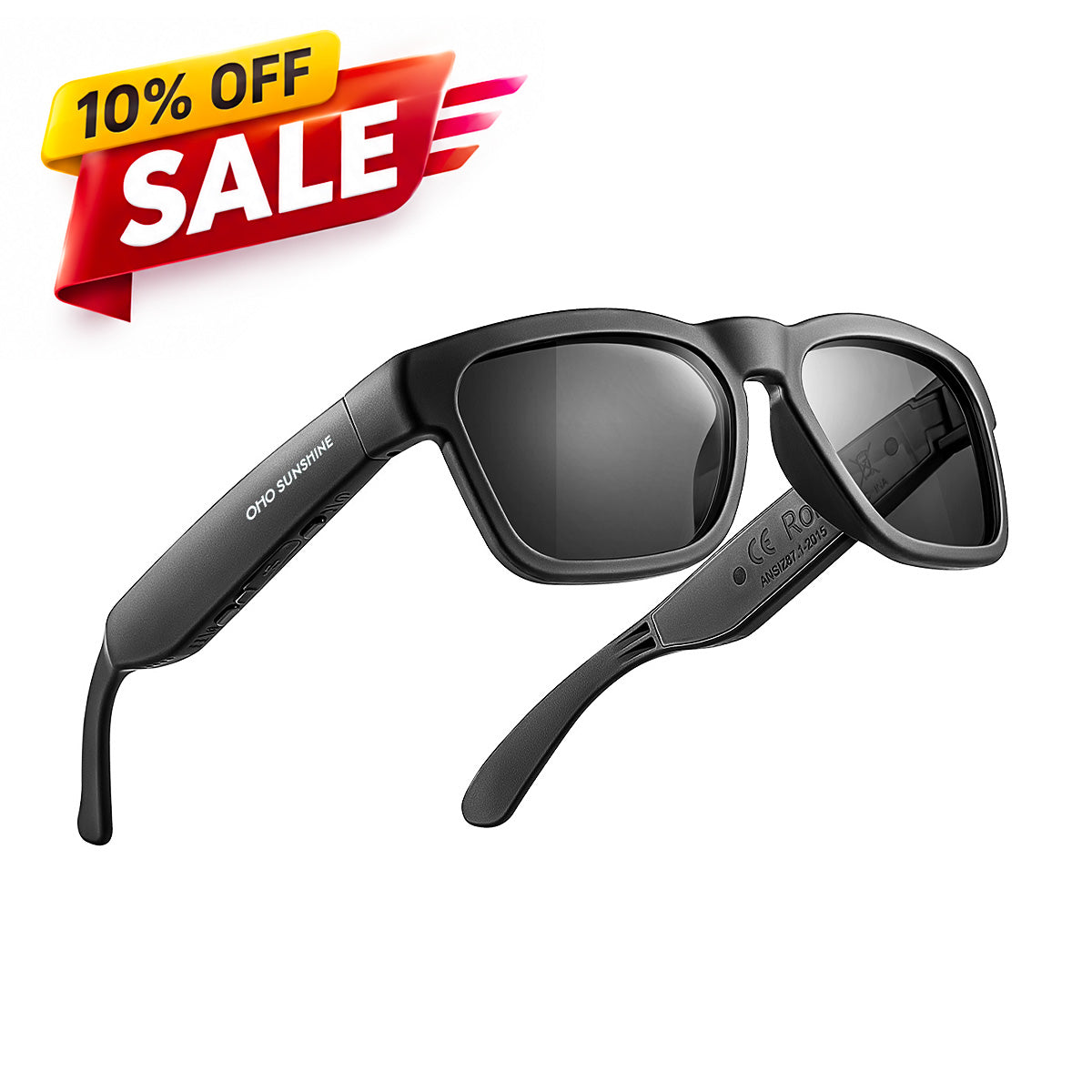



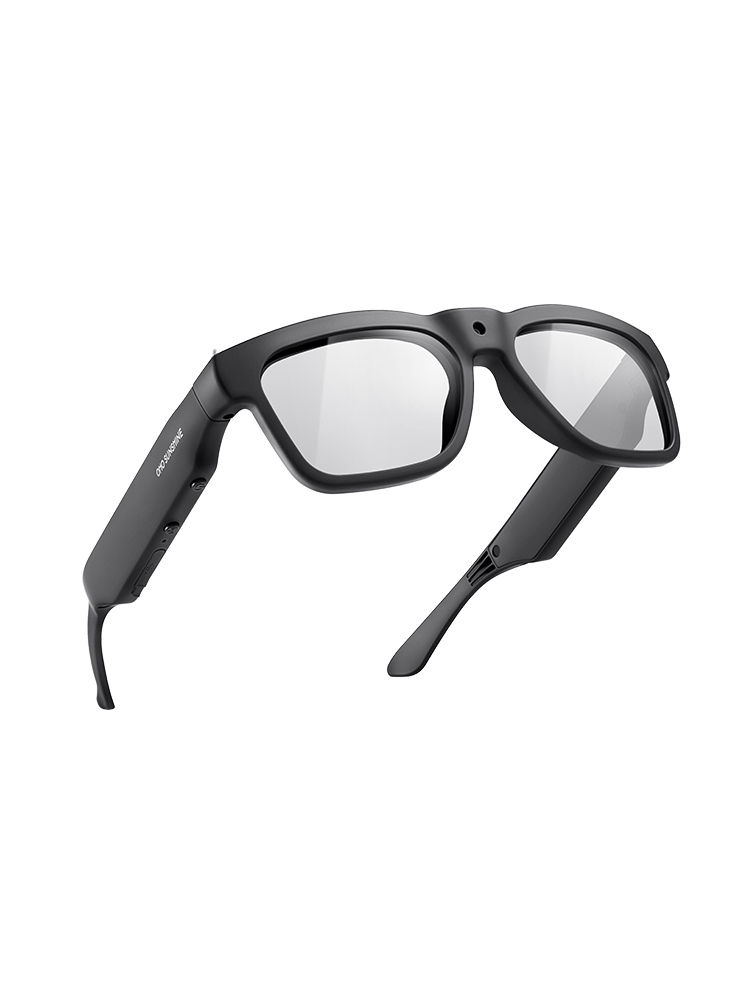


Open-ear bluetooth sunglasses can work for an e-scooter commute, but only under specific conditions. They leave your ear canals open, so you keep access to traffic sounds that sealed earbuds block out. Whether navigation prompts stay clear still depends on wind, route exposure, fit, and volume, not on the open-ear design alone.
That makes the right choice conditional rather than automatic. Test your glasses before you trust them on a real ride, and treat any drop in clarity as a signal to slow down or adjust your setup instead of turning the volume up.
Can Open-Ear Audio Glasses Work on an E-Scooter?
Open-ear bluetooth sunglasses fit short, lower-exposure commutes when a quick stationary test confirms prompts stay clear at a low, comfortable volume. They stop being a good fit once wind, traffic noise, or distraction starts to compete with your attention on the road.

The open-ear design itself only solves one problem: it does not seal your ear canal the way in-ear headphones do, so ambient sound still reaches you. That is different from guaranteeing you will hear a turn prompt over crosswind on a bridge, or that you will notice a car merging next to you while a voice is talking in your ear. Route exposure, riding speed, how the frame sits on your face, and whether the speakers still line up with your ears after a helmet strap moves them all change the outcome.
The practical test is simple. Stand still, play a short navigation prompt, and see whether it is genuinely easy to follow at low volume. If it is, try a quiet, low-risk stretch of your actual route before trusting the glasses on busier roads. If the prompt is already hard to catch while standing still, wind on the move will only make it worse.
How Wind Changes Navigation Clarity
Headwind, exposed roads, and faster stretches are where navigation prompts are most likely to get lost, often before louder background noise makes the problem obvious. The fix is not a volume number; it is recognizing when to slow down, stop, or switch to visual navigation instead.

Independent cycling-headphone testing found that open-ear and bone-conduction designs keep your ears unobstructed for traffic awareness, but the same testing noted that wind and traffic noise can still overwhelm a cycling headphones test session, especially on descents and exposed sections. That pattern carries over to e-scooter riding: a bridge, an open avenue, or a stretch with steady headwind puts more strain on speech clarity than a slow, sheltered side street.
Helmet straps, glasses frames, and your riding posture can also shift how directly sound reaches your ears, even if the glasses themselves have not moved much. A setup that sounded fine standing in your driveway can sound thinner or more uneven once you are leaning into wind at speed. When you notice prompts getting harder to follow as conditions change, that is the cue to slow down or pull over rather than keep adjusting audio while riding.
Reduce Wind Buffeting Before You Ride
Start with fit and positioning, not volume. A short pre-ride sequence, followed by a real prompt test, catches most clarity problems before you are moving in traffic.
Check Fit, Frame Angle, and Speaker Alignment
- Seat the glasses evenly on your face and check that they do not shift when you look ahead or turn your head side to side.
- Make a small frame-angle adjustment only if needed to keep the speakers consistently near your ears; there is no single ideal angle that works for every face or frame.
- Check whether a helmet strap, prescription eyewear, or temple pressure is pushing the frame off position or blocking a speaker. Our smart glasses fit guide walks through bridge contact and temple pressure checks in more detail if fit feels off.
Test the Route Before Increasing Volume
Play a short navigation prompt while standing still, then repeat the same prompt on a quiet, low-risk part of your usual route. Use the lowest volume where the words are still genuinely understandable, and pay attention to whether wind or traffic noise changes that as you move. For a closer look at how wind specifically affects open-ear designs while cycling, our cycling wind and safety notes cover similar fit and exposure checks. If the prompt is still unclear after this test, change the setup, pick a different route, or stop relying on audio navigation instead of adjusting controls while riding.
Balance Volume With Traffic Awareness
Set the volume once, before you ride, and keep it low enough that navigation prompts do not compete with the sounds around you. Open-ear audio can help you avoid sealing off your ears the way in-ear headphones do, but it does not guarantee you will notice traffic.
Keep the Prompt Audible, Not Dominant
Test a stationary navigation prompt first and pick the lowest volume where the words are still clear. If you find yourself reaching for a higher volume once you start riding, treat that as a sign your route, fit, or setup needs attention, not as a problem volume alone should fix. Federal cycling safety guidance for adults recommends staying alert to your surroundings, and notes that headphone use can make it harder to hear approaching traffic, which is a reasonable caution for scooter riders using any audio device as well.
Stop When the Setup No Longer Works
- Pull over safely before changing fit, volume, or route settings; do not adjust anything while riding.
- Stop relying on the audio prompts if they become hard to understand or if nearby traffic sounds harder to notice than usual.
- Keep both hands ready on the controls and your visual attention on the road as the priority at all times.
The CPSC's e-scooter safety alert advises riders to avoid distractions and stay prepared to react, and its micromobility safety guidance recommends slowing down and staying aware of surroundings, particularly around traffic and pedestrians. Neither source treats any headphone or glasses style as a substitute for that attention, and this article does not either: if navigation prompts or nearby traffic are not clearly audible at your lowest comfortable volume, stop relying on the glasses until the setup or the conditions change.
Choose Bluetooth Sunglasses by Commute Need
Before picking a model, confirm it explicitly lists Bluetooth audio and open-ear speakers; camera, translation, or microphone features do not by themselves prove a pair will work for spoken navigation. Our Bluetooth glasses collection groups the open-ear audio options together if you want to browse beyond the three below.
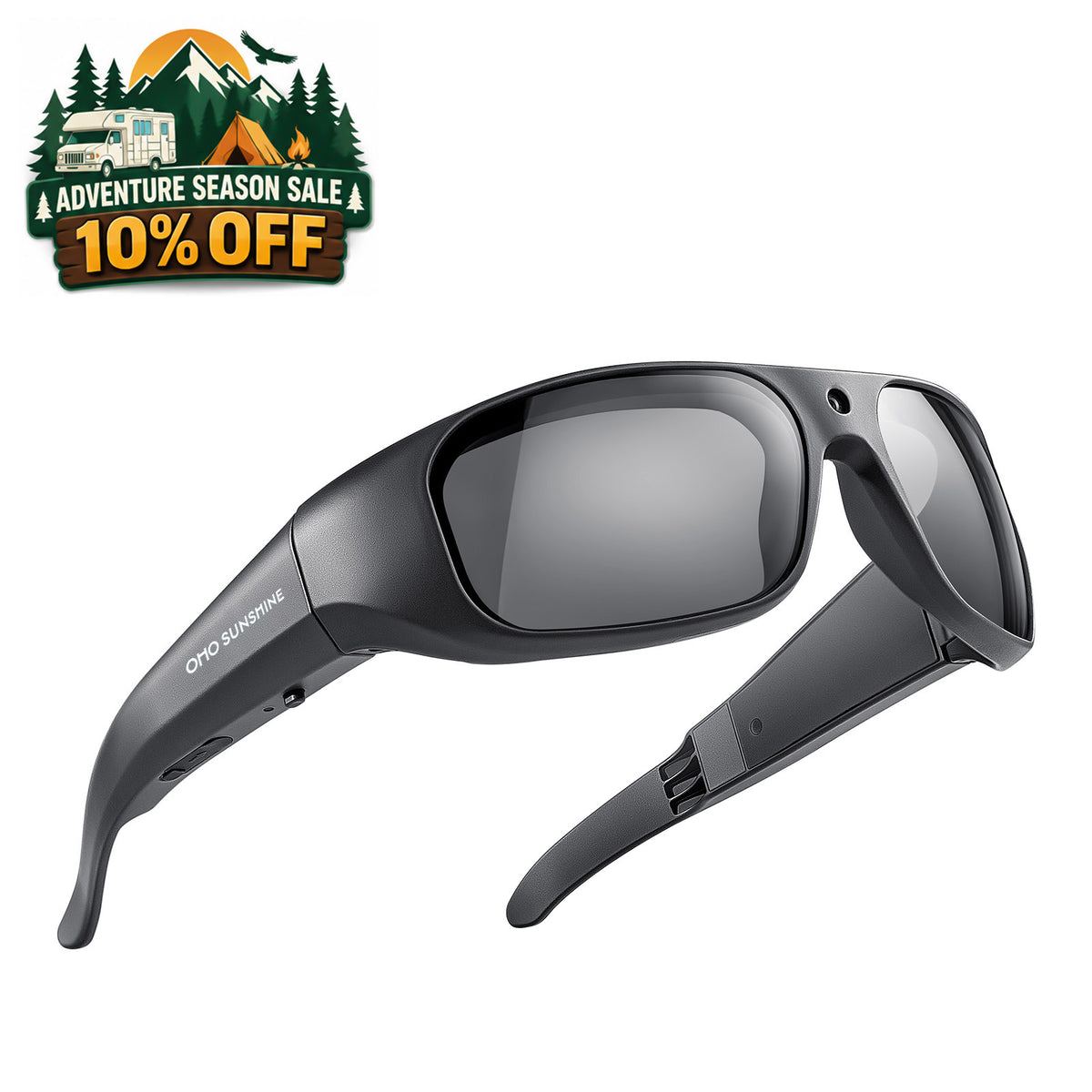
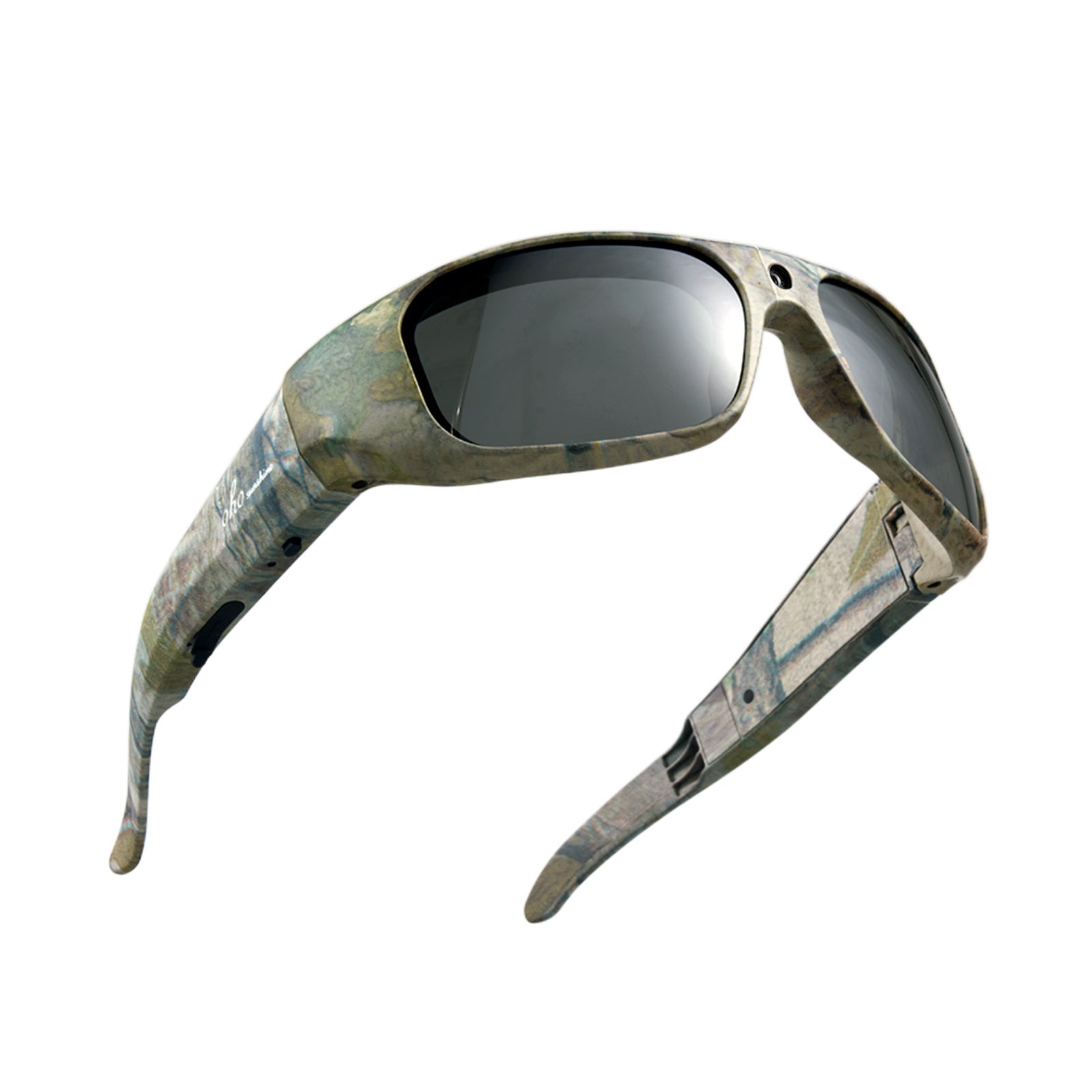
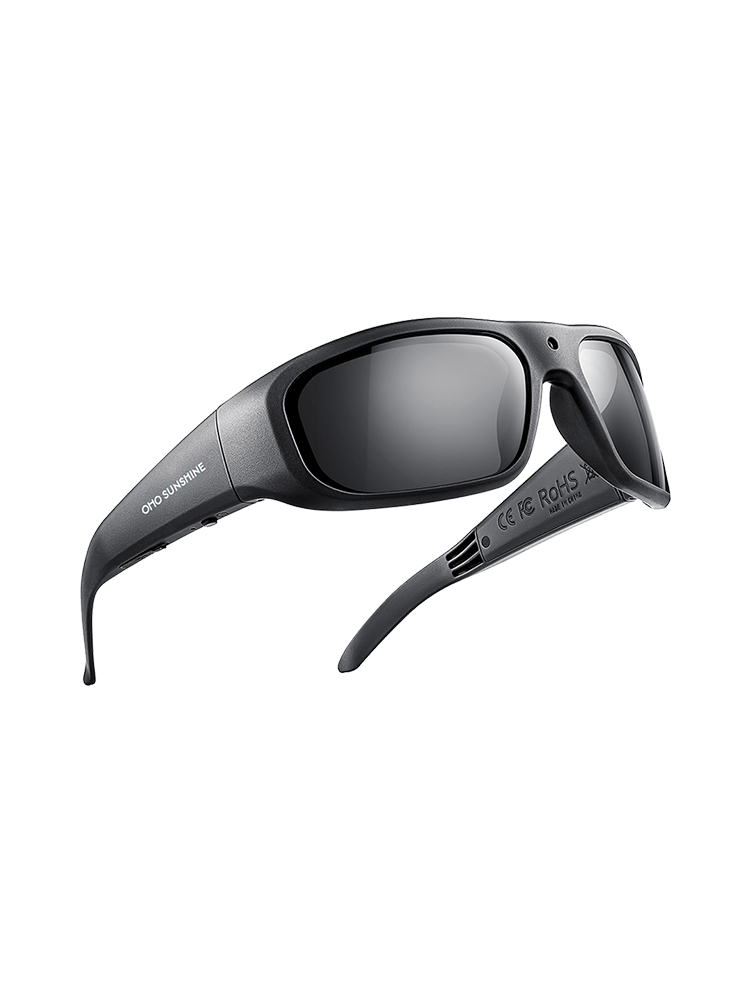
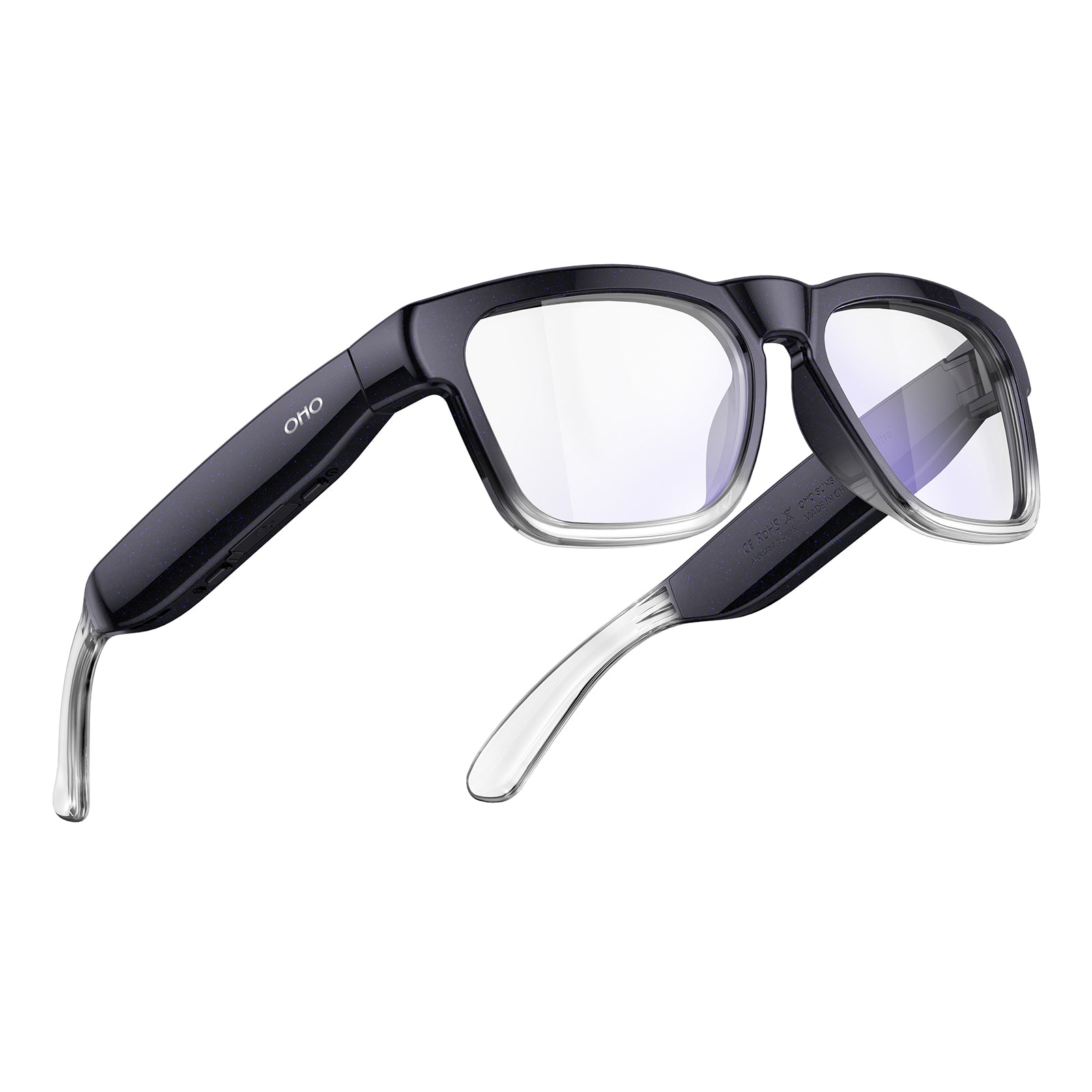
Based only on the specifications each product lists, the GlobeEar smart glasses are the clearest match for a commute built around audio, calls, and battery life: the listing documents Bluetooth audio, ENC hands-free calling, an open-ear speaker, and a stated 10-hour battery, alongside commuting and cycling scenario labels. The Edge Pro smart glasses suit a rider who also wants camera and translation features alongside open-ear Bluetooth 5.3 audio, since the listing pairs those functions with cycling and outdoor-sports scenarios. The Brave camera glasses options are documented as a camera-first pair, with 4K video, a built-in microphone, and polarized lenses; its listing does not specify Bluetooth audio or open-ear speakers, so it is not a supported choice for navigation audio until that is confirmed.
| Model | Commute priority | Unresolved check before buying |
|---|---|---|
| GlobeEar smart glasses | Bluetooth audio, calls, longer battery | Moisture rating is IPX4; not rated for downpours or submersion |
| Edge Pro smart glasses | Open-ear audio plus camera and translation | Wind and navigation clarity are not tested in the listing |
| Brave (camera glasses options) | Camera-first capture | Bluetooth audio and open-ear speakers not documented |
This is a summary of the supplied product records, not independent wind or navigation testing. If your commute is mainly about hearing turn-by-turn prompts and taking calls, GlobeEar has the strongest documented fit. If you want camera capture alongside audio, Edge Pro pairs the two, but treat the audio clarity claim as unverified until you test it on your own route.
Conclusion
Use open-ear bluetooth sunglasses for e-scooter navigation only if a stationary test shows prompts stay clear at your lowest comfortable volume, and you can still track traffic around you. If wind, road noise, or distraction breaks that test, change your setup, pick a quieter route, or ride without relying on audio. Confirm your chosen model's Bluetooth and open-ear specifications, then test it on a short, low-risk stretch before you count on it for a full commute.
FAQs
Can I Take Phone Calls Through Bluetooth Sunglasses on My Commute?
Calls are a separate use case from navigation prompts. Wind and background noise can affect how clearly a caller hears you, so test the microphone and call quality in a quiet or stopped setting before counting on it while riding. Treat a clear call while standing still as a starting point, not a promise that the same clarity holds at speed.
Can I Wear Audio Glasses in Rain or While Sweating?
Water resistance is model-specific, and a rating like IPX4 covers light splashes and sweat, not heavy rain or submersion. Check the exact rating listed for the model you are considering, and stop using the glasses in conditions that go beyond that stated rating.
Are Camera Glasses Automatically Bluetooth Audio Glasses?
No. A built-in camera, microphone, or translation feature does not confirm that a pair has Bluetooth audio or open-ear speakers for navigation. Before choosing camera glasses for turn-by-turn prompts, check the product listing or manual for both capabilities specifically, rather than assuming one feature implies the other.


Zostaw komentarz
Ta strona jest chroniona przez hCaptcha i obowiązują na niej Polityka prywatności i Warunki korzystania z usługi serwisu hCaptcha.