
Most people squint through bright summer days without realizing their favorite lenses might be leaving them exposed. Those small stickers on the frame promise safety, but "polarized" and "UV400" are not the same thing. One manages how clearly you see, while the other protects your biological health. Choosing the right UV400 polarized sunglasses is the difference between simple shade and total eye security. It is time to decode the labels and see what your eyes actually need.
The Science Behind the UV400 Standard for UVA and UVB Protection
The sun emits energy that the human eye cannot detect, but it can lead to serious health issues if the lens is not prepared. These invisible energy waves travel through the atmosphere even on cloudy days. Protection starts with the lens material itself.
The Impact of UVA and UVB Rays
Ultraviolet (UV) radiation consists of different types of rays. UVA rays are long waves that can penetrate deep into the eye and cause aging of the cells. UVB rays are shorter waves that primarily cause surface damage like painful burns. Every pair of high-quality glasses must provide sunglasses UVB protection to keep these invisible threats away. Failure to block these rays can lead to long-term issues with your vision.
The 400nm Shield Standard
Light is measured in nanometers (nm), which are tiny units of length. All harmful UV rays fall below the 400nm mark. A lens with a UV400 rating acts as a physical wall that blocks every ray up to that wavelength. This provides the comprehensive UVB UVA protection sunglasses require to keep your vision safe in any environment. It ensures that the most energetic and harmful parts of the light spectrum never reach your sensitive pupils.

The Role of Polarized Filters and Why They Are Not UV Coatings
Visible light travels in waves that bounce off every surface, but horizontal reflections create the most visual stress. Polarization is a specific technology designed to handle this reflected light.
How Polarization Cuts Glare
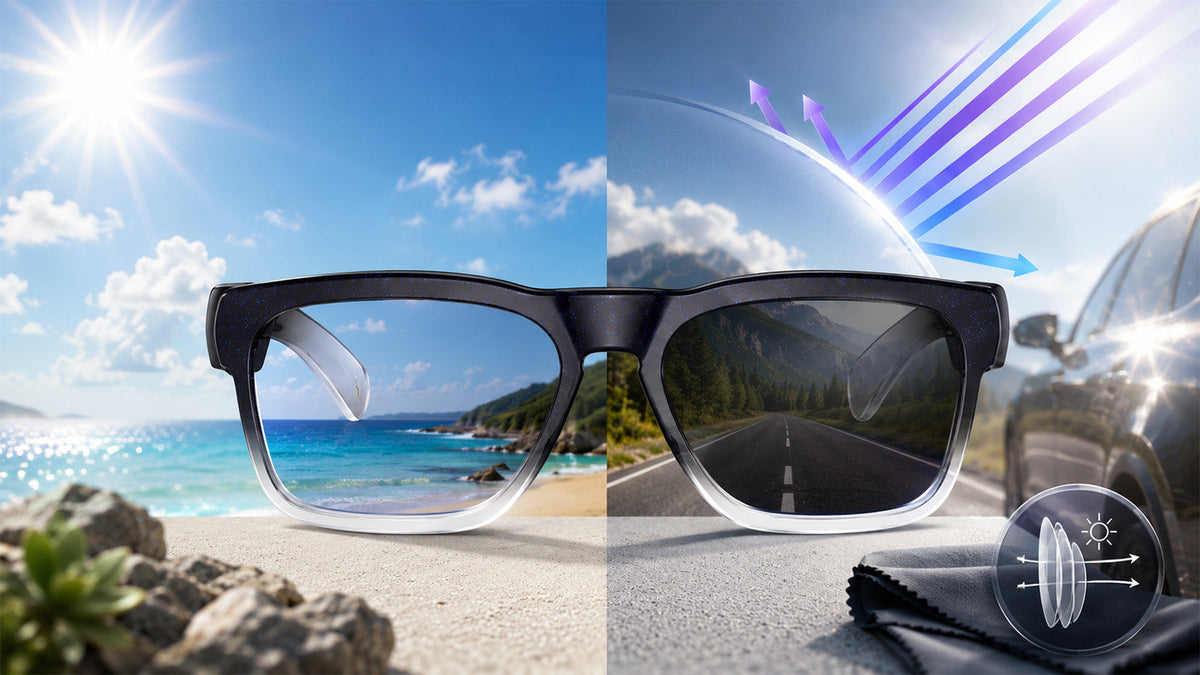
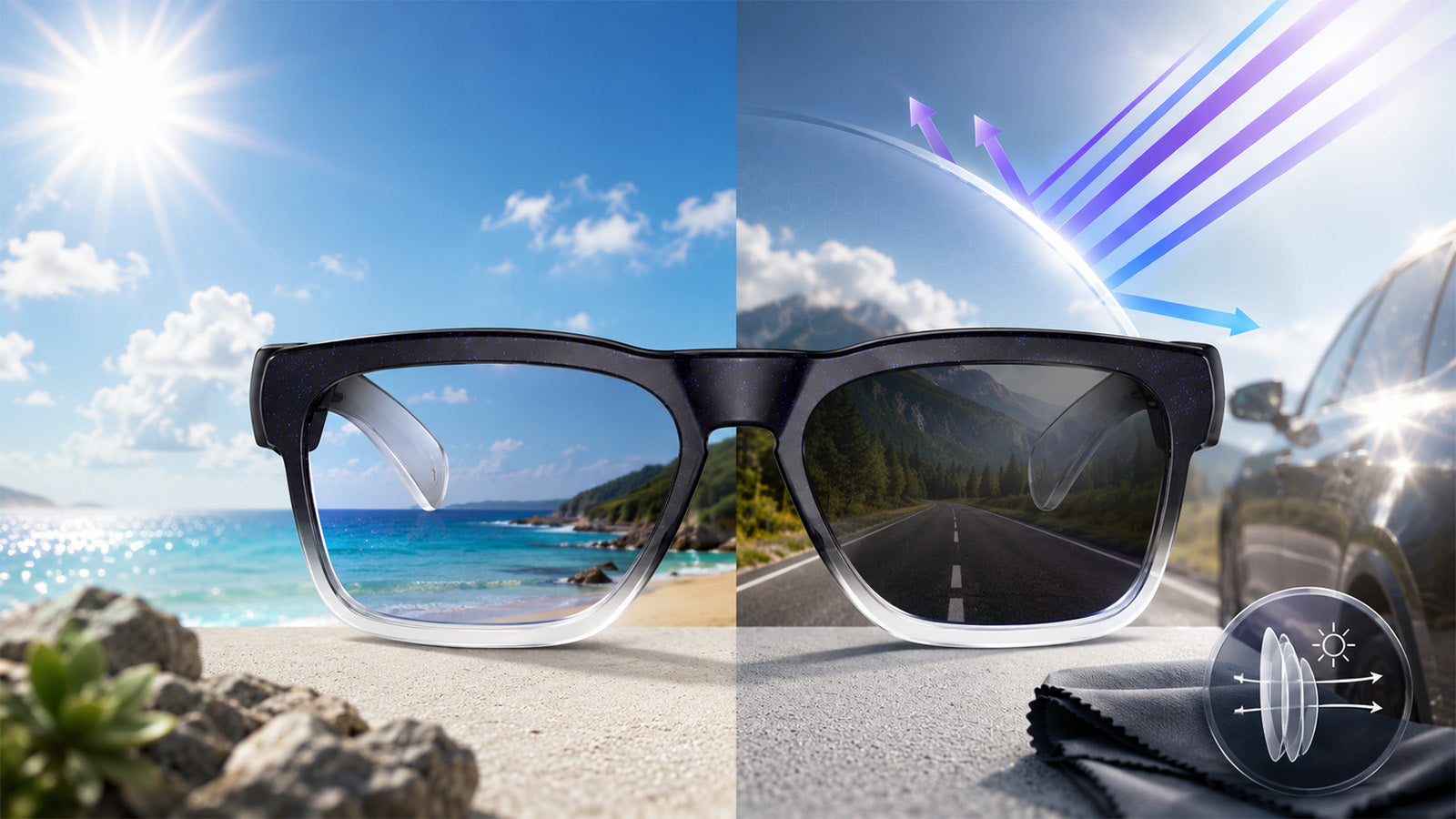
Light waves usually vibrate in all directions. When they hit flat surfaces like roads or water, they become "polarized," which means they vibrate horizontally. This creates glare, which is the blindingly bright light that makes you squint. A polarized filter is a chemical layer that only allows vertical light through. This clears up your view instantly and reveals details that would otherwise be hidden by the bright reflections.
Comfort versus Health Protection
A common mistake is believing that a polarized lens automatically saves your eyes from the sun. Polarization is about visual comfort and clarity, while UV400 is about biological safety. Combining both into polarized UV400 sunglasses ensures that you see clearly without risking your health. While a polarized filter makes the world look better, the UV400 coating is what keeps the sun from damaging your tissue.
The following comparison highlights why you need both layers of protection.
| Feature | Primary Function | Main Benefit |
| UV400 Coating | Blocks 100% of UV radiation | Prevents long-term eye damage |
| Polarized Filter | Eliminates horizontal glare | Improves clarity and reduces squinting |
high-performance eyewear usually combines these filters to maximize safety.
5 Common Myths About Sunglasses Protection
Misinformation makes it easy to choose the wrong gear. Knowing the truth about these five myths will help you protect your vision more effectively.
- Darker lenses offer more protection. Darkness only reduces visible light, not ultraviolet rays. A clear lens with a UV400 coating is safer than a dark lens with no coating.
- Polarized lenses always have UV protection. These are two different treatments. Always check the label for "UV400" specifically to ensure your health is protected.
- Cheap glasses protect just as well as expensive ones. Some low-cost glasses use cheap dye that offers zero safety. It is important to verify that the glasses meet international standards.
- You do not need protection on cloudy days. UVA rays can pass through clouds easily. Eye protection is a requirement for every day of the year.
- All "UV Protection" labels mean UV400. Some labels only mean the glasses block a portion of rays. Only the 400nm standard guarantees 100% blockage of UVA and UVB.

Factors to Determine Your Need for Professional Protection
Deciding whether you need these features depends on your daily habits and the environments where you spend your time.
- Daily Sun Exposure Levels: People who spend more than two hours a day outdoors require a strict UV400 standard to prevent cumulative tissue damage.
- Proximity to Reflective Surfaces: If your routine involves driving, water sports, or snow, the horizontal glare makes a polarized filter a necessity for safety.
- Geographic Altitude and Location: UV intensity increases at higher altitudes and closer to the equator, which makes professional grade shielding more important.
- Personal Light Sensitivity: If you experience frequent squinting or headaches in bright light, you likely need the combination of polarization and UV filtration to reduce eye strain.
Can Camera Sunglasses Still Offer Real UV400 Polarized Protection?
Technology has advanced so that smart devices can now match the quality of traditional eyewear. You no longer have to choose between recording your view and protecting your eyes.
Quality Lenses in Smart Devices
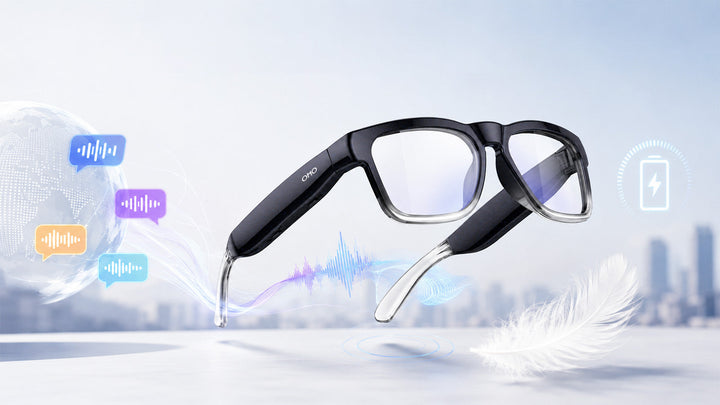
Modern devices like the Primex EIS prove that high-tech features can live alongside professional lenses. This model uses a polarized UV400 lens that blocks 100% of UVA and UVB rays while you film. It features a 2K resolution camera with Electronic Image Stabilization (EIS) to eliminate jitter, delivering fluid and cinematic results even during high-motion activities. You get professional eye safety and professional-level video in one single frame.
Durability for Active Creators
A creator needs gear that stays comfortable during long hours in the sun without feeling like a heavy piece of equipment. By using lightweight TR90 material, these professional frames weigh only 60g, which is light enough for all-day adventures. Since high-resolution files require a lot of space, these devices often support up to 512GB of built-in storage to ensure no memories are lost. They can even charge while in use, which solves the problem of a dying battery during a long hike. This balance of safety and tech proves that your eyes never have to pay the price for a great video.
Secure Your Vision with Professional Standards
Safe eyes and clear views are the foundation of any great outdoor adventure. Choosing the right standards ensures you can enjoy the sun without risking your health. Every trip is better when you can see the world in high definition without the fear of radiation. Find a pair that balances style with the safety your eyes deserve.
FAQs about Polarized and UV400 Lenses
Q1. What Is the Difference Between Polarized and UV400 Lenses?
Polarized lenses are designed to block horizontal light waves to stop glare from flat surfaces. UV400 lenses are a health standard that blocks 100% of the sun's radiation up to 400 nanometers. You should look for glasses that offer both features to get the best visual experience and the highest safety level.
Q2. Does Lens Color Have an Impact on Ultraviolet Safety?
Lens color is a personal preference and does not indicate how much UV protection you have. A clear or light yellow lens can have a UV400 coating while a very dark gray lens might have none at all. Always rely on the technical labels rather than the darkness of the tint when you buy new eyewear.
Q3. Is It Safe to Wear Polarized Sunglasses in Low Light?
Polarized lenses can make some screens or digital displays look dark or distorted because of the light filters. They also reduce the total amount of light reaching your eye, so they are not recommended for night driving or very dim rooms. Use them when you are in bright outdoor environments to get the most benefit for your vision.
Q4. How Long Does the UV Protection Coating Last on Lenses?
The UV protection on many sunglasses can degrade over time if the lenses are scratched or exposed to extreme heat for long periods. It is a good practice to replace your sunglasses if they have heavy surface damage or deep scratches. Keeping them in a protective case when they are not in use helps the coating last much longer.