

















Smart translation glasses can help you learn a foreign language faster in one narrow way: they make short listening practice easier to start because you are not staring at a phone screen. That convenience does not automatically translate into faster progress. Speed depends on how you use the translated audio, whether you keep testing your own recall, and whether you replay the original speech without help. This guide walks through an audio practice sequence, three daily workflows, and the product facts worth checking before you buy a pair for language study.
Can Smart Translation Glasses Help You Learn a Foreign Language Faster?
The short answer splits into two parts: what the glasses can realistically change, and what they cannot prove yet.

What the Glasses Can Change
Wearing translation glasses removes one friction point. You no longer need to pull out a phone, unlock it, and open a translation app while someone is speaking. That lower friction can make you more likely to attempt a short practice session on a commute, a walk, or during a quick exchange. Immediate audio feedback also means you hear a translated version of a phrase right after the original, instead of typing it into an app later. This may reduce practice friction and make access easier. It may make practice easier to fit into a normal day, but that possibility is not proof of a consistency or learning gain. The glasses do not, by themselves, prove that words stick better or that comprehension improves faster than it would with a phone.
What They Cannot Prove
A mixed-methods evaluation of real-time translation in augmented reality glasses found no significant quantitative difference between AR glasses and phone-based translation, even though participants said the glasses felt less intrusive during conversation. That device comparison did not establish faster language progress from AR translation glasses. Speed depends on what happens after you hear the translation: whether you try to recall the original phrase, whether you replay it without help, and whether you revisit it later. Those habits, rather than the hardware alone, can influence how much a session helps.
How Do You Use Translated Audio Without Losing Active Listening?
Use translation as a check on your own attempt, not as the first thing you hear. The sequence below keeps your ears working before the glasses do.
The Listen, Try, Check, Replay Sequence
- Listen to the original phrase or sentence first, before any translation plays.
- Try to identify the meaning yourself, or attempt a short response, even if you are unsure.
- Use the translated audio briefly to check whether your guess was close.
- Replay the original phrase without translation and notice what you missed the first time.
This order matters because conditions that require more effort from the learner, as long as they can still succeed, tend to produce stronger learning gains than being handed the answer immediately. Spaced review, revisiting the same phrase a day or a week later, tends to help retention more than repeating it several times in one sitting. Treat the glasses as a feedback tool inside that sequence, not a simultaneous two-track audio system, unless a product specifically confirms it can play both streams at once.

Signs Translation Is Taking Over
- You wait for the translated audio before attempting to understand anything.
- You can repeat the meaning but cannot recognize the original phrase when it plays again.
- Your sessions never include a translation-free replay or a later recall check.
If you notice any of these, cut back the support on your next attempt. Try the phrase with less help, or none, before turning translation back on.
What Dual-Audio Workflows Work for Daily Practice and Immersion?
These three workflows apply the same rule to different settings: quiet study, live conversation, and everyday immersion.
Repeated Listening at Home
- Pick a short clip or phrase you can replay, such as a lesson line or a short news clip.
- Listen to the original once and try to summarize it out loud before checking translation.
- Replay the original again and repeat your summary without looking at any text or translation.
There is no set number of repeats that guarantees mastery. Keep replaying until your summary matches the original meaning without help.
Conversation Practice
- Let the conversation continue in the original language and only trigger translation when you miss a phrase or need to confirm a response.
- Keep talking rather than pausing on every sentence; note phrases mentally to review after the conversation ends.
- In a low-stakes practice conversation, test the open-ear audio, translation delay, and audio routing before relying on the device in a real exchange. Then turn translation off and check whether you can understand or recall one short phrase.
Walking, Travel, and Immersion
- Use hands-free prompts or a brief translation only when your surroundings let you focus, such as reading a sign or catching part of an announcement.
- Repeat the phrase later in a quiet setting without translation to see if it stuck.
- Keep a phone or phrasebook on hand for moments when noise, an unfamiliar accent, or a weak connection makes the translation unreliable.
In the EARLL demonstration, researchers reported perceived latency, largely from slow object-detection timing, in the wearable language-learning prototype. That observation applies to that prototype and does not establish the same delay for other devices.
When Do Hands-Free Glasses Help More Than a Phone Screen?
The right tool depends on the moment, not on which device has more features. Here is how three common study scenes usually play out.
Match the Device to the Study Scene
| Study scene | Where glasses help | Where a phone still wins | Recommended setup |
|---|---|---|---|
| Quiet home study | Hands-free replay while you take notes or move around | Precise transcript review and adjusting playback speed | Glasses for listening, phone for transcript checks |
| Live conversation | Fast audio feedback without breaking eye contact | Reviewing a saved translation or spelling out a name | Glasses for the exchange, phone for follow-up notes |
| Travel or walking | Catching short prompts without stopping to type | Maps, offline phrasebooks, or spotty connectivity backup | Glasses on, phone ready as backup |
Why Hands-Free Does Not Mean Phone-Free
Hands-free audio usually still depends on a paired phone. Bluetooth pairing, app settings, internet access, and language selection often happen on the phone even when the glasses handle the actual listening moment. What changes is how often you have to look at a screen while trying to listen or talk. Reducing that friction can make a session feel less disruptive. It does not remove the phone from your study kit. For real-world limits on live exchanges, including noise, accents, and connectivity, our guide on real conversation limits covers what still needs verifying before you rely on any pair of glasses for a live exchange.
What Should You Verify Before Buying Translation Glasses for Language Study?
Before you buy anything, run through the checks that actually change whether a pair fits a study routine.
The Checks That Determine Study Fit
| Verify this | Why it changes the study routine | Decision if unverified |
|---|---|---|
| Exact language pair and direction | Translation only helps if it covers the language you are learning, both ways | Defer until confirmed |
| Where translated audio plays | Open-ear audio versus a paired phone screen changes how hands-free the routine really is | Defer until confirmed |
| Latency and accuracy | A slow or wrong translation can teach the wrong phrase | Defer until confirmed |
| Phone or app dependency | Determines whether you still need your phone nearby for setup or translation | Defer until confirmed |
| Recording and privacy behavior | Glasses with a built-in camera may record video and audio; confirm indicators and local rules before use | Skip if unclear and privacy matters |
A Conditional Store Candidate
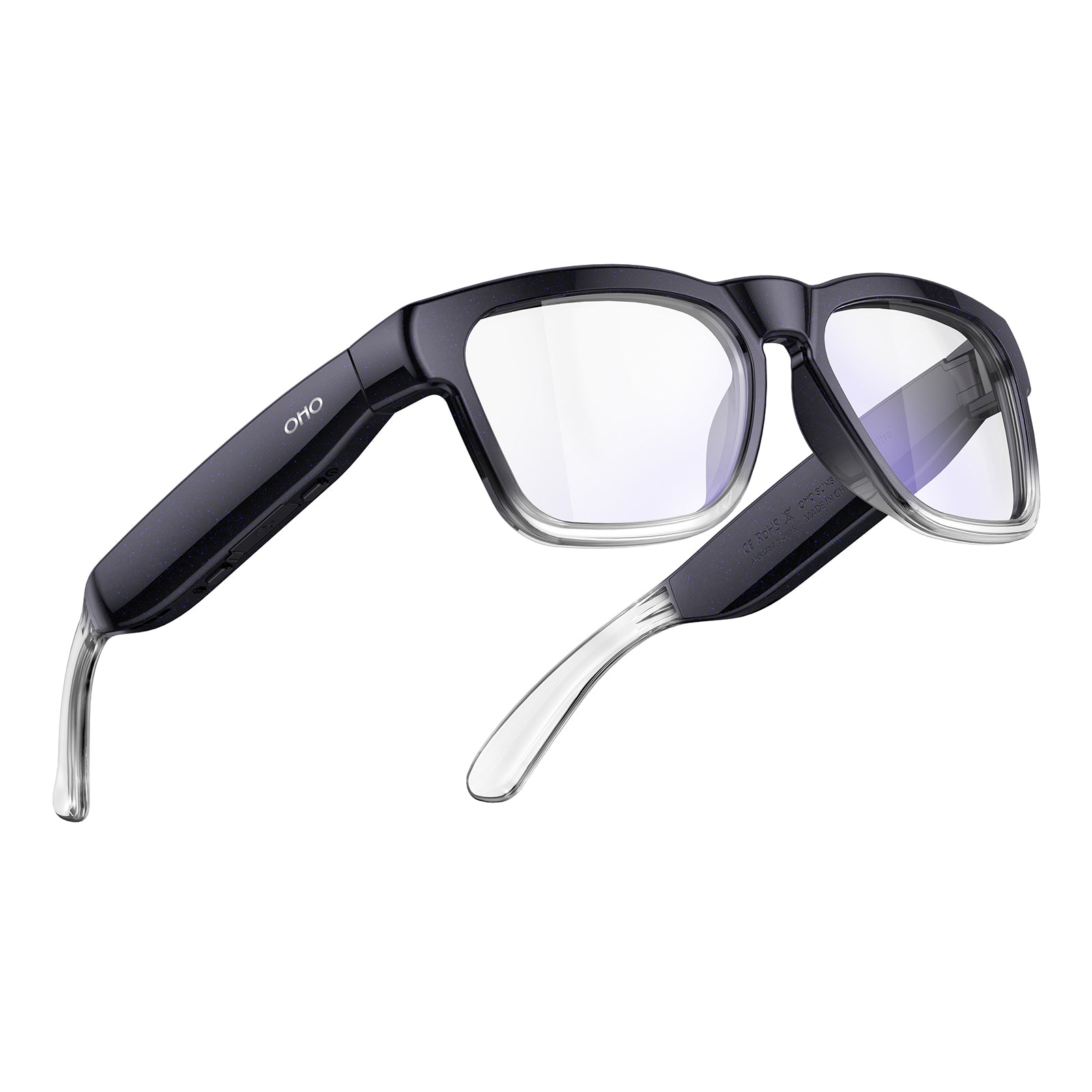
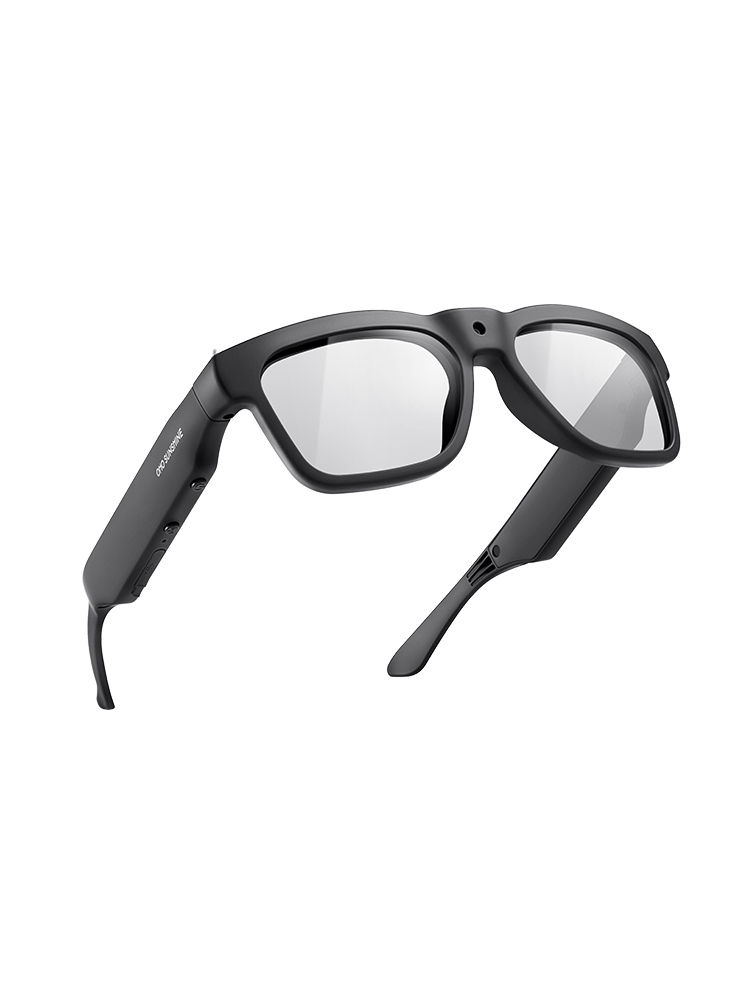
Once those checks are clear, our Edge Pro smart glasses are a reasonable candidate for hands-free conversation practice. The current product record lists real-time translation covering 165 languages, two-way translation, an open-ear speaker, a built-in microphone, voice control, and Bluetooth 5.3, alongside a 4K camera for recording practice scenes. Related current product records list slightly different language counts, so recheck the number and your exact language pair before relying on this feature. We list these as the current manufacturer specifications, and we recommend confirming the audio route for your intended use and any phone or app requirement before you rely on it for daily study. Review the Edge Pro translation features directly, and compare options in the AI translation glasses lineup if you want alternatives with similar audio and translation support.
When to Defer or Skip
- Buy conditionally when the language pair, translation direction, audio route, latency, and phone or app requirements all match your routine.
- Defer when any of those facts are unclear on the product page; ask before you buy rather than assuming.
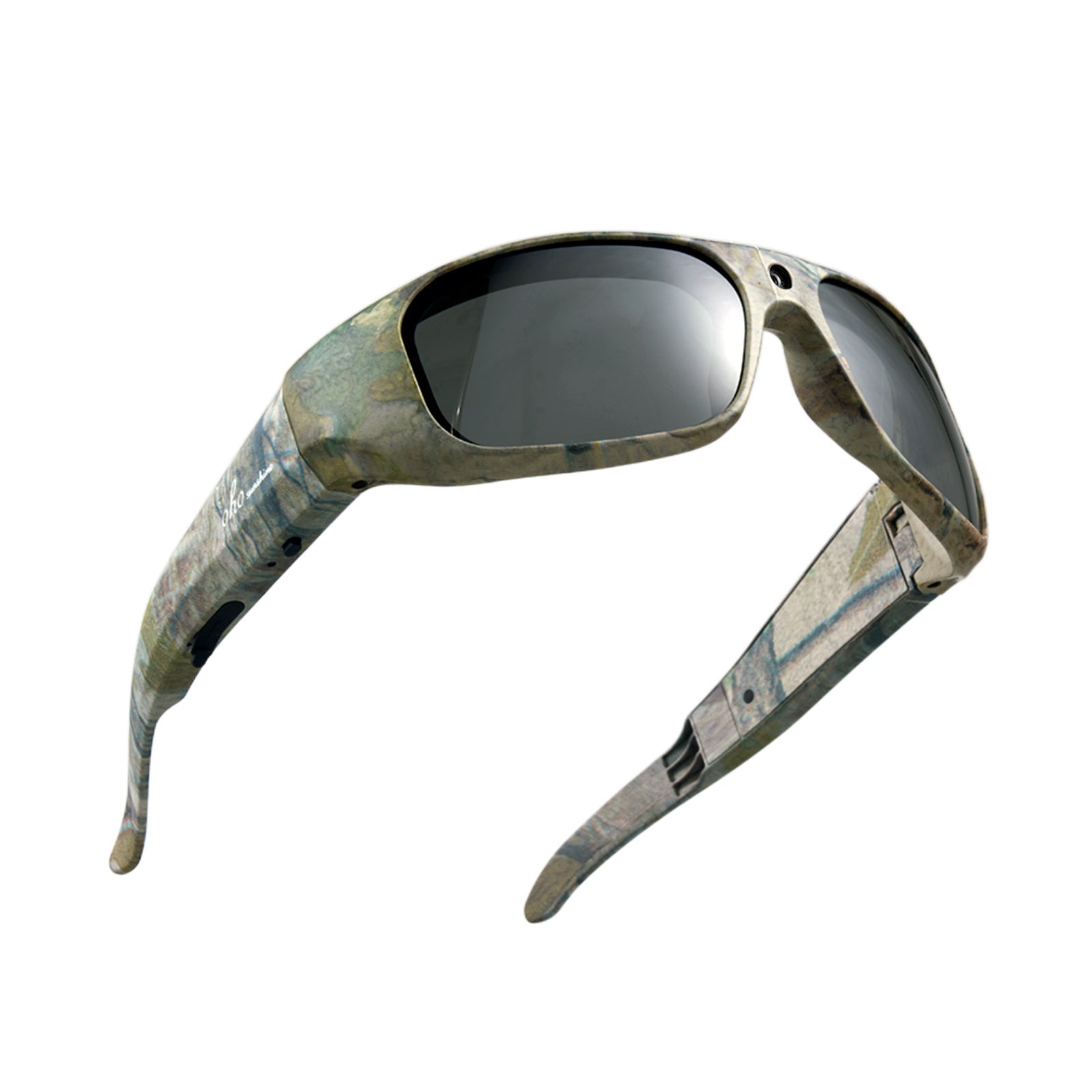
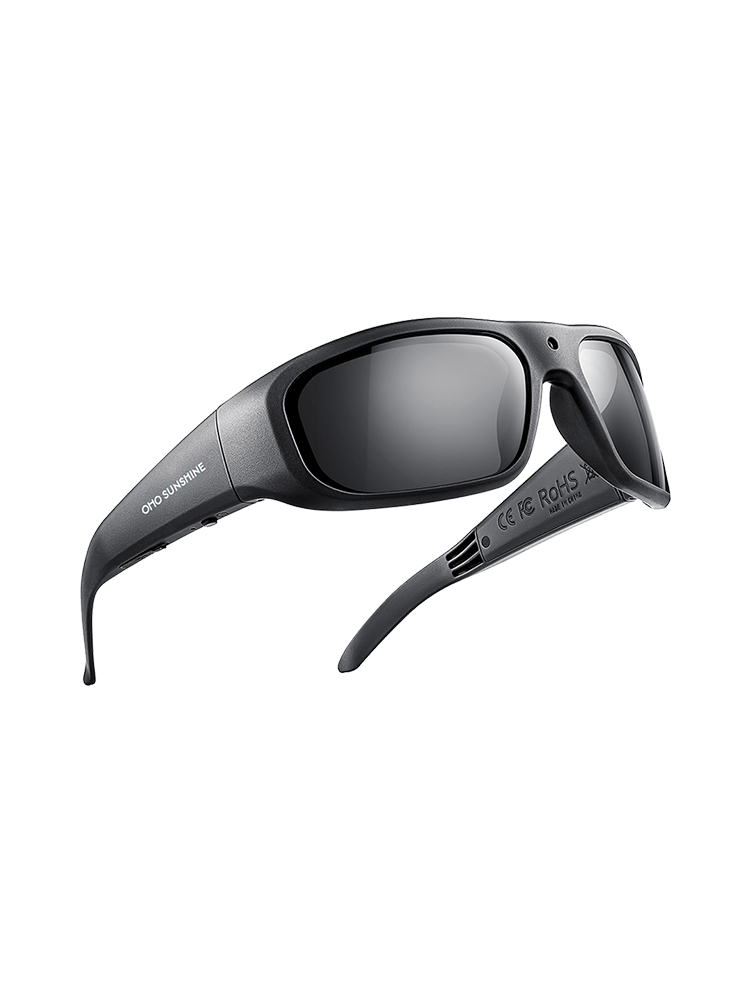
- Skip camera glasses, including recording-focused models, for translation study unless their listing separately and explicitly confirms translation support. A camera and microphone alone do not translate speech.
FAQ
Can Translation Glasses Make You Learn a Language Faster?
No study confirms a guaranteed speed increase from wearing translation glasses. They can make short practice sessions easier to start and less screen dependent, which may help you practice more consistently. Faster progress still depends on active listening and recall, not the hardware alone.
How Do I Use Translation Glasses Without Becoming Dependent on Translation?
Listen to the original phrase and attempt to understand or respond before turning on translation. Use the translated audio only as a quick check, then replay the original without help and try to recall it again later.
Can I Use Translation Glasses Without Looking at My Phone?
You can reduce phone use during the moment of listening or conversation, since the audio plays through the glasses. Setup, app settings, language selection, and some translation modes may still require a paired phone, so keep it nearby.
Are Camera Glasses Enough for Language-Learning Translation?
No. A camera and microphone let a pair of glasses record video and audio, but that does not mean they translate speech. Confirm the exact translation mode, language pair, audio route, and connectivity requirements before assuming any camera glasses support language study.
References
- Purdue University (2025). Retrieval-Based Learning: A Review.
- Florida State University (2024). Eyes on the Future: A Mixed-Methods Evaluation of Real-Time Translation in Augmented Reality Glasses.
- University of Washington Makeability Lab (2024). Embodied AR Language Learning Through Everyday Object Interactions: A Demonstration of EARLL.


Leave a comment
This site is protected by hCaptcha and the hCaptcha Privacy Policy and Terms of Service apply.