















Ghost glare in ski goggles usually falls into one of three patterns: a reflection that shifts with sun angle or head position, a haze or fog that stays put no matter how you look, or doubling that remains even after you take the goggles off. The first pattern is often just light behaving the way bright snow and low winter sun do. The second and third point toward a lens problem or something beyond the goggles, and each has a different next step.
What Kind of Ghost Glare Are You Seeing?
Start by watching how the glare behaves, not by assuming a cause. The pattern you see decides whether you compare conditions, inspect the lens, or stop riding altogether.
When the Effect Changes With Sun or Head Position
If the double image or halo shows up mostly when you're facing low sun, bright open snow, or looking at a sharp angle, test it again from another direction. Tilt your head slightly or turn away from the light source and see if the effect fades. A change tied to sun position and viewing angle doesn't prove the lens is fine or damaged on its own, but it tells you which comparison to run next: environmental conditions versus the lens itself.
When Ghosting Persists in Neutral Conditions
Ghosting that stays the same in shade, indoors, or under flat overcast light is a different story. Once the outer lens surface is confirmed dry, that kind of persistent haze deserves a closer look for contamination, scratches, coating wear, a shifted lens, or moisture trapped between the layers. Visible moisture sitting between the panes is a stronger signal to stop trusting that lens than a reflection that simply moves with the sun.
When the Doubling Remains Without the Goggles
Take the goggles off while you're stationary and safe, not mid-run, and check whether the doubling is still there. If it disappears, the goggles were likely involved. If it doesn't, the issue belongs to a different troubleshooting path entirely, one that has nothing to do with lens cleaning or repositioning.
Why Ski Goggles Produce Double Reflections or Ghost Glare
Several distinct goggle-related conditions can create reflections or haze, and each one calls for a different response. Knowing which category you're looking at keeps you from cleaning a lens that actually needs replacement, or replacing one that just needs repositioning.

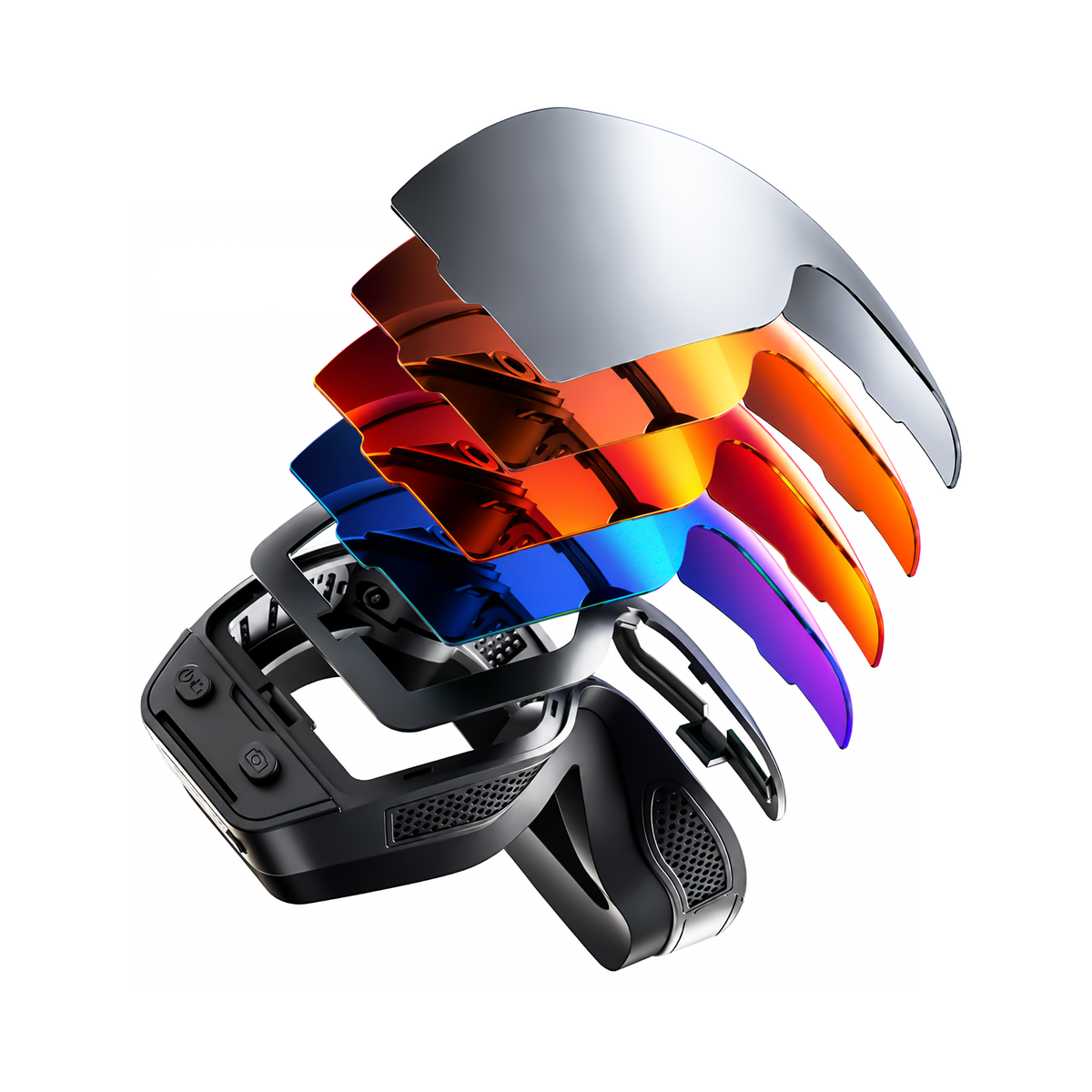
Many ski and snowboard goggles use a dual-pane design: an inner lens and an outer lens with a sealed air cavity between them. That cavity is meant to insulate the inner lens from cold air so it doesn't fog from condensation, and a perimeter seal helps keep the cavity isolated from outside moisture, according to a dual-pane lens cavity and perimeter seal patent describing this construction. When that seal is compromised, moisture can work its way into the cavity, and moisture between lens layers can compromise visibility in a way that ordinary surface fog does not.
Surface-level issues are a separate category. Contamination like sunscreen, snow spray, or skin oil on the outer or inner face can scatter light into a hazy double image, and this is usually the easiest problem to rule out with a manual-approved cleaning method. Scratches, coating damage, and delamination (where a lens layer starts separating) create a more fixed pattern of distortion that doesn't wipe away. A goggle that's seated unevenly on your face or has shifted in the frame can also throw off your view, which is a fit issue rather than a lens defect. Treating these as separate categories, instead of one vague "ghosting" problem, is what lets you match the right fix to what you're actually seeing.
How to Check Ski Goggles Without Damaging the Lens
If your vision on the mountain is unreliable, stop riding before you troubleshoot anything else. Once you're safely stopped, work through the inspection in order instead of jumping straight to cleaning or repositioning.
Start With a Dry, Hands-Off Inspection
- Move somewhere with neutral, even light if you can.
- Look at the outer lens for film, droplets, or scratches, then check the edges for separation or a lens that's sitting loosely in the frame.
- Look specifically for haze or moisture that appears to sit between the two lens layers rather than on the surface.
- Avoid rubbing the inner lens or reaching for a household cleaner unless your goggle's own instructions specifically allow it. The inner coating is often more fragile than the outer one.
Reposition and Compare the Same View
- Put the goggles back in their normal centered position on your face.
- Look at the same background or object before and after a small adjustment to fit or frame pressure.
- If the glare changes noticeably with frame seating, note that result, but don't treat a changed appearance as proof the lens itself is repaired. Fit and lens condition are two separate things.
Repeat the Check With the Goggles Off
- While stationary and safe, compare the same view without the goggles on.
- If the doubling is gone, the goggles were the source and you can move to the inspection findings above.
- If it remains, stop treating this as a lens-only problem and move to the escalation guidance below instead of repeating the check.
When Should You Stop Using a Lens and Request Warranty Review?
Stop using a lens once you've found moisture trapped between the panes, physical damage that survived a careful dry inspection, or vision that stays unreliable after repositioning. At that point, further cleaning or adjusting isn't likely to change the outcome, and continuing to ride on that lens isn't worth the risk.
Before contacting the manufacturer, gather what they'll need to evaluate the claim: the exact model name, your purchase date or order number, clear photos of the affected area (including any visible moisture between layers), and a short note on when the symptom appears. Then check the current warranty terms directly, since coverage length, what defects are included, proof-of-purchase rules, and how to submit a claim can all vary by model and change over time. A one-year warranty listing doesn't guarantee that a specific defect will be approved for replacement; it tells you there's a process worth starting.
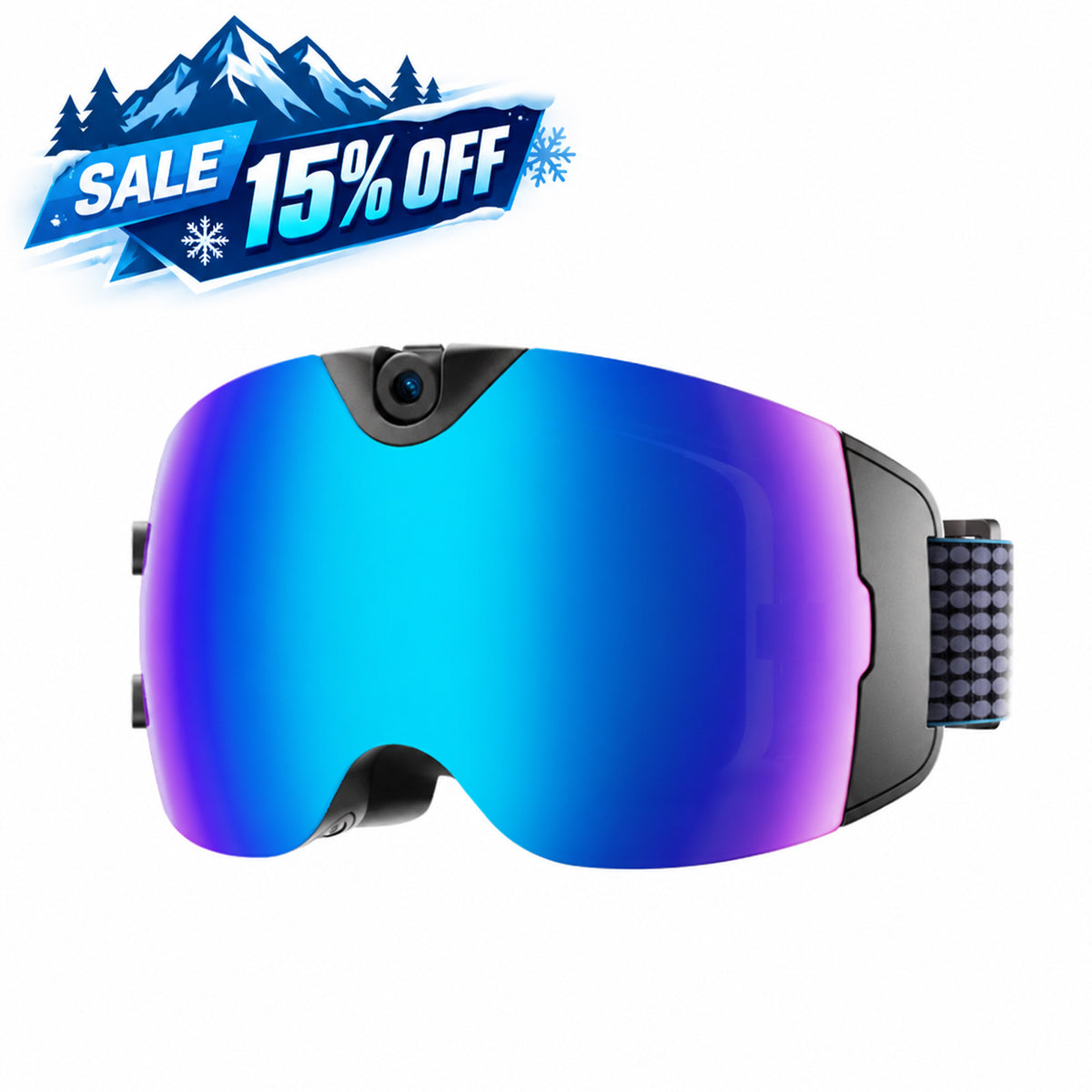
If you're shopping for a replacement anyway and also want hands-free run footage, that's a separate decision from fixing the current lens. Our Skyshot camera ski goggles combine a polarized, anti-fog lens with a 140-degree 4K camera and a one-year warranty, which fits riders who want to record while they ride. Choose it because you want that recording feature, not as a workaround for unresolved ghost glare on your current pair. If comfort under a helmet matters to you with a camera-equipped goggle, our camera ski goggles comfort test walks through what to check before buying.
When the Double Vision Is Not Adequately Explained by the Goggles
If doubling remains after you take the goggles off, is new, or doesn't line up with any visible lens problem you found, stop treating it as a goggle issue. Continuing to clean, reposition, or replace lenses at that point won't address the actual cause.
New or unexplained double vision is worth taking seriously on its own. Eye care guidance notes that double vision has many possible causes, and doctors recommend seeing one promptly when it's new or unexplained double vision, rather than assuming it will resolve with a gear fix. Stop riding whenever you can't reliably judge terrain, contrast, or distance, and arrange evaluation before you get back on snow. This article can't tell you whether the cause is your eyes, something else entirely, or a coincidence with a goggle problem, and it isn't meant to.
If terrain stays distorted without goggles, end your ski day immediately and schedule a professional medical evaluation before returning to the slopes.

FAQs
Can trapped moisture between ski-goggle lenses be dried out?
Moisture that's visibly sitting between the two lens layers isn't the same as ordinary surface fog, and it shouldn't be treated like it. Avoid using heat or forceful drying to try to clear it. The safer move is to stop relying on that lens and check your specific model's care and warranty instructions before attempting anything further.
Does a one-year goggle warranty guarantee a replacement lens?
No. A listed warranty term tells you there's a process to submit a claim, not that any specific defect will be approved. Approval depends on the current policy, the model, your proof of purchase, and the manufacturer's own assessment of what you report, so it's worth checking those details before assuming replacement is automatic.
Can an anti-fog lens fix ghost glare in ski goggles?
Anti-fog treatments are built to reduce condensation-related fogging, not every form of ghosting or reflection. If haze persists once the lens is dry, or appears to sit between the panes, anti-fog coating isn't the relevant fix. Use the inspection and replacement steps above instead of assuming a fog-resistant feature will resolve it.
Conclusion: Choose the Safest Next Step
Match your next action directly to the symptom you observe. Compare lighting angles if glare only shifts with the sun, or photograph trapped moisture and submit a warranty claim if the seal failed. If doubling persists with goggles off, stop riding immediately and arrange professional evaluation.


コメントを書く
このサイトはhCaptchaによって保護されており、hCaptchaプライバシーポリシーおよび利用規約が適用されます。