











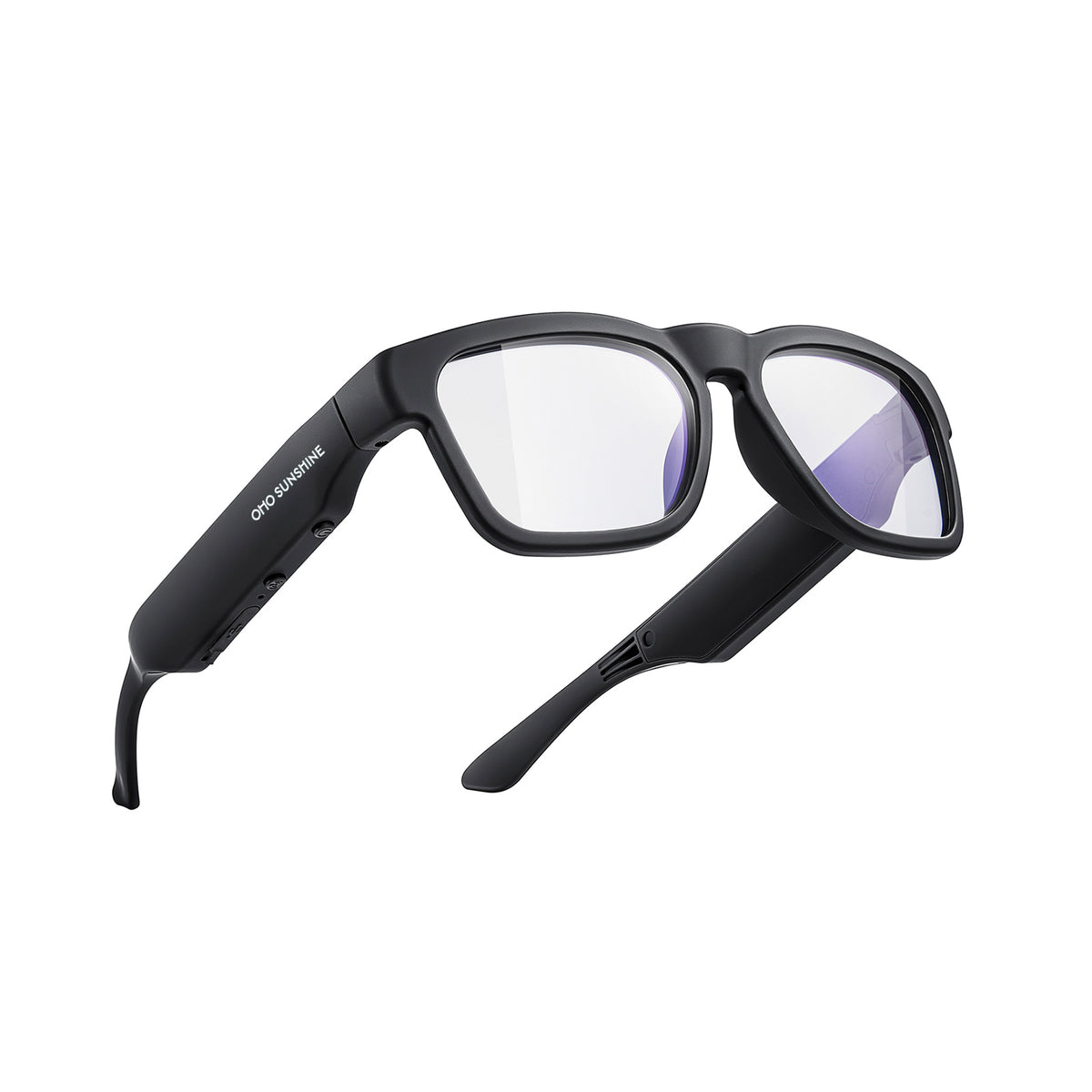


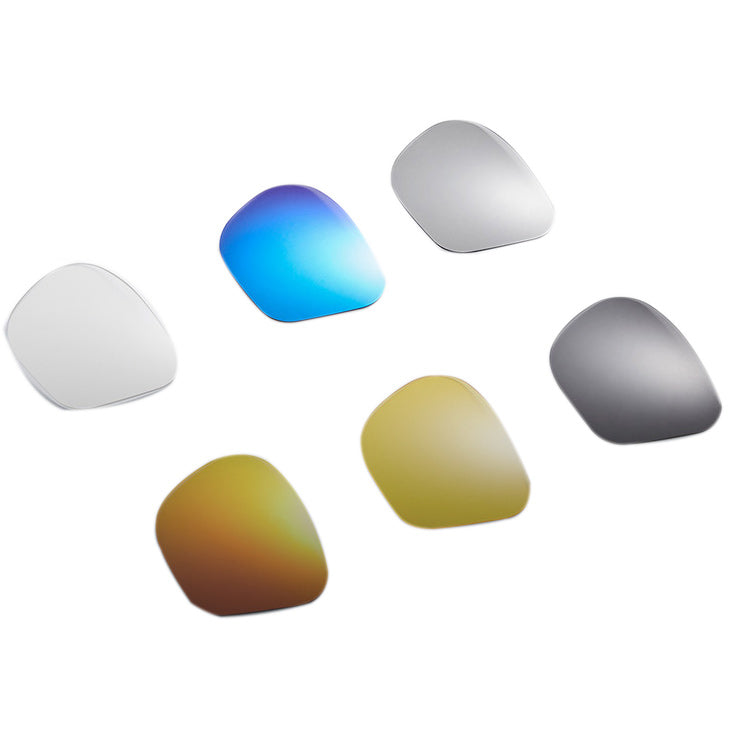
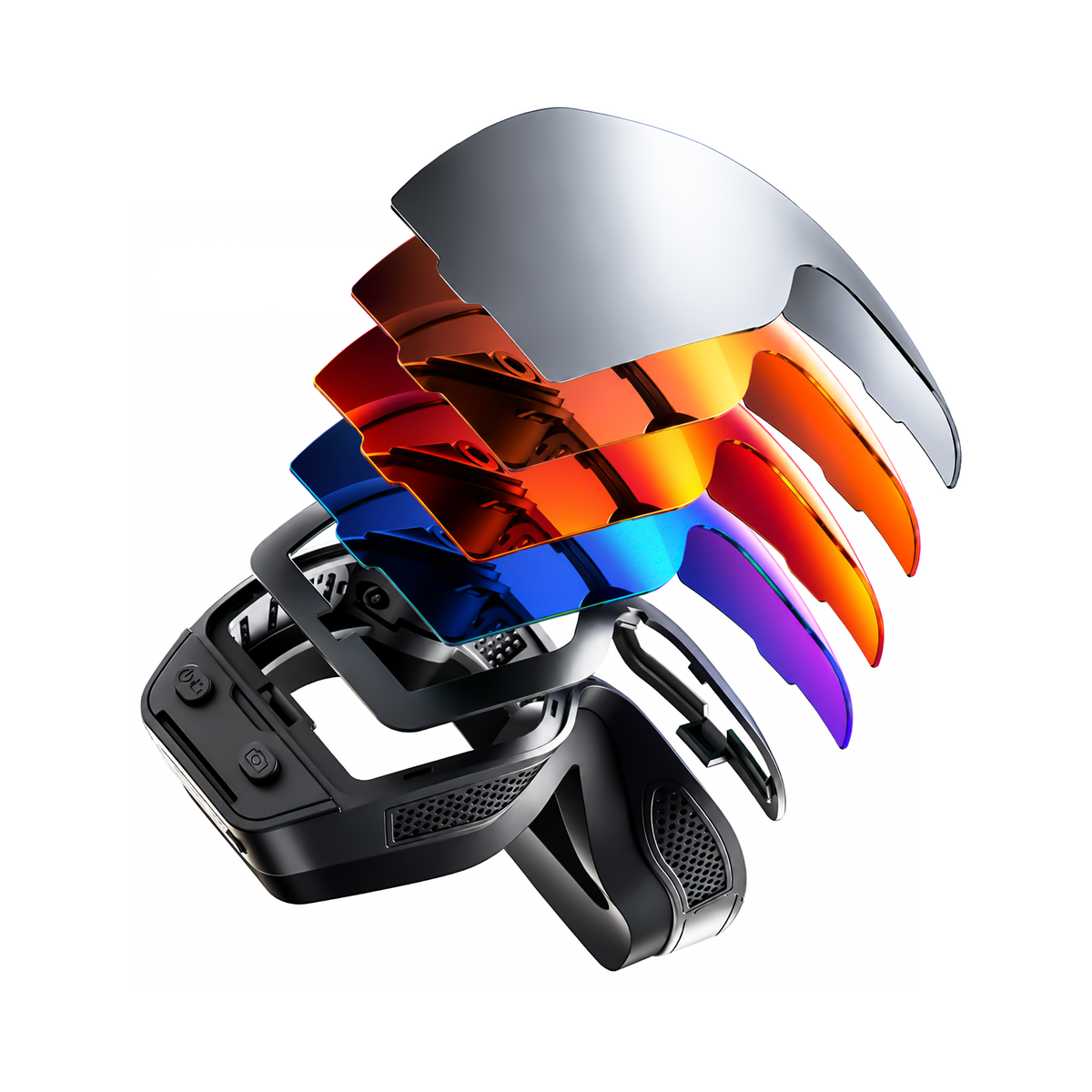



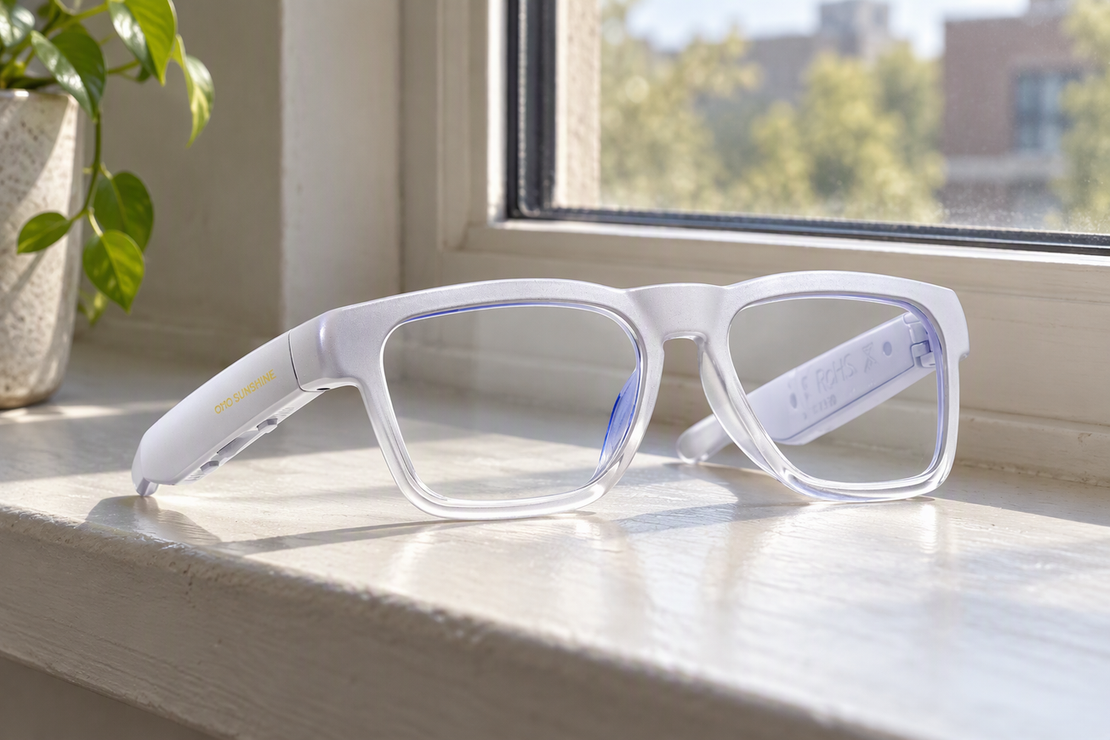
Not necessarily, and you can't tell by looking. A clear or lightly tinted photochromic lens may or may not block UV, because how dark a lens looks tells you nothing about its UV protection. The answer you can rely on is a clear UV protection statement for the exact lens you own or plan to buy.
Do Clear Photochromic Lenses Block UV?
A clear appearance can't confirm UV protection, and it can't rule it out either. The American Academy of Ophthalmology states that lens color and darkness do not tell you anything about a lens's ability to block UV light. This works both ways. A dark lens is not proven protective, and a clear lens is not proven unprotected.
Photochromic lenses lighten and darken as light conditions change, so the same pair can look nearly clear in your kitchen and much darker on a sunny sidewalk. That shift in tint is something you can see. UV filtering is something you can't see, so the look of the lens at any moment is a snapshot of its tint, not a reading of its UV protection. Holding the lens up to a window or checking it in a mirror gives you no useful answer.

The same AAO guidance notes that photochromic lenses may be good UV-absorbing sunglasses, but the label must state that benefit. In practice, the word "photochromic" alone is not a promise. A lens earns your trust on UV through its stated protection, so the real question shifts from "how does it look?" to "what does the documentation for this lens say?"
How to Verify UV Protection for the Exact Lens
Check the lens itself, using documentation that clearly names it. The process has two parts: confirm you have the right record, then read what it actually says about UV.
Match the Documentation to the Lens
Start by identifying the exact lens make and model. Look at your lens order, prescription receipt, packaging, product listing, or the card that came with the glasses. For prescription eyewear, the lens type is often recorded on the order from your optical shop, separate from the frame name.
A frame description is not a lens specification. Neither is a category label such as "photochromic" or "light-adaptive." Many eyewear lines offer more than one lens option, and the UV wording for one option doesn't automatically carry over to another. If you're comparing photochromic Bluetooth glasses, match each listing's UV wording to the lens option on that specific model. If you're still choosing a lens type, our breakdown of photochromic and polarized lens setups covers how those options differ for mixed-light days.
Look for an Explicit UV Statement
A useful statement names a UV protection level for that lens in plain terms. We follow the same record-matching approach in our ski goggle UV verification walkthrough for snow goggles, and it works the same way here:
- Open the document you matched to your lens and find the UV wording. A stated level, such as 100% UV protection or what a UV400 label means, gives you something concrete to rely on.
- Read the claim exactly as written. Phrases like "helps reduce glare" or "great for sunny days" describe comfort, not a UV protection level, so treat them as no statement at all.
- If the statement is missing or vague, ask the manufacturer or seller to confirm the UV protection for your exact lens in writing. You can also ask an eye-care professional, and the AAO notes that many opticians and optical stores have a device that measures total UV protection from lenses.

If you bought photochromic glasses from us and the listing leaves the UV question open, contact our support team with your order details. Ask for the UV statement that applies to the exact lens on your pair, so your answer comes from a record rather than a guess.
Your Next Step
Before you count on clear-looking lenses for time outdoors, pull up the record for your exact lens and find its stated UV protection. If you can't find one, get written confirmation from the maker or have an eye-care professional check the lens before you rely on it.
FAQs
If my lenses darken in sunlight, does that prove they block UV?
No. Darkening shows that the photochromic tint is working, but tint and UV protection are separate things. According to AAO guidance, the darkness of a lens doesn't tell you about its UV blocking, so a lens that changes color well still needs a stated UV protection level.
Do photochromic Bluetooth glasses need a different UV check?
The check is the same. Audio features, speakers, and battery specs don't change how you confirm lens protection. For smart Bluetooth sunglasses, look for the UV statement tied to the lens option on that model, just as you would for standard eyewear.
Can I test UV protection at home with a flashlight or phone?
Looking through a lens can't tell you its UV protection, since what you see is visible light and tint. An optician or optical store with a UV measuring device is the practical option when paperwork is missing. Call ahead to ask whether they offer the check.
Does one UV claim cover every lens in a product line?
Not automatically. A product line can include different lens choices, and each one should have its own stated protection. If a listing gives one UV claim for several options, ask the seller to confirm it applies to the lens you chose.



Zanechať komentár
Táto lokalita je chránená testom reCAPTCHA a vzťahujú sa na ňu pravidlá ochrany súkromia a podmienky poskytovania služby hCaptcha.