








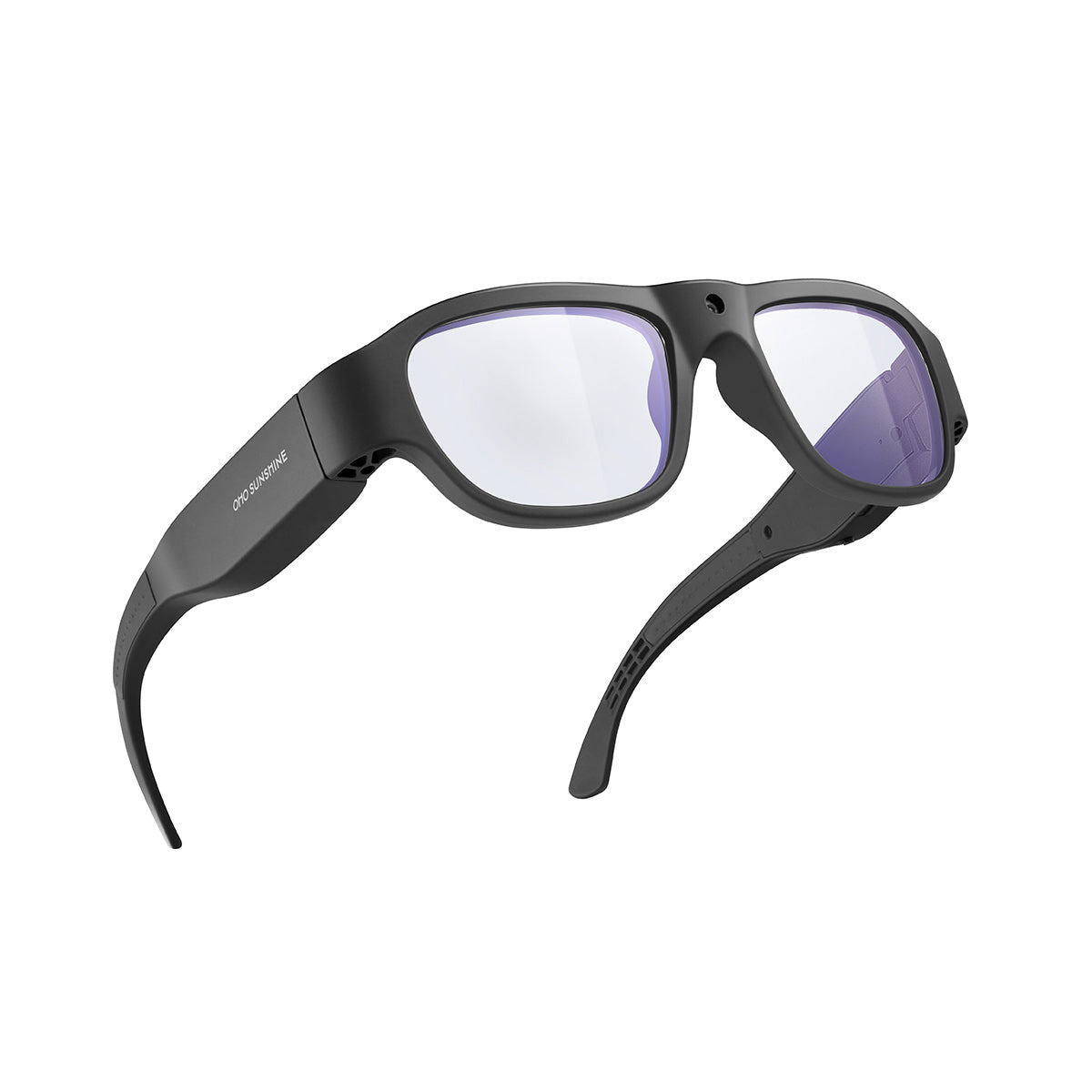
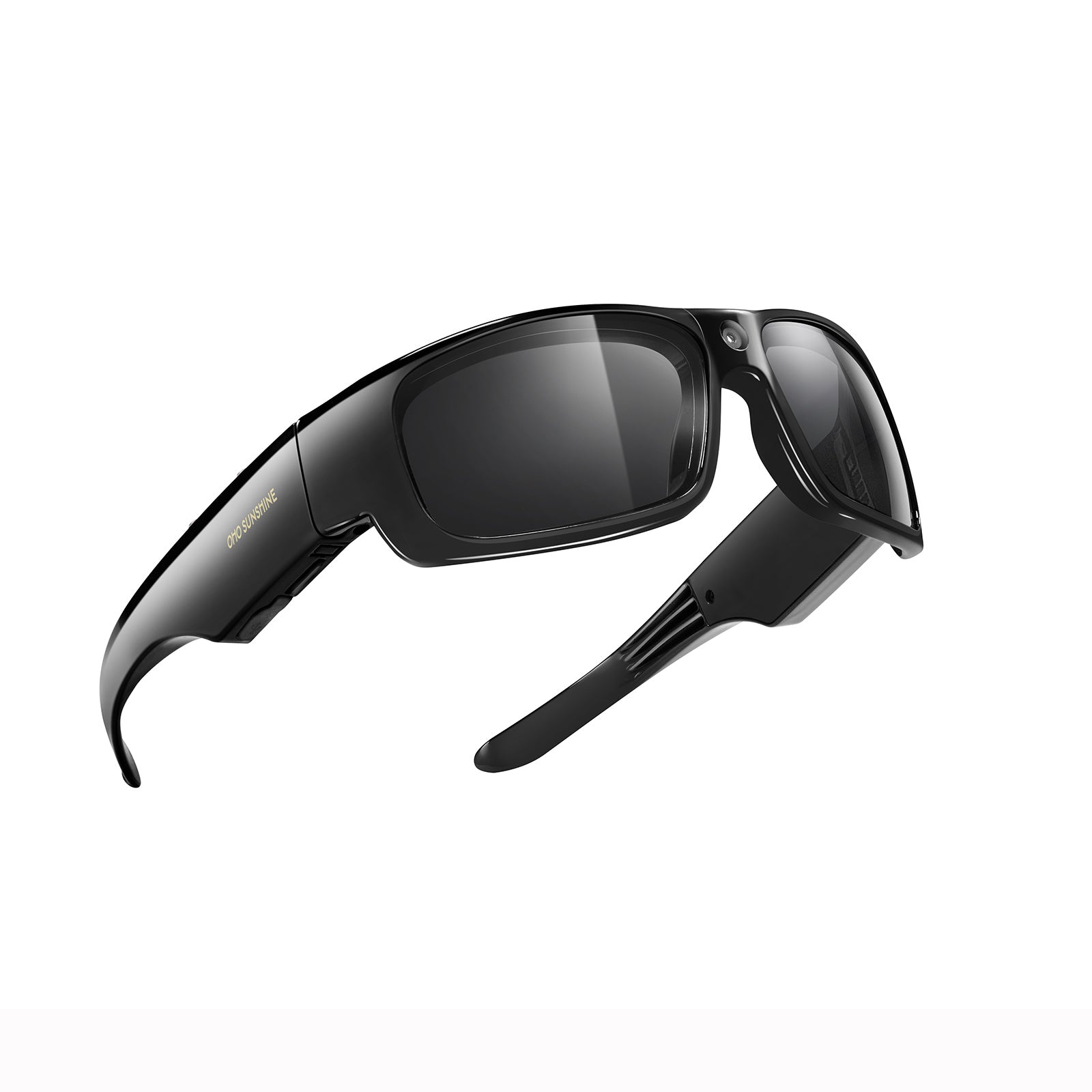


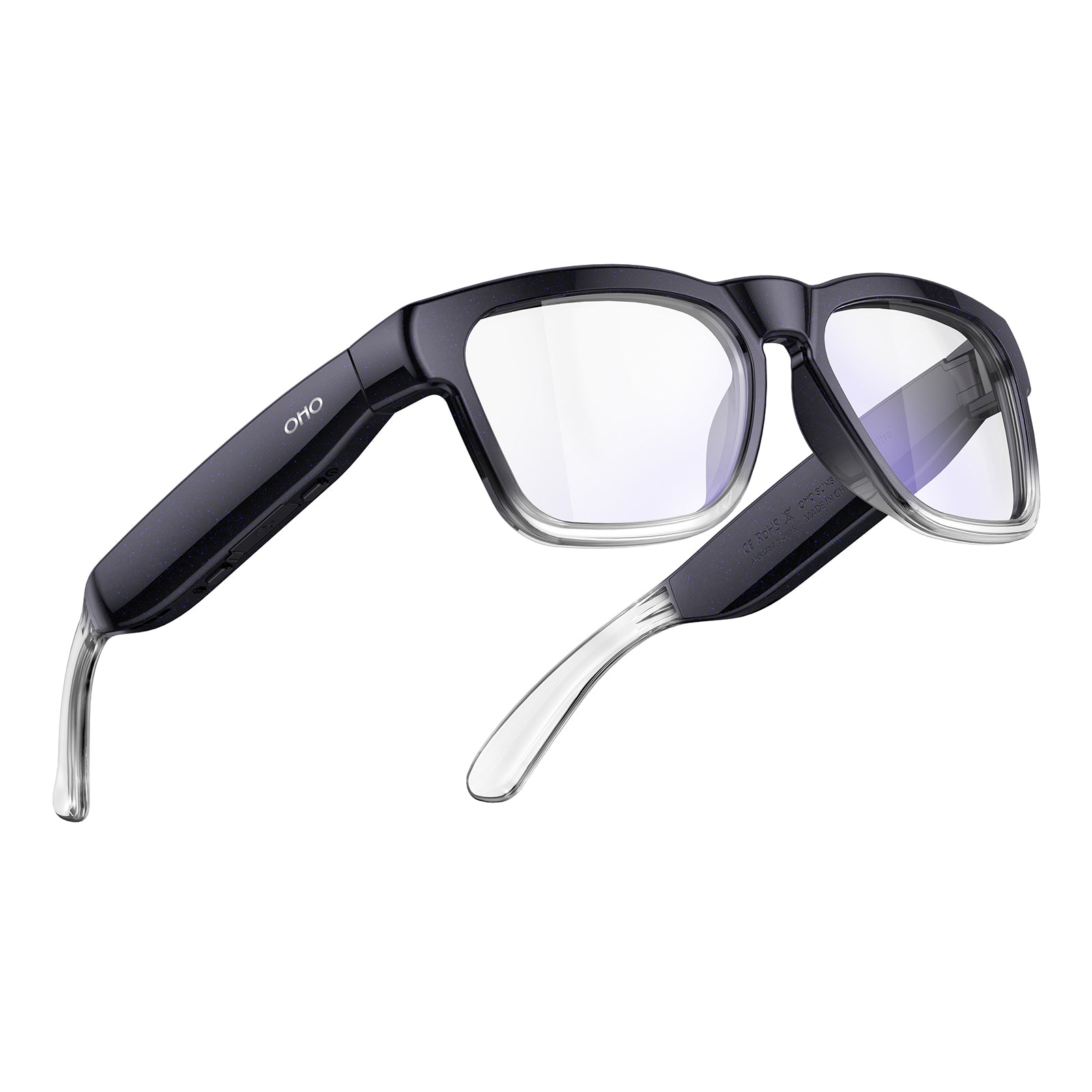


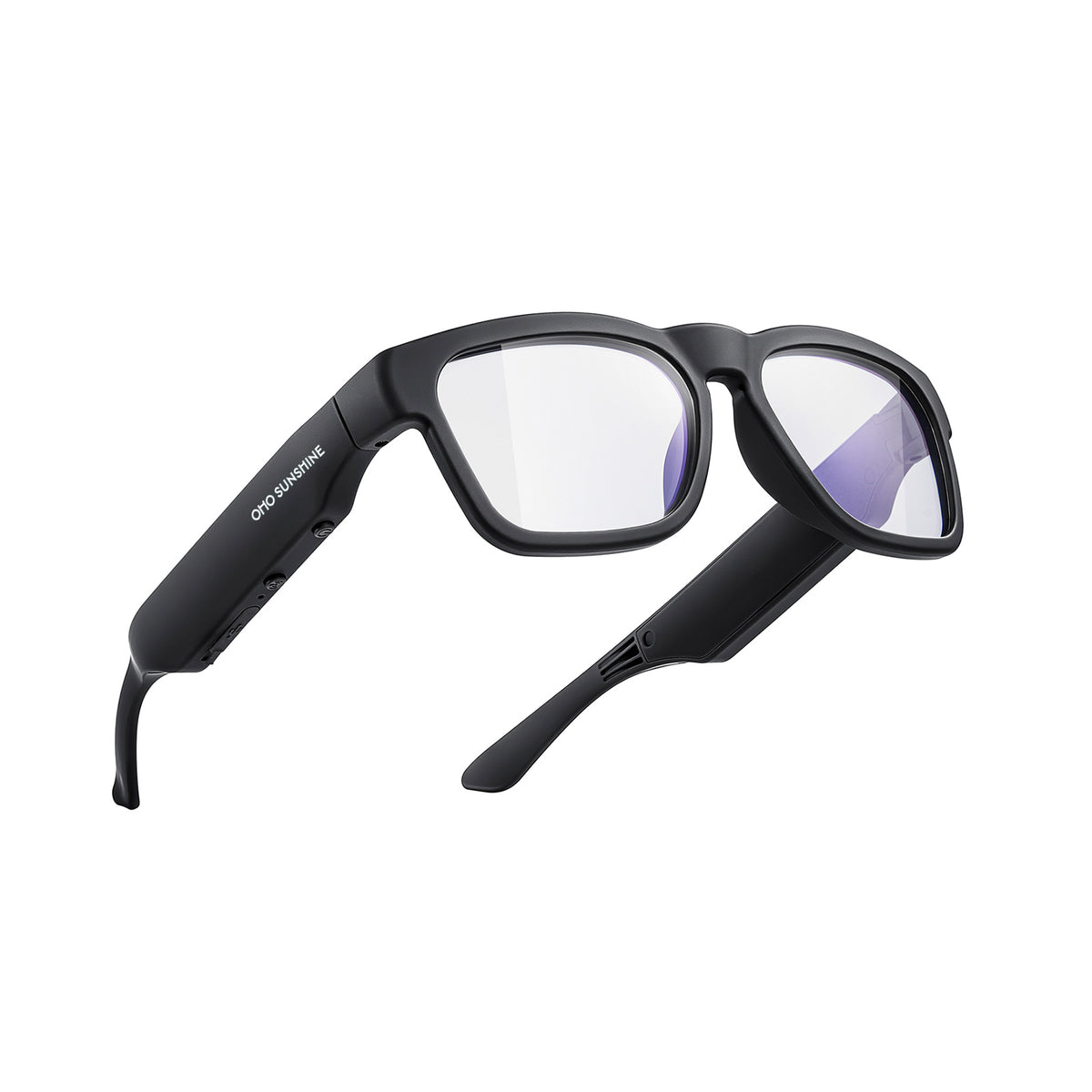



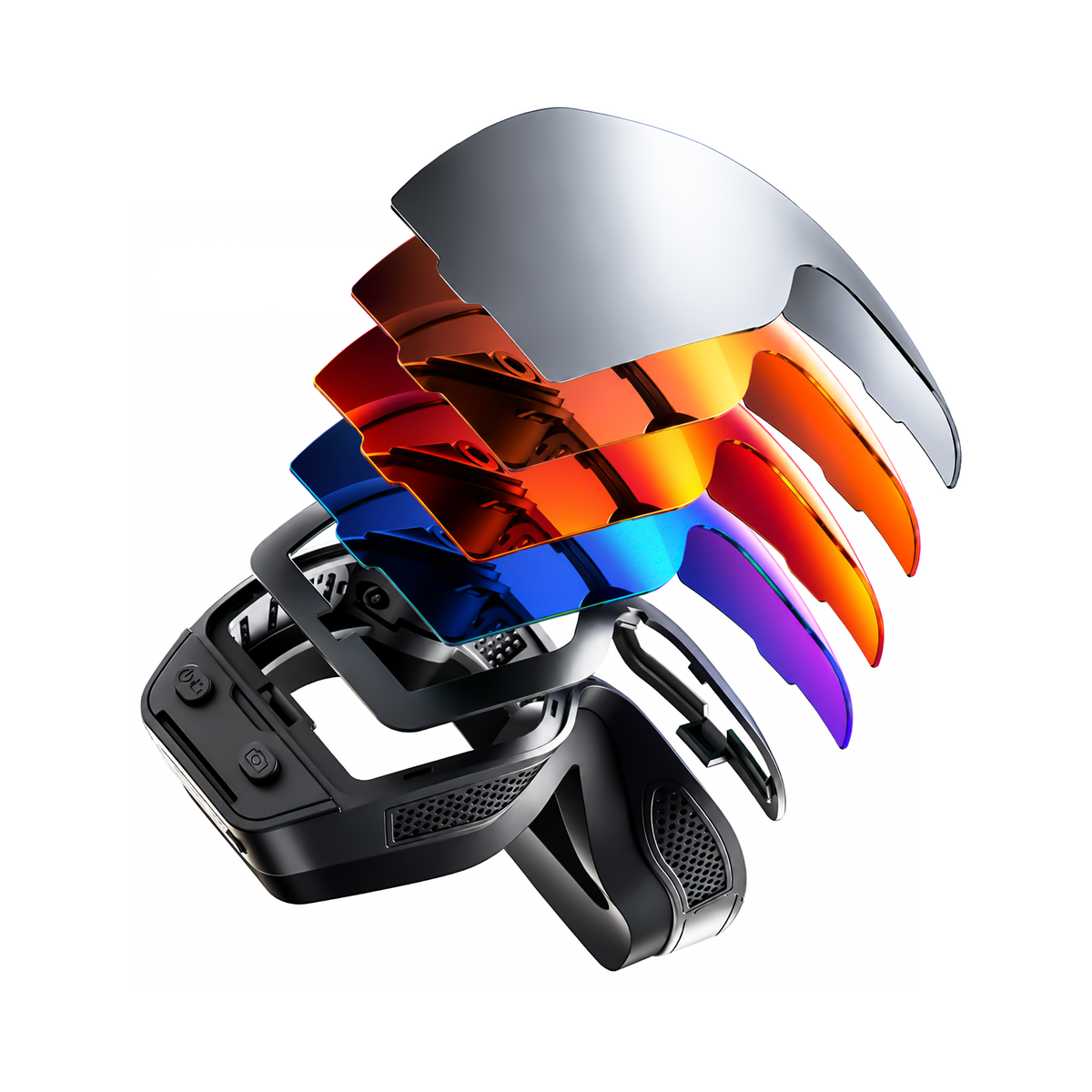



The safest way to clean photochromic smart glasses is to follow the care instructions for your exact model and lens. A "photochromic" label only tells you the lens darkens and lightens with changing light. It does not say which cloth or cleaner is safe for that lens's coatings, so find your pair's current care directions before anything touches the lens.
Check the Exact Model's Care Instructions First
Before you clean, confirm which frame and lens you own, then find the lens-care directions written for that pair. That's the step that keeps you from using a cleaner or cloth your lenses weren't meant to handle.
Identify the Frame and Lens Option
Start with the model name and the lens option, not just the word "photochromic." A single frame style can come with more than one lens type. Our Bluetooth glasses lineup includes polarized, photochromic, and blue-light lenses, and each lens can come with its own care notes. If you have swapped lenses since you bought the pair, for example with lenses from our replacement parts collection, go by the lens you have now. Don't borrow directions from a similar-looking model or from the lens your frame came with. Write down the exact model name and lens type before you move on.
Find the Lens-Care Instructions
Once you know the model, open its current user guide. Our smart glasses user manuals are a good place to start for our models. Good lens-care directions answer three things: which cloth to use, which cleaner (if any) is allowed, and in what order to work. They should also explain how to handle loose grit, like sand or dust, compared with greasy smudges such as fingerprints. Grit and smudges may call for different first steps, so don't guess when the guide is silent.
If the guide skips any of those points, or you can't find a guide for your pair, contact our support team before you clean. Share your model name and lens option, then ask which cloth and cleaner are approved and what sequence to follow. Until you have that answer, the safest choice is to hold off on cleaners rather than try a product that may not suit your lenses.

Avoid These Wiping Materials
Whatever your model's guide says, some quick fixes are best left out of the routine. In its eyeglass cleaning tips, ZEISS advises against cleaning glasses with a tissue, tie, or sleeve. Those are exactly the things people grab when a smudge shows up during a commute or a workout, so it helps to decide in advance not to use them.
This advice is general lens-care guidance from a lens maker. It tells you what to skip. It does not name a replacement material or cleaner for your specific photochromic lenses. For the approved option, go back to your model's instructions or the answer from support. A simple habit helps here: keep the approved cloth wherever you store your glasses. That way you won't be tempted to grab a shirt hem or a paper napkin just because nothing else is nearby.
Treat Frame and Electronics as a Separate Care Job
Lens-care directions don't tell you whether liquid is safe near the speakers, buttons, charging contacts, or other openings in a smart frame. Bluetooth glasses and smart Bluetooth sunglasses put electronics right into the temples and hinges. A cleaner approved for the lens is not automatically approved for those areas.
Treat the frame as its own question when you read your manual. Look for a separate section on cleaning the frame, the openings, and charging points, and on how much moisture each area can handle. If the manual only covers lenses, or says nothing about liquid near the electronics, ask support what is allowed before you wipe the temples with anything damp. When cleaning the lenses, work in a way that keeps any approved cleaner on the lens surface and off the frame.

For more on how we approach this split, our guides to camera-glasses cleaning after sweat, dust, or rain and audio smart glasses cleaning walk through keeping openings like camera ports and acoustic vents out of the wet part of the job. Those articles cover their own product types. For photochromic lenses on a different model, your exact model's directions still take priority.
Conclusion
If your model's care method is still unclear, contact support before you clean, and get four answers. Ask for the approved lens cloth, the approved cleaner (or confirmation that none is needed), and how to remove loose grit versus smudges. Then ask for the liquid limits around the frame's electronic openings. With those answers in hand, you can clean your photochromic lenses with confidence instead of guessing.
FAQs
Does a "safe for coated lenses" label mean a cleaner is safe for my photochromic lenses?
Not by itself. A general label like that isn't written for your specific lenses or their coatings. Treat a cleaner as approved only when your model's care instructions name it or when support confirms it for your exact frame and lens option.
Can I follow the cleaning instructions from a different pair of smart glasses?
It's better not to. Different models and lens options can have different care directions, and a smart frame's electronics may have their own moisture limits. Use the guide for the pair in your hands. If you can't find one, ask support for that model's directions instead of borrowing another pair's.
What details should I have ready before contacting support about lens care?
Have the exact model name, the lens type (such as photochromic), and whether you have replaced the lenses since buying. With those details, support can match the right care directions to your pair on the first reply instead of having to ask follow-up questions.
Is a microfiber cloth always safe for photochromic lenses?
Don't assume any cloth is approved for your lenses until your model's instructions name it. Some of our guides for other smart glasses types do use microfiber for the lenses, but your pair's own directions decide what is safe for your lenses. If the manual doesn't name a cloth, ask support to confirm one before your next cleaning.


Zanechať komentár
Táto lokalita je chránená testom reCAPTCHA a vzťahujú sa na ňu pravidlá ochrany súkromia a podmienky poskytovania služby hCaptcha.