


















AI translation glasses can help in a group when people take clear turns. When speakers talk over each other, though, you shouldn't count on any model until you've tested it. Even the best AI glasses need to pass two separate tests, one for orderly turn-taking and one for overlapping speech, because a two-way translation claim or a long language list shows coverage, not whether the glasses can pull apart several voices at once.
Group Support Depends on the Model—and Remains Unverified for Elingo
Whether smart glasses can follow your group depends on the exact model and on how your group talks. With our Elingo glasses, you can test orderly turns, but their handling of overlapping speakers isn't documented.
What Elingo's Listing Confirms
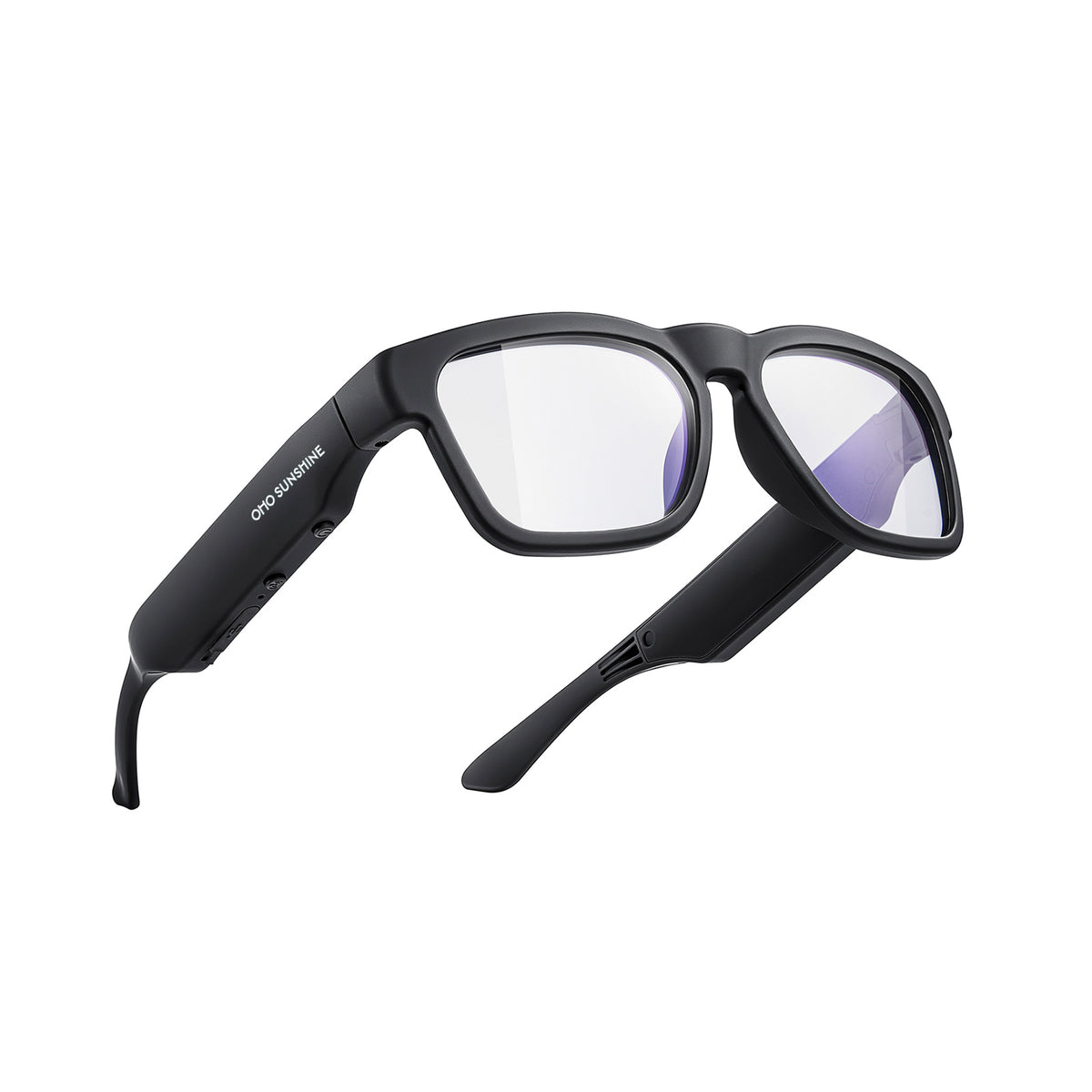
Our listing for our Elingo AI smart glasses advertises two-way translation in 165 languages. Translation runs through a dedicated smartphone app paired with the glasses. The results appear on the smartphone, not on the glasses. So the listing tells you which languages are covered and where to look during a conversation. It says nothing about how the app works when three or four people are talking.
What Elingo Does Not Document for Groups
Our Elingo listing does not detail a dedicated group mode, speaker separation, or how the app handles simultaneous speech. You should not assume unlisted multi-speaker support. The same rule applies across all the translation glasses we carry and across the best AI glasses anywhere: no model guarantees seamless group handling without a direct test. Until you verify Elingo with your specific group dynamic, treat multi-speaker performance as unconfirmed.
Why Overlapping Speakers Change the Test
Turn-taking and overlap send different sound into the microphone. That's why a smooth one-on-one demo can't show you how a busy dinner table will go.
When Speakers Take Turns
When one person speaks at a time, the audio holds only one voice at any moment. The system just has to recognize that speech and translate it, so clear turns are the more controlled condition. Accents, background noise, and connection limits can still affect a turn-taking exchange, as we explain in our look at how translation glasses handle live exchanges. If the glasses pass with clear turns, you've only learned that the model handles orderly talk in your language pair. You still don't know what happens when a second voice cuts in.
When People Speak at Once
Overlap means two or more voices share the same stretch of audio. Researchers studying multi-speaker meetings report that such recordings can contain almost 20% overlapped speech. They also found that speech recognizers trained on clean, single-speaker audio make more errors on those overlapped parts. The same paper notes that systems built to track one speaker at a time can miss the person interrupting entirely. That research looked at meeting transcription systems, not consumer glasses. Read it as the reason overlap needs its own test, not as a prediction for any glasses model.
Test the Glasses with Your Expected Group
Run a short trial that copies the group you expect, then trust the glasses only in the conditions they pass. This is a practical check for buyers, not a formal benchmark, and it's the most direct way to judge which of the best AI glasses fit your situation.
- Set up the real workflow. Use the exact languages your group will speak, and pair the glasses with the app as the model's translation manual describes. With Elingo, that means watching the phone screen, because that's where translations appear. Results can also shift with the language pair, so it helps to know how accuracy varies by language pair.
- Start with clear turns. Have two or three people speak one at a time, each finishing before the next begins. Check that each person's contribution shows up complete and in the right target language.
- Add the interruptions you expect. Repeat the trial using the pattern of your real situation. That might be quick back-and-forth, someone cutting in, or two people answering at once.
- Watch for three failures. Look for contributions that go missing, get merged into another speaker's line, or come out in the wrong language. What matters is whether the key points stay understandable, not whether every word is perfect.
- Decide by condition. If clear turns pass and overlap fails, use the glasses only when people can take turns. If key overlapping speech fails or you can't test it, plan another approach. You could ask speakers to pause between turns, or use a method that has shown it works in that condition.

If your trip includes airports, restaurants, or other loud spaces, our pre-trip conversation test adds noise checks and a phone backup plan for important conversations. Run it alongside this group trial so your fallback is ready before you rely on the glasses.
The Bottom Line
The best AI glasses for your group must pass a live trial with your specific languages and speaking cadence. Clear turn-taking is manageable, whereas overlapping speech remains an unpromised challenge. Start with turn-taking using our Elingo phone-based workflow, and maintain a backup plan whenever participants speak at once.
FAQs
Does a higher language count mean better group handling?
No. A language count shows which languages a model covers. It doesn't show whether the model can separate several speakers or handle more than one source language at the same moment. Our Elingo glasses list 165 languages and our Edge Pro smart glasses with camera list 164, and neither number tells you anything about group performance.
Will the glasses switch automatically if a third language joins?
Automatic switching to a third language isn't documented for Elingo, so don't assume the app will detect a newly spoken language mid-conversation. Test a language change on its own, separate from overlap. Start with one language pair, bring in the third speaker, and see whether the app keeps up or needs you to change settings.
Can translation glasses tell you who said what?
Speaker labeling isn't documented in our Elingo listing, so plan to keep track of speakers yourself by watching who is talking. In meeting research, working out who spoke when is its own processing step. That's why a translation feature alone shouldn't be taken as speaker identification.


Zanechať komentár
Táto lokalita je chránená testom reCAPTCHA a vzťahujú sa na ňu pravidlá ochrany súkromia a podmienky poskytovania služby hCaptcha.