














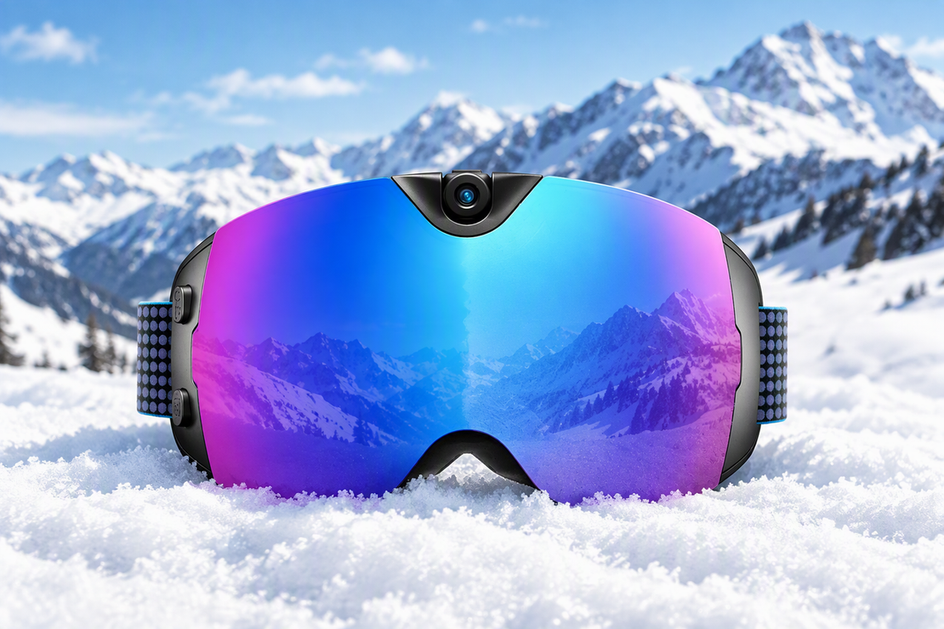
Neither cylindrical nor spherical ski goggles is the universal best choice. Cylindrical lenses curve side to side and stay flatter top to bottom, giving a lower profile and often a lower price. Spherical lenses curve both horizontally and vertically, which can widen your peripheral view but usually costs more.
Your best pick depends on whether you want a wider view and wrapped look or a simpler, budget-friendly profile, and on how well the exact model fits your face and helmet.
How Cylindrical and Spherical Lenses Differ
Lens shape describes curvature, not automatic optical quality. Spherical designs may offer a broader peripheral view than a similarly sized cylindrical design, while cylindrical designs may show mild edge effects for some wearers.
Cylindrical and Spherical in Plain English
Cylindrical lenses curve across your face from side to side but stay flat from your brow to your cheek. That flatter vertical profile gives them a classic, lower look and keeps manufacturing simpler, which often keeps the price down. Spherical lenses curve in both directions at once, creating a rounder, bubble-like shape that sits further away from your face. The extra curve and larger lens surface are why spherical goggles are generally linked to a wider field of view. Neither name tells you how clear or distortion-free a specific pair will be. The shape only describes the geometry; lens material, coatings, and frame construction still decide the real optical result.

The Optical Tradeoff in One View
The table below lines up the two shapes by the priority each one tends to serve best.
| Lens shape | Curvature & visual profile | Possible optical implication | Best starting priority |
|---|---|---|---|
| Cylindrical | Curves side to side, flat top to bottom | May show mild edge effects for some wearers | Low profile, value |
| Spherical | Curves horizontally and vertically | May offer a broader peripheral view | Wraparound look, wide view |
These are directional tendencies, not lab-measured rankings. A well-built goggle in either shape can still cut distortion through careful lens geometry and thickness, since optical correction can reduce distortion regardless of category label.
How to Choose the Right Shape for Your Ride
Your riding priorities, face shape, and budget matter more than the shape label alone. Match your dominant priority first, then confirm the exact goggle fits before you buy.
Match the Shape to Your Riding Priorities
A value-focused resort skier or snowboarder who mostly rides groomed runs may prefer starting with a cylindrical goggle. The lower-profile shape often costs less, and the mild edge effects some wearers notice rarely change how you ride groomed terrain. A rider who frequently checks moguls, trees, or terrain to the side, or who simply prefers a more wrapped look, may prefer to start with a spherical goggle instead, since the broader curve is generally linked to a wider peripheral view. Skiers and snowboarders with unusually flat or curved face profiles should treat these starting points as a first filter, not a final answer. A cylindrical or spherical goggle that does not fit your face or helmet is the wrong choice regardless of its shape.
Check Fit, Value, and Extras Before You Buy
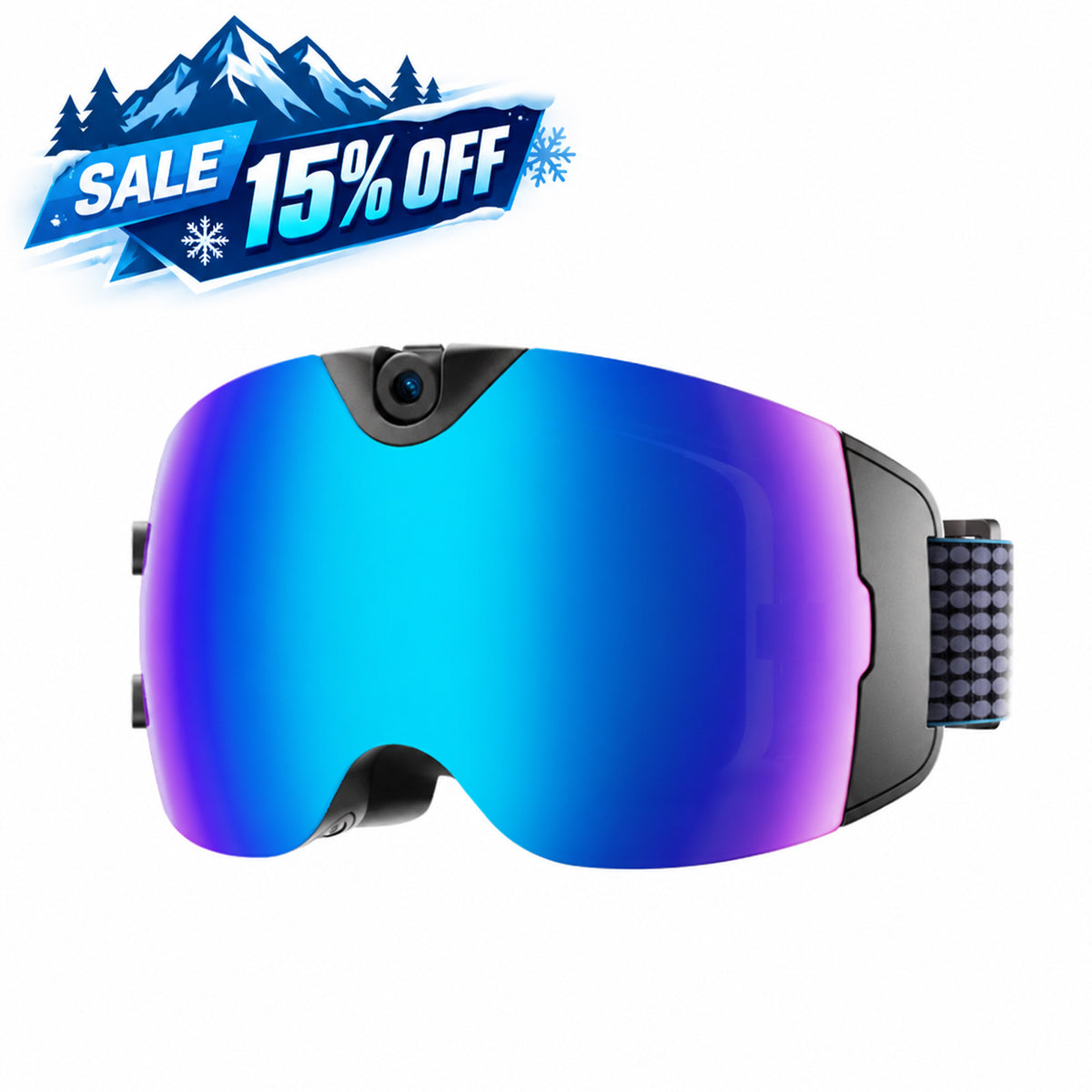
Confirm the exact lens shape in the product listing instead of guessing from a photo, since some frames look more curved than they actually are. Try the goggles on with the helmet you plan to wear and check for a full seal, no pressure points, and no gaps at the brow or cheeks. The ASTM F659 requirements for ski and snowboard goggles cover categories such as field of view, optical properties, UV transmission, fogging resistance, lens strength, and strap retention, so check whether a listing states it meets that specification. Anti-fog treatment, tint, ventilation, and replacement-lens availability matter as much as the shape, and our smart ski goggles buying guide walks through those specs in more detail. A camera or smart feature does not tell you anything about lens curvature. If you want built-in run footage, our Skyshot camera ski goggles record 4K video and 24-megapixel photos through a 140-degree wide-angle camera lens, but that number describes what the camera captures, not your own field of view through the goggle lens. Riders who mainly want snow goggles with a camera for hands-free clips should judge Skyshot on its recording features and fit, separately from any cylindrical-or-spherical decision, since its lens curvature is not part of its published specs.

Start with your dominant priority: a wider, wrapped view points toward spherical goggles, while a lower profile and better value point toward cylindrical goggles. Either shape can work well for skiing or snowboarding once you confirm the exact model's fit, optical claims, and anti-fog design. Camera and smart features are a separate decision from lens curvature, so choose them based on your recording needs, not the shape label.
FAQs
Can cylindrical ski goggles still have clear optics?
Yes. A cylindrical lens can still be clear and low-distortion when the goggle uses good optical correction and solid lens construction, so the flatter shape does not automatically mean blurry or distorted vision. Check the exact model's optical-quality claims and try it on before assuming the shape alone limits clarity.
Do spherical goggles automatically prevent fogging?
No. The extra curve gives more room inside the lens, but fogging depends on ventilation, anti-fog treatment, outside conditions, and how well the goggle seals against your face. Check a specific model's fogging and ventilation claims instead of assuming spherical shape solves fogging on its own.
Is a camera's field of view the same as what I see through the goggle lens?
No. A camera field-of-view spec, like Skyshot's 140-degree wide-angle camera lens, describes what the camera records, not your own optical view through the goggle. Check the goggle's separate optical field-of-view or lens specification if peripheral vision is your main concern.


留言
此網站已受到 hCaptcha 保護,且適用 hCaptcha 隱私政策以及服務條款。