
Smart sunglasses have come a long way from tinted lenses and basic frames. Today they record video, play music, handle calls, translate languages, and do it all while sitting on your face like a regular pair of glasses. The problem is not finding options. It is knowing which features actually match the way you live. This guide breaks down the decision by lifestyle so you can skip the overwhelm and find the right fit.
What Smart Sunglasses Can Actually Do Today
Before narrowing down options, it helps to know what is available. Smart sunglasses today fall into a few distinct functional categories, and most people only need one or two of them.

The main types of smart glasses on the market:
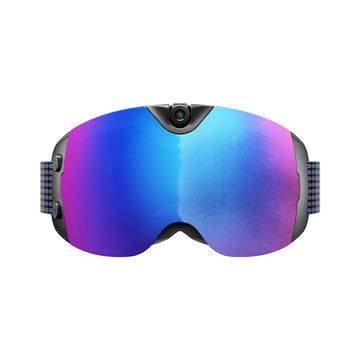
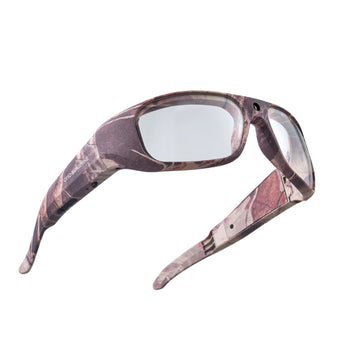
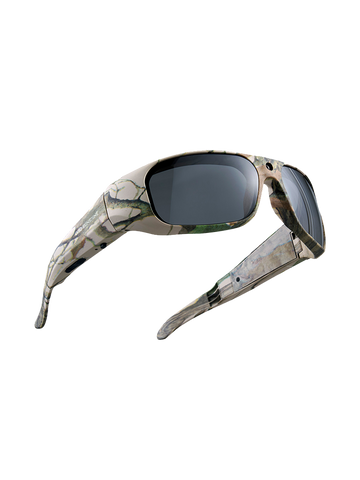
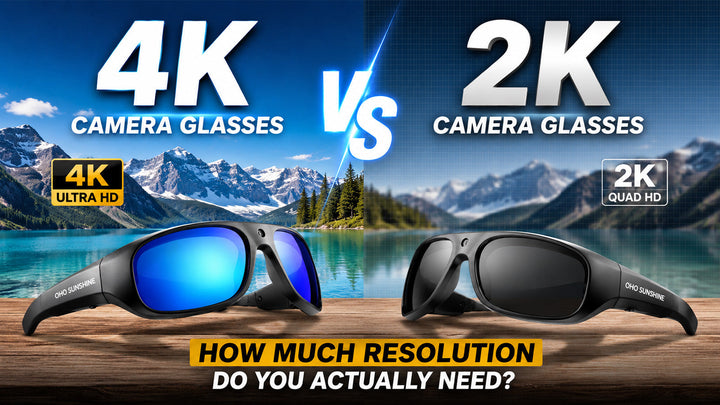
- Camera glasses: Record video and take photos from a first-person perspective, hands-free. Resolution typically ranges from 1080P to 4K, and some advanced models include EIS, or Electronic Image Stabilization, for stabilized footage during movement
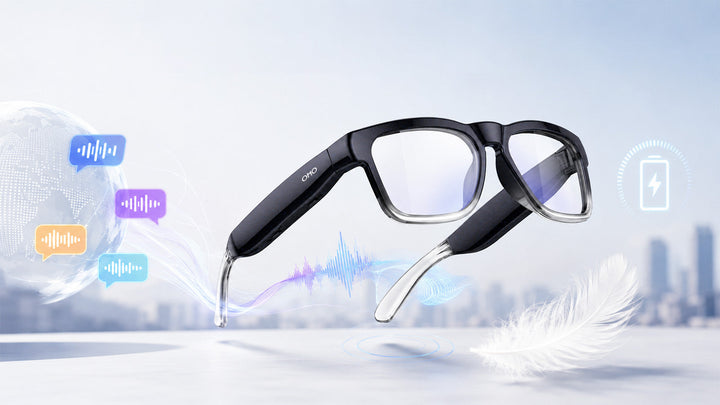
- Bluetooth audio glasses: Connect to your phone wirelessly for music, podcasts, and calls through open-ear speakers built into the frame
- AI translation glasses: Use a paired smartphone app to deliver real-time spoken translation through the frame's built-in speakers and microphone
- Hybrid models: Combine two or more of the above, such as camera plus audio, into a single pair of frames
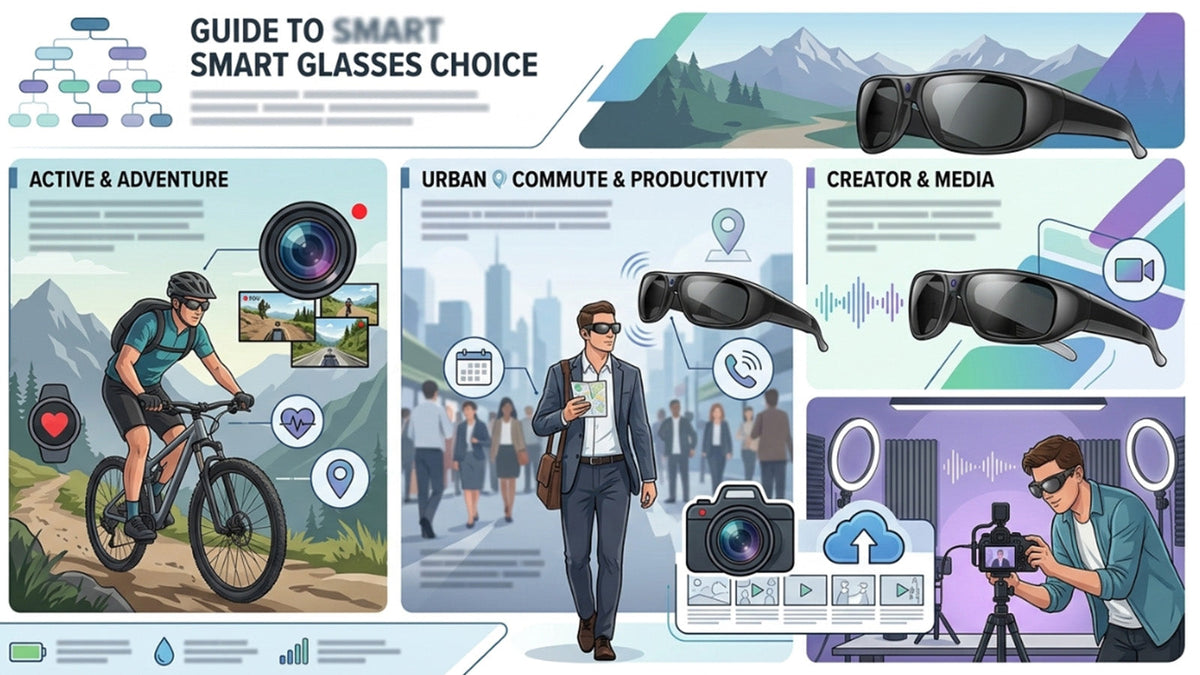
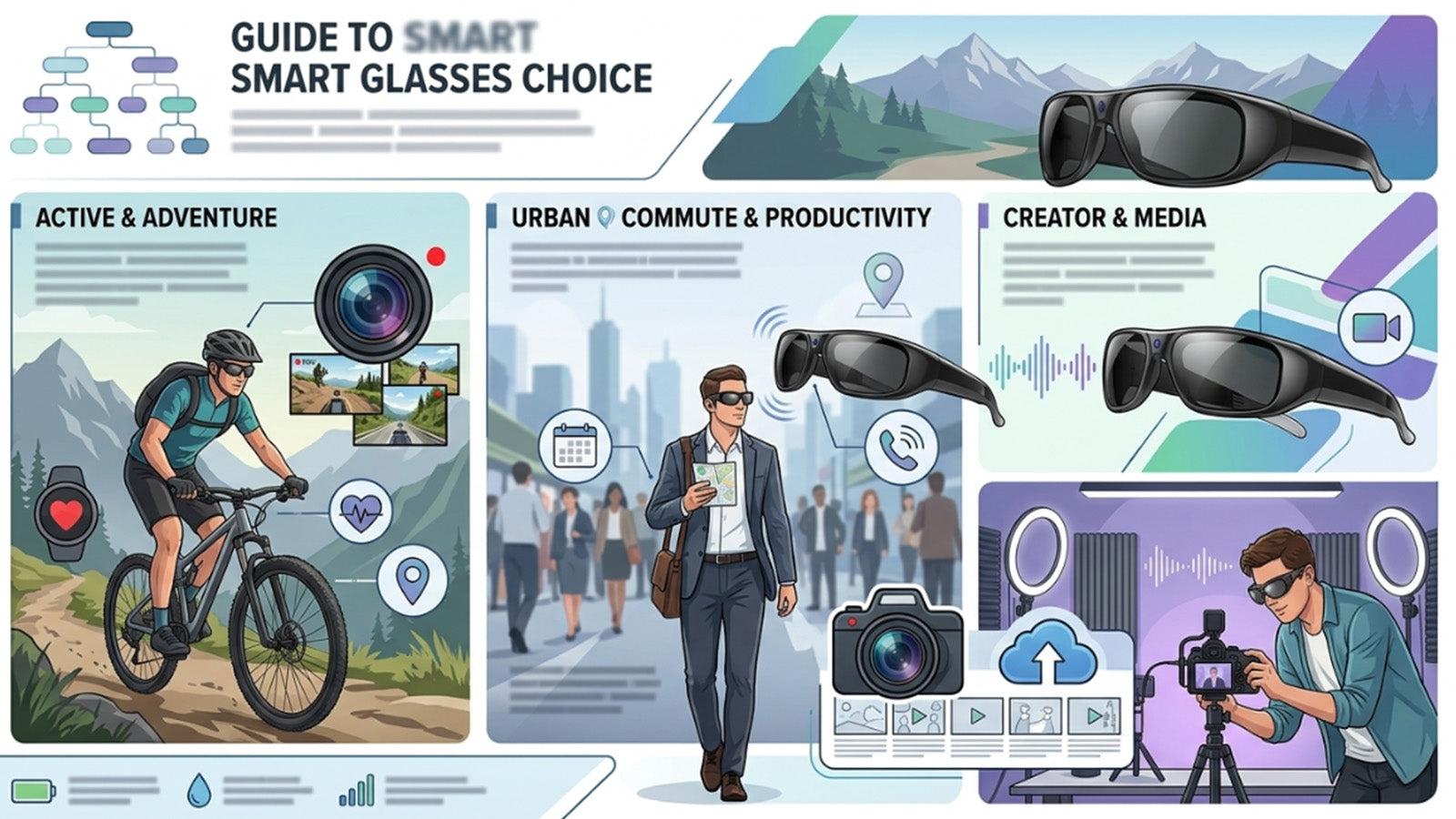
Knowing which category fits your daily routine is the first step toward making the right choice. The sections below map each major lifestyle scenario to the features that matter most.
Choosing Smart Glasses for Travel and Outdoor Activities
Outdoor use demands more from eyewear than most other scenarios. Camera functionality tends to be the top priority here. Recording hands-free means capturing moments without stopping or reaching for a phone, and first-person footage from a moving perspective is something no phone mount can fully replicate.
What to prioritize for travel and outdoor use:
- Video resolution: 2K or 4K delivers footage worth keeping
- EIS stabilization: Essential for any activity involving movement, vibration, or uneven terrain
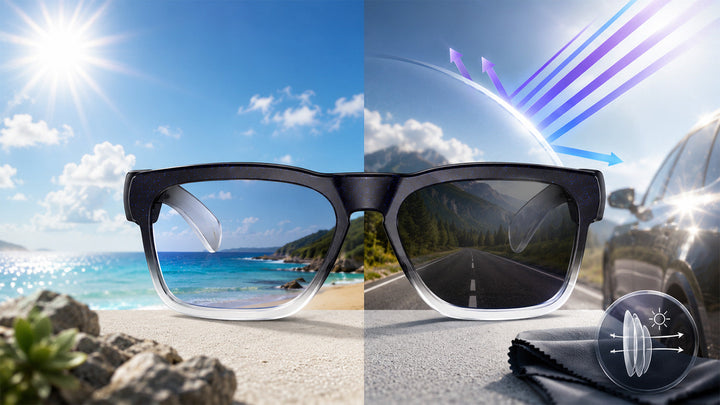
- Lens protection: Polarized lenses reduce glare during outdoor use; UV400 protection matters for extended sun exposure
- Weight and frame material: Lightweight frames, particularly TR90, reduce fatigue during all-day wear
- AI translation: A practical addition for international travel, allowing real-time spoken conversation across language barriers without reaching for a phone
For travelers and outdoor enthusiasts who want camera recording and stabilized footage in one lightweight package, the OhO Sunshine Primex EIS is a purpose-built option worth looking at. It combines 2K recording with Electronic Image Stabilization in a TR90 frame, covering the core needs of this use case without unnecessary bulk.

Choosing Smart Glasses for Work, Calls, and Daily Commuting
The commute and workday call for connectivity over recording. Bluetooth smart sunglasses handle this well, keeping you aware of your surroundings through open-ear speakers while managing calls and audio without ever holding a phone.
Audio Quality and Call Performance
For commuters, the speaker and microphone setup is the most important spec to evaluate. Open-ear audio means some sound leaks outward, which is a reasonable trade-off for the situational awareness it provides.
Key features for work and commuting use:
- Bluetooth 5.2 or higher for stable, low-latency connection
- Built-in mic with noise reduction for clear calls in urban environments
- Battery life of at least eight hours to cover a full workday
- Low-profile frame design that fits professional or casual settings without standing out
Lens Flexibility for Indoor and Outdoor Transitions
Commuters move between environments constantly. Photochromic lenses, which automatically adjust tint based on ambient light, remove the need to swap between pairs throughout the day.
- Darkens automatically in bright outdoor conditions
- Clears up in indoor or low-light environments
- Removes the need to carry a second pair of glasses
For everyday commuters, prioritizing battery life and microphone quality over camera specs tends to deliver the most practical day-to-day value.
How to Pick the Right Smart Glasses for Your Needs
With the lifestyle scenarios covered, the decision comes down to matching your primary use case to the right feature set. The table below serves as a practical starting point.
Use this as a quick reference before making a final decision.
| Lifestyle | Must-Have Feature | Good to Have | Skip if Not Needed |
| Travel and outdoor | Camera, EIS, UV400 lens | AI translation, lightweight frame | High-end audio |
| Work and commuting | Bluetooth audio, mic quality | Photochromic lens, long battery | Camera recording |
| Everyday casual wear | Comfort fit, battery life | Style options, open-ear audio | Advanced camera |
| International travel | AI translation, mic clarity | Camera, wide language support | Heavy feature sets |
| Active sports | EIS, lightweight frame, durability | Polarized lens, TR90 frame | AI translation |
The table above maps each lifestyle to its most relevant features. Prioritizing the must-haves first prevents overpaying for features that will rarely be used.
A few practical questions to ask before buying:
- Will you wear these primarily outdoors, indoors, or both?
- Do you need to record video, or is audio connectivity the main use case?
- How long will you wear them in a single session?
- Does frame style matter for your professional or social environment?
- Is battery life a limiting factor given your daily schedule?
Most buyers find that answering these five questions narrows the field significantly. The best smart glasses are not the ones with the most features. They are the ones that match the way you actually move through your day.
Find Your Fit, Then Wear It Every Day
Smart sunglasses work best when they are chosen for a specific lifestyle rather than a general feature list. Whether the priority is capturing outdoor adventures with a camera-equipped pair, staying connected through bluetooth smart sunglasses during a busy commute, or breaking language barriers with AI translation on an international trip, there is a purpose-built option for each scenario. Start with how you live, and the right pair becomes an obvious choice.
FAQs about Smart Bluetooth Sunglasses
Q1. What Is the Difference Between Smart Glasses and Regular Bluetooth Sunglasses?
Regular bluetooth sunglasses typically offer audio playback and call handling through a wireless connection to your phone. Smart glasses extend this with additional capabilities such as built-in cameras, AI-powered translation, or voice assistant integration. The distinction matters when deciding how much functionality you actually need, since more features generally means more to manage and charge.
Q2. How Long Does the Battery Last on Smart Bluetooth Sunglasses?
Battery life varies by model and feature set. Audio-only bluetooth sunglasses typically offer between eight and twelve hours of continuous playback. Camera-equipped models tend to have shorter recording windows, though standby time is considerably longer. For audio playback, around 10 hours of continuous music listening can be expected. Checking the specific battery specs for each use mode before purchasing gives the most accurate expectation.
Q3. Can Smart Sunglasses Replace Both Sunglasses and Earbuds at the Same Time?
For many everyday use cases, yes. Bluetooth smart sunglasses with polarized lenses handle sun protection and audio simultaneously, which simplifies what you carry and removes the need to manage a separate pair of earbuds. The open-ear design keeps you aware of your surroundings while delivering audio, which is a practical advantage in most everyday environments. For situations requiring complete sound isolation, a dedicated pair of earbuds remains the more suitable tool.